MCQ
Consider the function $f(x)=\left\{\begin{array}{cc}\frac{x+5}{x-2}, & \text { if } x \neq 2 \\1, & \text { if } x=2\end{array}\right.$ Then, $f(f(x))$ is discontinuous
  • A
    at all real numbers
  • at exactly two values of $x$
  • C
    at exactly one value of $x$
  • D
    at exactly three values of $x$

Answer

Correct option: B.
at exactly two values of $x$
b
(b)

We have,

$f(x)=\left\{\begin{array}{cc}\frac{x+5}{x-2}, & x \neq 2 \\1, & x=2\end{array}\right.$

$f(x)$ is discontinuous at $x=2$

$\therefore f(f(x))$ is also discontinuous at $x=2$

Now, $f(f(x))=\frac{f(x)+5}{f(x)-2}=\frac{\frac{x+5}{x-2}+5}{\frac{x+5}{x-2}-2}$

$\Rightarrow f(f(x))=\frac{6 x-5}{9-x}$

Clearly $f(f(x))$ is discontinuous at $x=9$

$\therefore f(f(x))$ is discontinuous at $x=2$ and $9$

Hence, $f(f(x))$ is discontinuous at exactly two values of $x$.

Need a full question paper?

Generate a complete, print-ready paper with questions like this in minutes — across 16+ boards, with answer keys.

Start Generating Free

Similar questions

Let $x = x ( y )$ be the solution of the differential equation $2( y +2) \log _e( y +2) dx +\left( x +4-2 \log _e( y +2)\right) dy =0$, $y > -1$ with $x\left(e^4-2\right)=1$. Then $x\left(e^9-2\right)$ is equal to
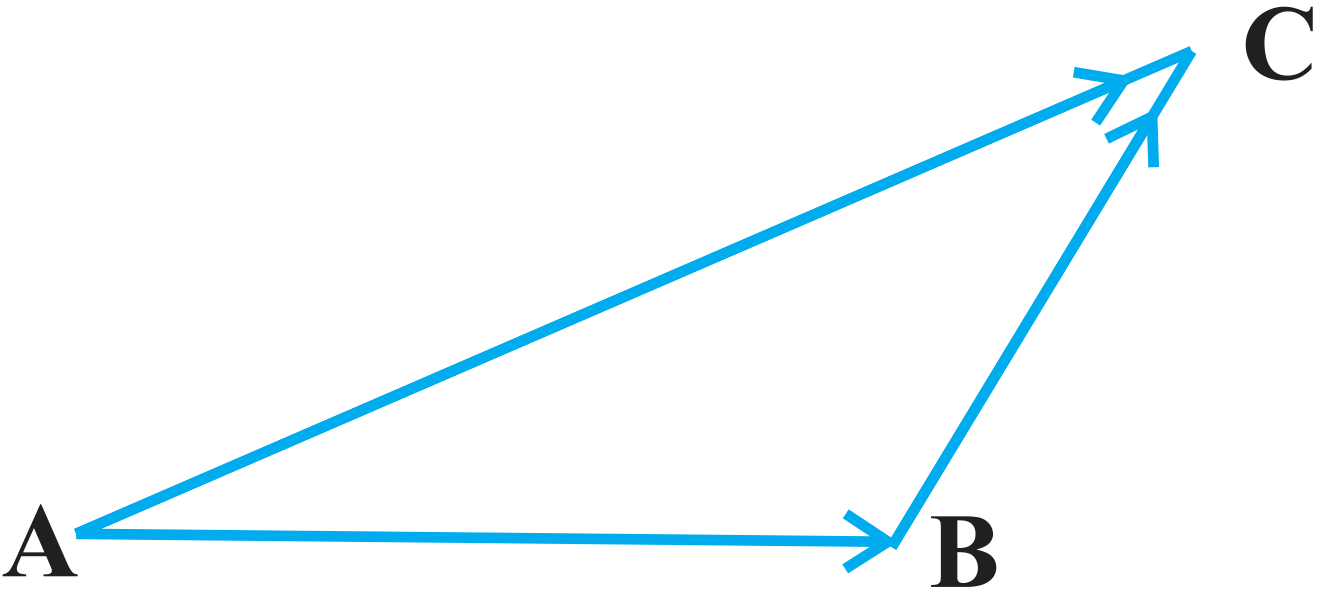
In triangle ABC (Fig 10.18), which of the following is not true:

  1. $\overrightarrow{\text{AB}}+\overrightarrow{\text{BC}}+\overrightarrow{\text{CA}}=\vec{0}$
  2. $\overrightarrow{\text{AB}}+\overrightarrow{\text{BC}}-\overrightarrow{\text{AC}}=\vec{0}$
  3. $\overrightarrow{\text{AB}}+\overrightarrow{\text{BC}}-\overrightarrow{\text{CA}}=\vec{0}$
  4. $\overrightarrow{\text{AB}}-\overrightarrow{\text{CB}}+\overrightarrow{\text{CA}}=\vec{0}$
Let $S (x) = \int\limits_{{x^2}}^{{x^3}} \,  ln\, t\, d\, t\, (x > 0)$ and $H (x) = \frac{{S'\,\,(x)}}{x}$. Then $H(x)$ is :
The matrix $\begin{bmatrix}1 &\text{amp; } 0 &\text{amp; 1} \\ 2 &\text{amp; 1}&\text{amp; 0} \\ 3 &\text{amp; 1} &\text{amp; 1}\end{bmatrix}$ is:
  1. non-singular
  2. singular
  3. skew-symmetric
  4. symmetric
If $I = {\kern 1pt} \int\limits_0^{\frac{\pi }{6}} {\frac{{\cos x}}{x}dx,J = \int\limits_{\frac{\pi }{3}}^{\frac{\pi }{2}} {\frac{{\cos x}}{x}dx.} } $ Which of the following is CORRECT ?
The minimum value of $|x| + |x + {1 \over 2}| + |x - 3| + |x - {5 \over 2}|$ is
Choose the correct answer in exercise:
$\int\frac{\text{x dx}}{(\text{x}-1)(\text{x}-2)}$ equals
  1. $\text{log}\Bigg|\frac{(\text{x}-1)^2}{\text{x}-2}\Bigg|+\text{C}$
  2. $\text{log}\Bigg|\frac{(\text{x}-2)^2}{\text{x}-1}\Bigg|+\text{C}$
  3. $\text{log}\Bigg|\Bigg(\frac{\text{x}-1}{\text{x}-2}\Bigg)^2\Bigg|+\text{C}$
  4. $\text{log}|(\text{x}-1)(\text{x}-2)|+\text{c}$
The value of $\cot^{-1}9+\text{cosec}^{-1}(\frac{\sqrt{41}}{4})$ is given by:
  1. $0$
  2. $\frac{\pi}{4}$
  3. $\tan^{-1}2$
  4. $\frac{\pi}{2}$
The roots of the equation $\left| {\,\begin{array}{*{20}{c}}{x - 1}&1&1\\1&{x - 1}&1\\1&1&{x - 1}\end{array}\,} \right| = 0$  are
The matrix $\text{A}=\begin{bmatrix}0&0&4\\0&4&0\\4&0&0\end{bmatrix}$ is a:
  1. Square matrix.
  2. Diagonal matrix.
  3. Unit matrix.
  4. None of these.