Question
Consult the table of standard electrode potentials and suggest three substances that can oxidise ferrous ions under suitable conditions.

Answer

Oxidation of ferrous ion means :
$Fe^{2+ \rightarrow } Fe^{3+} + e^- ; E^0_{Fe3+/Fe2+} = 0.77V$
Any substance which standard electrode potential is more than that of $Fe^{+3 }/F^{+2}$ can oxidise ferrous ions.
$($refer to the table given in book$)$
The $EMF$ of the substance whose reduction potentials greater than $0.77V$ will oxidised ferrous ion.
For example $Br_{2 },Cl_{2},$ and $F_2.$

Need a full question paper?

Generate a complete, print-ready paper with questions like this in minutes — across 16+ boards, with answer keys.

Start Generating Free

Similar questions

The resistance of a conductivity cell containing $0.001\ce{M KCl}$ solution at $298 K$ is $1500 \Omega .$ What is the cell constant if conductivity of $0.001\ce{M KCl}$ solution at $298 K$ is $0.146 \times 10^{–3} S \ cm^{–1}.$
Answer the following:
(a) For a certain reaction large fraction of molecules has energy more than the threshold energy, yet the rate of reaction is very slow. Why?
(b) State a condition under which a bimolecular reaction is kinetically first-order reaction.
Calculate the osmotic pressure in pascals exerted by a solution prepared by dissolving $1.0 g$ of polymer of molar mass $185,000$ in $450 \ mL$ of water at $37^\circ C.$
Write complete reaction for the bromination of phenol in aqueous and non aqueous medium.
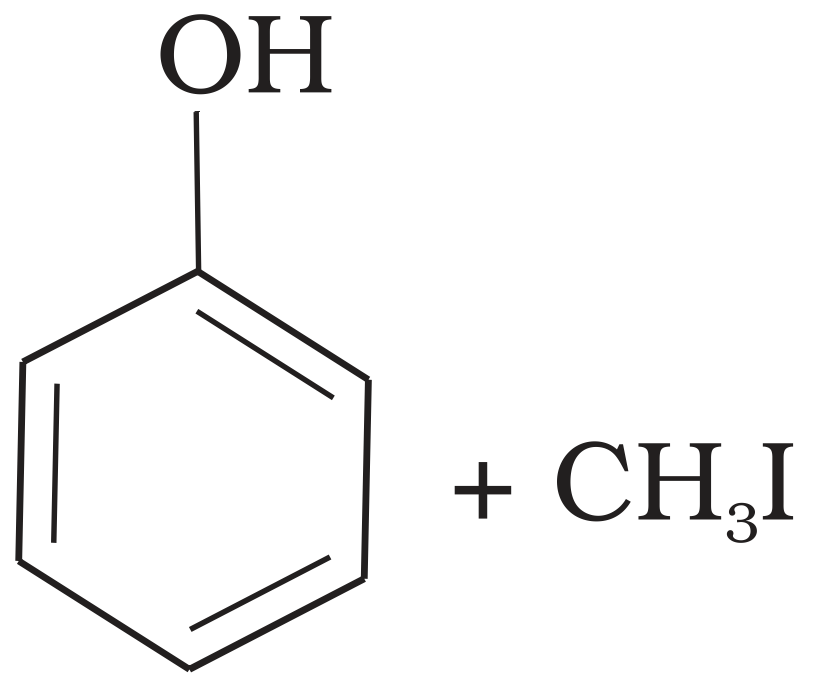
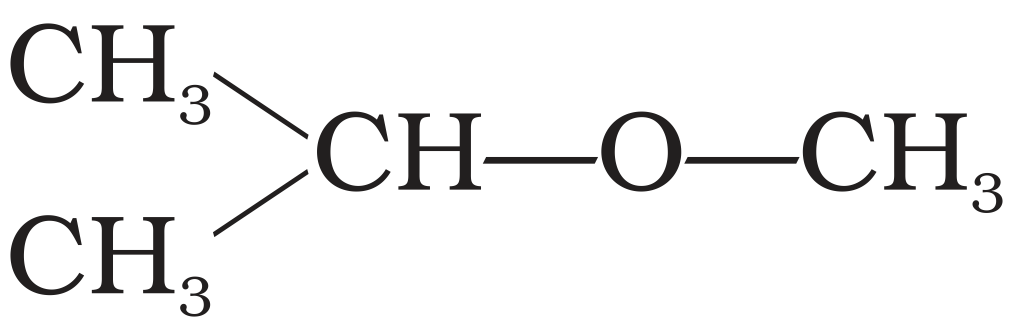
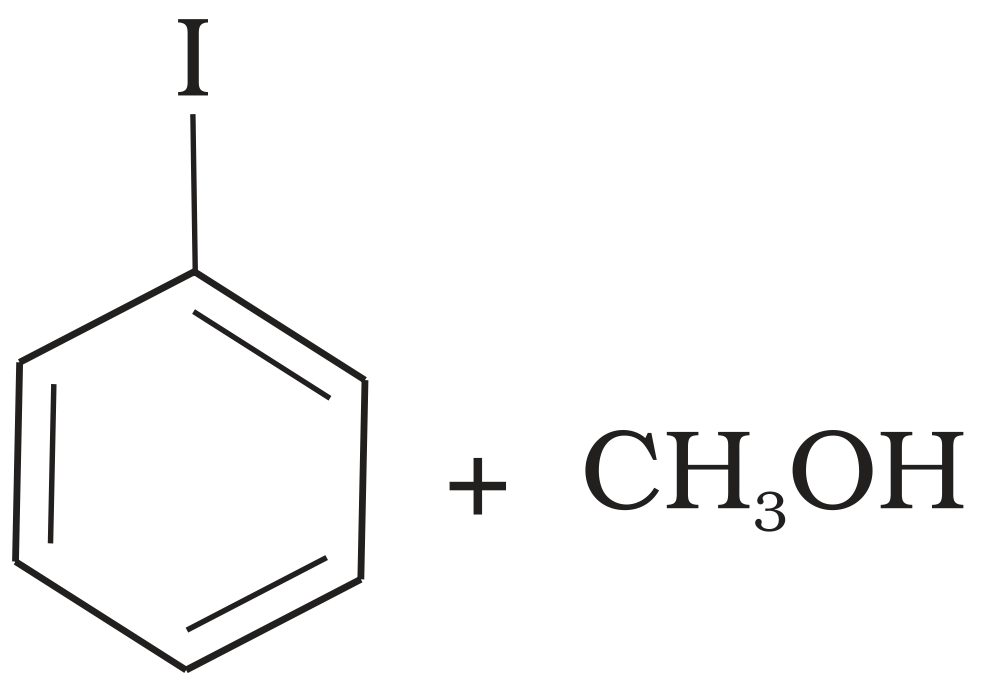
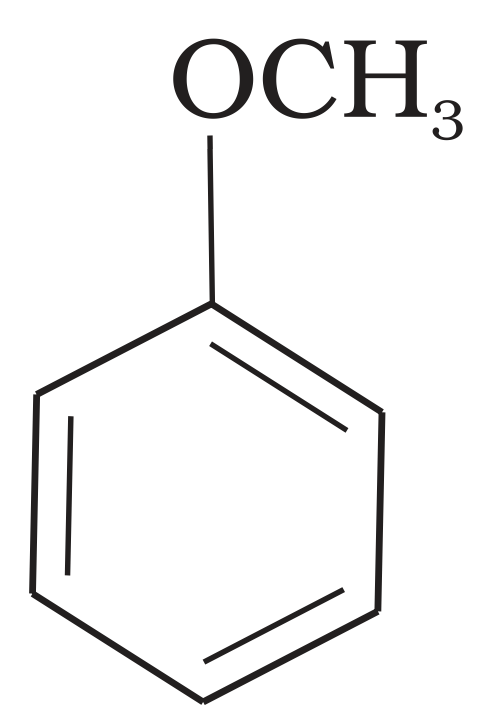
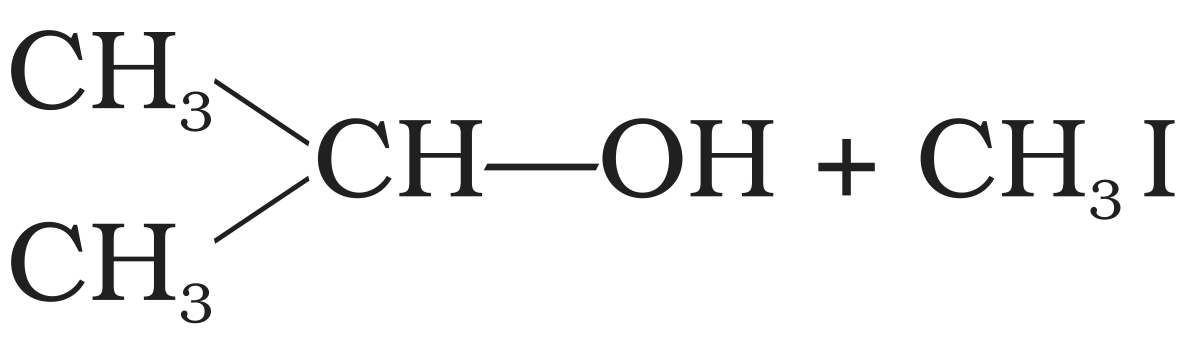
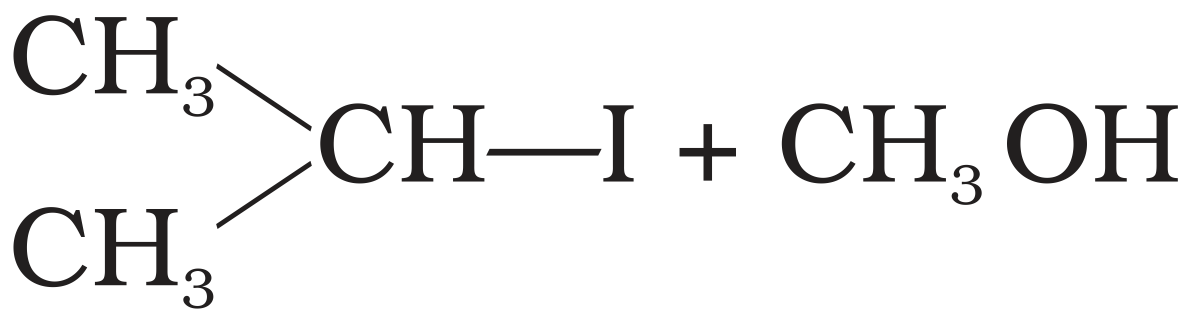
Match the starting materials given in Column $I$ with the products formed by these $($Column $II)$ in the reaction with $II.$
 
Column $I$
 
Column $II$
$(i)$ $CH_3-o-CH_3$ $(a)$
$(ii)$
$(b)$
$\ \ \ \ \ \ \ \ \ \ \ \ \ \text{CH}_3 \\ \ \ \ \ \ \ \ \ \ \ \ \ \ \ | \\ \text{CH}_3-\text{C}-\text{I}+\text{CH}_3\text{OH} \\ \ \ \ \ \ \ \ \ \ \ \ \ \ \ | \\ \ \ \ \ \ \ \ \ \ \ \ \ \ \text{CH}_3$
$(iii)$
$\ \ \ \ \ \ \ \ \ \ \ \ \ \text{CH}_3 \\ \ \ \ \ \ \ \ \ \ \ \ \ \ \ | \\ \text{H}_3\text{C}-\text{C}-\text{O}-\text{CH}_3 \\ \ \ \ \ \ \ \ \ \ \ \ \ \ \ | \\ \ \ \ \ \ \ \ \ \ \ \ \ \ \text{CH}_3$
$(c)$
$(iv)$
$(d)$ $CH_3-OH + CH_3-I$
 
 
$(e)$
 
 
$(f)$
 
 
$(g)$
$\ \ \ \ \ \ \ \ \ \ \ \ \ \text{CH}_3 \\ \ \ \ \ \ \ \ \ \ \ \ \ \ \ | \\ \text{CH}_3-\text{C}-\text{OH}+\text{CH}_3\text{I} \\ \ \ \ \ \ \ \ \ \ \ \ \ \ \ | \\ \ \ \ \ \ \ \ \ \ \ \ \ \ \text{CH}_3$
A $1.00$ molal aqueous solution of trichloroacetic acid $(CCl_3COOH)$ is heated to its boiling point. The solution has the boiling point of $100.18 ^\circ C$. Determine the van't Hoff factor for trichloroacetic acid. $(K_b for water = 0.512 K \ kg \ mol^{–1}).$
Propose the mechanism for the following reaction:
$\text{CH}_3\text{CHO}\ \ +\ \ \text{HCN}\xrightarrow{\ \ \text{a}+ }\ \ \text{CH}_3-\text{CH}-\text{CN}\\ \ \ \ \ \ \ \ \ \ \ \ \ \ \ \ \ \ \ \ \ \ \ \ \ \ \ \ \ \ \ \ \ \ \ \ \ \ \ \ \ \ \ \ \ \ \ \ \ \ \ \ \ \ \ \ \ \ \ | \\ \ \ \ \ \ \ \ \ \ \ \ \ \ \ \ \ \ \ \ \ \ \ \ \ \ \ \ \ \ \ \ \ \ \ \ \ \ \ \ \ \ \ \ \ \ \ \ \ \ \ \ \ \ \ \ \ \ \ \text{OH}$
Preparation of alcohols from alkenes involves the electrophilic attack on alkene carbon atom. Explain its mechanism.
Boiling point of ethanol is higher in comparison to methoxymethane.
o-nitrophenol is more acidic than $o-$methoxyphenol.