Corpus luteum in pregnancy has a long life. However, if fertilisation does not take place, it remains active only for 10-12 days. Explain.
Download our app for free and get started
Corpus luteum secretes progesterone which is essential for maintaining the endometrium. This essential for proper development of the foetus. Hence, corpus luteum has a long life during pregnancy. On the other hand, in the absence of fertilization; there is no work for corpus luteum and hence it remains active only for 10-12 days.

Download our appand get started for free
Experience the future of education. Simply download our apps or reach out to us for more information. Let's shape the future of learning together!No signup needed.*
Similar Questions
- 1View SolutionStudy the figure given below and answer the questions that follow:
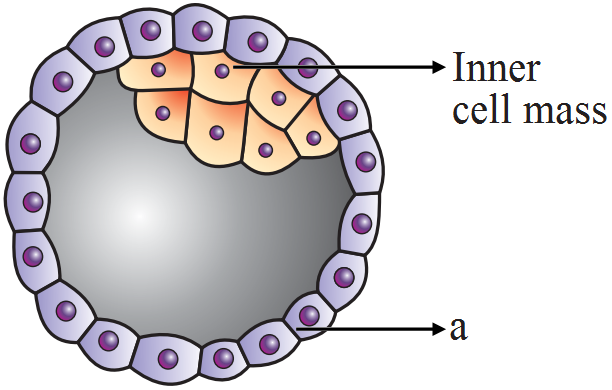
Identify ‘a’ in the figure and mention its function. - 2View SolutionDraw a diagram of a human sperm. Label only those parts along with their functions, that assist the sperm to reach and gain entry into the female gamete.
- 3View SolutionWhat function do fallopian tubes perform?
- 4View SolutionDescribe the process of parturition in humans.
- 5View SolutionWhy is parturition called a neuro-endocrine mechanism? Explain.
- 6View SolutionStudy the figure given below and answer the questions that follow:
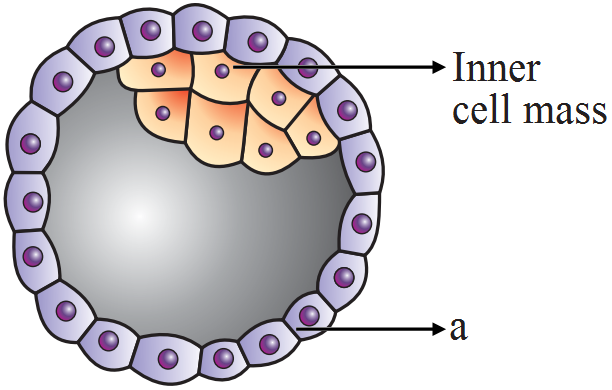
Where are the stem cells located in this embryo? - 7View SolutionMention the sites of action of the hormones GnRH and FSH during spermatogenesis in human males. Give one function of each of the hormones.
- 8View SolutionMention the relationship between concentration of luteinising hormone and maintenance of endometrium in the human uterus.
- 9View SolutionWhy is breast-feeding recommended during the initial period of an infant’s growth? Give reasons.
- 10View SolutionDuring reproduction, the chromosome number (2n) reduces to half (n) in the gametes and again the original number (2n) is restored in the offspring, What are the processes through which these events take place?