MCQ
Correct products of reaction are ?
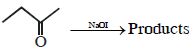
  • A
    $CHCl_3$
  • B
    $\begin{array}{*{20}{c}}
    {\,\,\,\,\,\,\,\,\,\,\,\,\,\,\,\,O\,\,\,}\\
    {\,\,\,\,\,\,\,\,\,\,\,\,\,||}\\
    {C{H_3}C{H_2} - C - OH}
    \end{array}$
  • $\begin{array}{*{20}{c}}
    {\,\,\,\,\,\,\,\,\,\,\,\,\,\,\,\,O\,\,\,\,\,\,\,\,\,\,\,\,}\\
    {\,\,\,\,\,\,\,\,\,\,\,\,\,||\,\,\,\,\,\,\,\,\,}\\
    {C{H_3}C{H_2} - C - {O^ - }N{a^ + }}
    \end{array}$
  • D
    $A$ and $C$ both

Answer

Correct option: C.
$\begin{array}{*{20}{c}}
{\,\,\,\,\,\,\,\,\,\,\,\,\,\,\,\,O\,\,\,\,\,\,\,\,\,\,\,\,}\\
{\,\,\,\,\,\,\,\,\,\,\,\,\,||\,\,\,\,\,\,\,\,\,}\\
{C{H_3}C{H_2} - C - {O^ - }N{a^ + }}
\end{array}$
c

Need a full question paper?

Generate a complete, print-ready paper with questions like this in minutes — across 16+ boards, with answer keys.

Start Generating Free

Similar questions

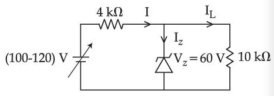
In the circuit shown below, maximum zener diode current will be $.....mA$
A series $LCR$ circuit containing a resistance of $120\, ohm$ has angular resonance frequency $4 \times 10^3 rad \, s^{-1}.$ At resonance, the voltage across resistance and inductance are $60\,V$ and $40\,V$ respectively. The values of $L$ and $C$ are respectively
A slab consists of two parallel layers of copper and brass of the same thickness and having thermal conductivities in the ratio $1 : 4$ . If the free face of brass is at ${100^o}C$ and that of copper at $0^\circ C $, the temperature of interface is ........ $^oC$
Pure sodium $(Na)$ is a good conductor of electricity because the $3s$ and $3p$ atomic bands overlap to form a partially filled conduction band. By contrast the ionic sodium chloride $(NaCl)$ crystal is
In the resonance tube experiment, first resonant length is $l_1$ and second  resonant length is $l_2$ then the third resonant length will be
An infinitely long rod lies along the axis of a concave mirror of focal length $f$. The near end of the rod is at a distance $u >f$ from the mirror. Its image will have a length 
In Young’s double-slit experiment, an interference pattern is obtained on a screen by a light of wavelength $6000 Å$, coming from the coherent sources $S_1$ and $S_2$. At certain point $ P $ on the screen third dark fringe is formed. Then the path difference $S_1P$ -$S_2P$ in microns is
A force of $- P \hat{k}$ acts on the origin of the coordinate system. The torque about the point $(2,-3)$ is $P(a \hat{i}+b \hat{j})$, the ratio of $\frac{a}{b}$ is $\frac{x}{2}$. The value of $x$ is
A gas is enclosed in a cylinder with a movable frictionless piston. Its initikl thermodynamic state at pressure $P_i=10^5 \mathrm{~Pa}$ and volume $V_i=10^{-3} \mathrm{~m}^3$ chanıes to i final state at $P_f=(1 / 32) \times 10^5 \mathrm{~Pa}$ and $V_f=8 \times 10^{-3} \mathrm{~m}^3$ in an adiabatic quasi-static process, such that $P^3 V^5=$ constant. Consider another thermodynamic process that brings the system from the same initial state to the same final state in two steps: an isobaric expansion at $P$, followed by an isochoric (isovolumetric) process at volume $V_f$. The amount of heat supplied to the system in the two-step process is approximately
The sum of two forces $\overrightarrow{\mathrm{P}}$ and $\overrightarrow{\mathrm{Q}}$ is $\overrightarrow{\mathrm{R}}$ such that $|\overrightarrow{\mathrm{R}}|=|\overrightarrow{\mathrm{P}}| .$ The angle $\theta$ (in degrees) that the resultant of $2 \overrightarrow{\mathrm{P}}$ and $\overrightarrow{\mathrm{Q}}$ will make with $\overrightarrow{\mathrm{Q}}$ is