MCQ
Curie temperature is the temperature above which:
  • A
    Paramagnetic material becomes ferromagnetic material.
  • B
    Ferromagnetic material becomes diamgnetic material.
  • C
    Ferromagnetic material becomes paramagnetic material.
  • D
    Paramagnetic material becomes diamagnetic material.
Answer

  1. Ferromagnetic material becomes paramagnetic material.

Explanation:

The Curie temperature(TC​) is the temperature at which certain materials lose their permanent magnetic properties, to be replaced by induced magnetism, that is, they go from becoming ferromagnetic to paramagnetic.

Above curie temperature, ferromagnetic material behaves as paramegnetic material.

Need a full question paper?

Generate a complete, print-ready paper with questions like this in minutes — across 16+ boards, with answer keys.

Start Generating Free

Similar questions

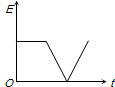
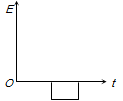
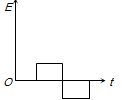
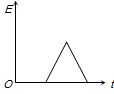
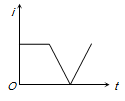
The current i in an induction coil varies with time t according to the graph shown

in figure. Which of the following graphs shows the induced emf (e) in the coil with time

(a)

(b)

(c)

(d)

Which of the following quantities remain constant in a planetary motion (consider elliptical orbits) as seen from the sun?
  1. Speed.
  2. Angular speed.
  3. Kinetic Energy.
  4. Angular momentum.

The Rutherford a-particle experiment shows that most of the a-particles pass through almost unscattered while some are scattered through large angles. What information does it give about the structure of the atom

(a) Atom is hollow

(b) The whole mass of the atom is concentrated in a small centre called nucleus

(c) Nucleus is positively charged

(d) All the above

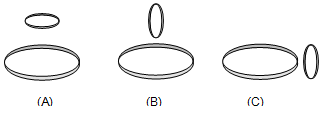
Two circular coils can be arranged in any of the three situations shown in the figure. Their mutual inductance will be

(a) Maximum in situation (A)

(b) Maximum in situation (B)

(c) Maximum in situation (C)

(d) The same in all situations

Fission of nuclei is possible because the binding energy per nucleon in them

(a) Increases with mass number at high mass numbers

(b) Decreases with mass number at high mass numbers

(c) Increases with mass number at low mass numbers

(d) Decreases with mass number at low mass numbers

Magnetic lines of force:
A short bar magnet placed with its axis at $30^{\circ}$ with a uniform external magnetic field of $0,25 T$, experiences a torque of magnitude $4.5 \times 10^{-2} J$. The magnitude of the magnetic moment of the magnet will be ___________ $J ^{-1}$.
In an a.c. generator the speed at which the coil rotates is doubled. How would this affect the frequency of output voltage?
How will  the force between the two poles change if the two poles are connected by an iron rod keeping the distance between two magnetic poles constant ?

Using a bar magnet P, a vibration magnetometer has time  period 2seconds. When a bar Q (identical to P in mass and size) is placed on top of P, the time period is unchanged. Which of the following statements is true

(a) Q is of non-magnetic material

(b) Q is a bar magnet identical to P, and its north pole placed on top of P's north pole

(c) Q is of unmagnetized ferromagnetic material

(d) Nothing can be said about Q's properties