Question
Define a computerised accounting system. Distinguish between a manual and computerised accounting system.

Answer

computerised accounting system: A computerised accounting system is that accounting information system that helps in processing the financial transactions and event as per the Grenerally Accepted Accounting principles (GAAP) and leads to the generation of reports as per the requirements of the users.
  Basis of Distinction Manual Accounting Compurised Accounting
1. Identifying financial transactions In this system, identification of in financial transactions is done manually by applying the principles of accounting. In this system also identification of financial transaction is done manually byapplying the principles of accounting.
2. Recording In this system, the recording of transactions in the books of original entryand related calculations such as adding subtraction and totalling are done manually. In this system,the recording of transaction i.e., storing of data in database is done manually and all other calculations are done by computers.
3. Classification In this system, classification i.e. posting to ledger accounts and the preparation of trial balance is done manually. In this, the stored data are processed automatically by the software to give us ledger accounts.
4. Summarising In this system, summarising i.e., balancing of ledger accounts and the prepration of trial balance is done manually. In this, transactions once recorded are stored in the database which will produce trial balance automatically.
5. Adjustment Entries The identification. recording and posting of adjustment entries is done manually. In the identification and recording of adjustment entries is done manually and thier posting etc. is done by software.

Need a full question paper?

Generate a complete, print-ready paper with questions like this in minutes — across 16+ boards, with answer keys.
Start Generating Free

Similar questions

Explain the main parts of Computer system with the help of a diagram.
On 1st April, 2016, Shivam Enterprise purchased a second-hand machinery for ₹ 52,000 and spent ₹ 2,000 on cartage, ₹ 3,000 on unloading, ₹ 2,000 on installation and ₹ 1,000 as brokerage of the middle man. It was estimated that the machinery will have a scrap value of ₹ 6,000 at the end of its useful life, which is 10 years. On 31st December 2016, repairs and renewals amounted to ₹ 2,500 were paid. On 1st October, 2018, this machine was sold for ₹ 30,600 and an amount of ₹ 600 was paid as commission to an agent. Calculate the amount of annual depreciation and rate of depreciation. Also prepare the Machinery Account for first 3 years, assuming that firm follows financial year for accounting.
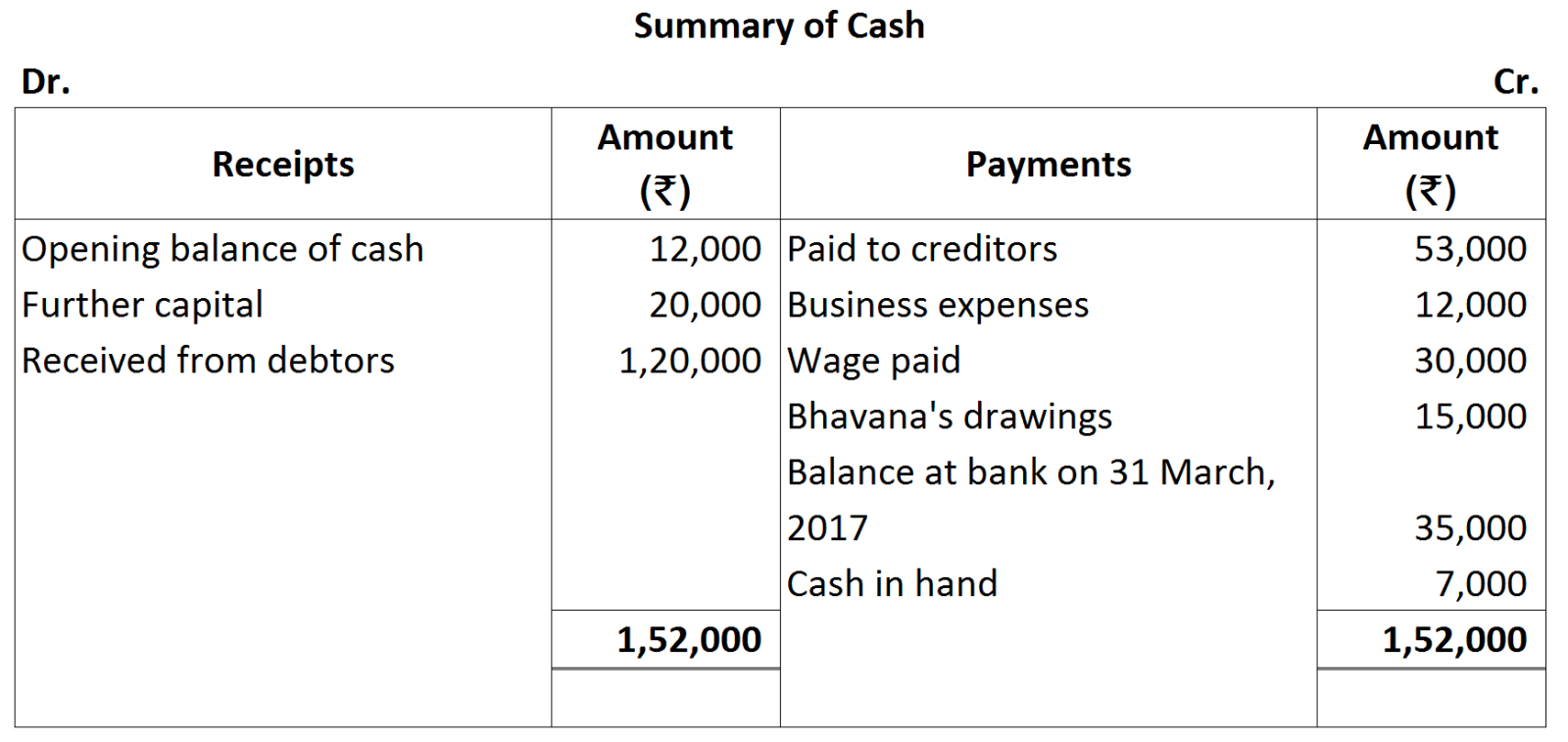
Mrs. Bhavana keeps his books by Single Entry System. You’re required to prepare final accounts of her business for the year ended March 31, 2017. Her records relating to cash receipts and cash payments for the above period showed the following particulars:

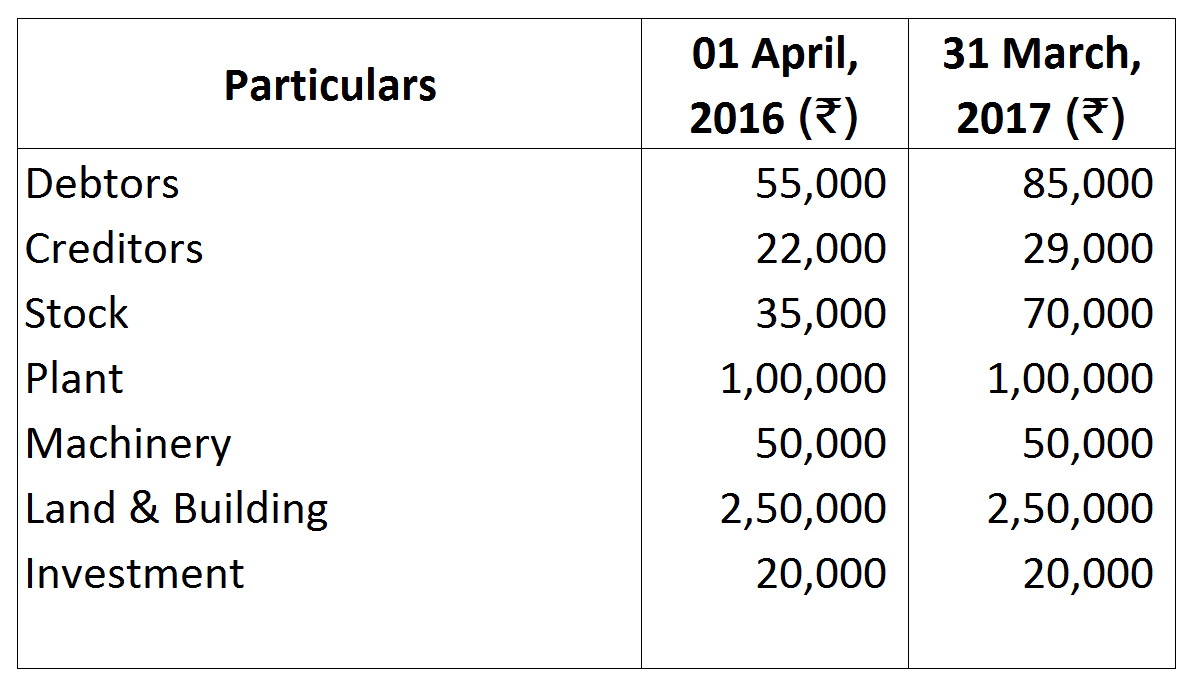
The following information is also available:

All her sales and purchases were on credit. Provide depreciation on plant and building by 10% and machinery by 5%, make a provision for bad debts by 5%.
Following is the Trial Balance as on 31st March 2016. Prepare Trading and Profit and Loss Account and Balance Sheet:

Additional Information:
  1. Stock on 31st March 2016 is ₹ 20,600.
  2. Depreciate machinery @ 10% p.a.
  3. Make a Provision @ 5% for Doubtful Debts.
  4. Provide $2\frac{1}{2}\%$ for discount on sundry debtors.
  5. Rent and Rates include security deposit of ₹ 400.
  6. Insurance prepaid ₹ 120.
On checking the Bank Pass Book it was found that it showed an overdraft of ₹ 5,220 as on 31st March, 2019, while as per Ledger it was different. The following differences were noted:
  1. Cheques deposited but not yet credited by the bank ₹ 6,000.
  2. Cheques dishonoured and debited by the bank but not given effect to it in the Ledger ₹ 800.
  3. Bank charges debited by the bank but Debit Memo not received from the bank ₹ 50.
  4. Interest on overdraft excess credited in the Ledger ₹ 200.
  5. Wrongly credited by the bank to account, deposit of some other party ₹ 900.
  6. Cheques issued but not presented for payment ₹ 400.
Raghuveer keeps incomplete records. His position was as follows:

During the year, Raghuveer introduced ₹ $50,000$ as further capital in the business and withdrew ₹ $7,500$ per month. From the above information, show Profit or Loss for the year ended $31^{st}$​​​​​​​ March,$ 2017:$
Redraft correctly the Trial Balance given below:
From the following balances extracted from the books of Raga Ltd. prepare a trading and profit and loss account for the year ended March 31, 2017 and a balance sheet as on that date.

​​​​​​The additional information is as under :
  1. Closing stock was valued at the end of the year ₹ 20,000.
  2. Depreciation on plant and machinery charged at 5% and land and building at 10%.
  3. Discount on debtors at 3%.
  4. Make a provision at 5% on debtors for doubtful debts.
  5. Salary outstanding was ₹100 and Wages prepaid was ₹ 40.
  6. The manager is entitled a commission of 5% on net profit after charging such commission
From the following information supplied by Sanjay, prepare his Bank Reconciliation Statement as on 31st March, 2019:
   
(i) Bank overdraft as per Pass Book. 16,500
(ii) Cheques issued but not presented for payment. 8,750
(iii) Cheques deposited with the Bank but not collected. 10,500
(iv) Cheques recorded in the Cash Book but not sent to the bank for collection. 2,000
(v) Payments received from customers directly by the bank. 3,500
(vi) Bank charges debited in the Pass Book. 200
(vii) Premium on life policy of Sanjay paid by the bank on standing advice. 1,980
(viii) A bill for ₹ 3,000 (discounted with the bank in February) dishonoured on 31st March, 2019 and noting charges paid by the bank. 100
X who keeps incomplete records gives you the following information:
ASSETS AND LIABILITIES
 1st April, 2022 (₹)31st March, 2023 (₹)
Stock in hand18,70020,400
Debtors12,00014,000
Creditors9,0001,500
Bills Receivable4,0005,000
Bills Payable1,000200
Furniture600600
Building12,00012,000
Bank Balance4,3503,350 (Overdraft)
  You are also given the following information:
i. A provision of ₹ 1,450 is required for bad and doubtful debts.
ii. Depreciation @ $5 \%$ is to be written off on Building and furniture.
iii. Wages outstanding ₹ 3,000 ; salaries outstanding ₹ 1,200 .
iv. Insurance has been prepaid to the extent of ₹ 250 .
v. Legal Expenses outstanding ₹ 700 .
vi. Drawings of Mr. X during the year were ₹ 7,520 .
Prepare a statement of Profit as on 31st March, 2023, and a final statement of affairs as at that date.