Question
Define connective tissue. Write down functions of connective tissue.

Answer

Connective tissues are most abundant and widely distributed in the body of complex animals. The cells of connective tissue are loosely spaced and embedded in an inercellular matrix. The matrix may be jelly like, fluid, dense or rigid.Functions of connective tissue:
  1. It binds different structure with another like skin with muscles and muscles with bones, etc.
  2. It forms a supporting framework of cartilage and bones in the body.
  3. Blood flows and transports gases, digested food, hormones and waste materials to different parts of the body.
  4. Adipose tissue helps in the storage of fats.

Need a full question paper?

Generate a complete, print-ready paper with questions like this in minutes — across 16+ boards, with answer keys.
Start Generating Free

Similar questions

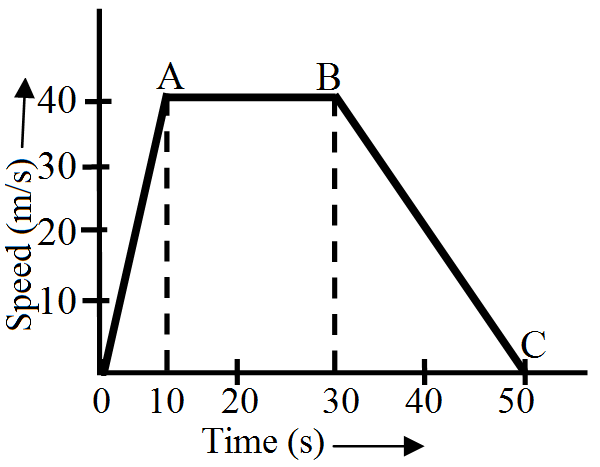
Study the speed-time graph of a car given alongside and answer the following questions:
  1. What type of motion is represented by $OA?$
  2. What type of motion is represented by $AB?$
  3. What type of motion is represented by $BC?$
  4. What is the acceleration of car from $O$ to $A?$
  5. What is the acceleration of car from $A$ to $B?$
  6. What is the retardation of car from $B$ to $C?$
A liquid compound $X$ of molecular mass $18u$ can be obtained from a number of natural sources. All the animals and plants need liquid $X$ for their survival. When an electric current is passed through $200$ grams of pure liquid $X$ under suitable conditions, then $178$ grams of gas $Y$ and $22$ grams of gas $Z$ are produced. Gas $Y$ is produced at the positive electrode whereas gas $Z$ is obtained at the negative electrode. Moreover, gas $Y$ supports combustion whereas gas $Z$ burns itself causing explosions.
  1. Name $(i)$ liquid $X$ $(ii)$ gas $Y$, and $(iii)$ gas $Z$
  2. What is the ratio to the mass of element $Z$ to the mass of element $Y$ in the liquid $X$?
  3. Which law of chemical combination is illustrated by this example?
  4. Name two sources of liquid $X$.
  5. Gate an important use of $Y$ in our life.
The electronic configuration of an element $Z$ is $2, 8, 8$.
  1. What is the atomic number of the element?
  2. State whether element $Z$ is a metal or a non-metal.
  3. What type of ion (if any) will be formed by an atom of element $Z$? Why?
  4. What is special about the outermost electron shell or the atom of this element?
  5. Give the name and symbol of element $Z$.
  6. Name the group of elements to which $Z$ belongs.
Write main differences between plant and animal cells.
Describe structure of a chromosome.
  1. Draw a neat diagram of Hydra.
  2. Label mesoglea and gastrovascular cavity.
  3. Name the group of animals it belongs to.
  4. Name one species of this group that lives in colonies.
What are the symptoms and causes of malaria$?$ How can it be prevented and controlled$?$
The following data was obtained for a body of mass $1\ kg$ dropped from a height of $5$ metres:
 
Distance above ground
Velocity
$i.$
$5m$
$0m/s$
$ii.$
$3.2m$
$6m/s$
$iii.$
$0m$
$10m/s$
Show by calculations that the above data verifies the law of conservation of energy (Neglect air resistance). $(g = 10m/s^2)$.
A stone is dropped from a $100 m$ high tower. How long does it take to fall?
$a.$ the first $50 m$ and
$b.$ the second $50 m .$
There are four substances $W, X, Y$ and $Z.$ The substance $W$ is a dark violet solid having diatomic molecules. A solution of $W$ in alcohol is used as a common antiseptic $C.$ The substance $X$ is a white solid which is usually recovered from sea water on a large scale. The substance $Y$ is a white solid which is insoluble in water and used in the form of small balls for the safe storage of woollen clothes. The substance $Z$ is a yet another white solid which is used in making commonly used dry cells.
  1. Name $(i) W (ii) X (iii) Y$ and $(iv) Z.$
  2. Out of $W, X, Y$ and $Z,$ which substance/ substances can undergo sublimation$?$
  3. Which substances organic in nature$?$
  4. What is the name of substance $C?$
  5. Which substance belongs to the halogen family$?$