Question
Write main differences between plant and animal cells.

Answer

 
Animal Cell
 
Plant Cell
$1.$
Animal cells are generally small in size.
$1.$
Plant cells are larger than animal cells.
$2$.
Cell wall is absent.
$2.$
The plasma membrane of plant cell is surrounded by a rigid cell wall made up of cellulose.
$3.$
Animal cells have a single highly complex and prominent Golgi apparatus.
$3.$
Plant cells have many simpler units of Golgi apparatus, called dictyosomes.
$4.$
Animals cells have centrosome and centrioles.
$4.$
Plant cells lack centrosome and centrioles.

Need a full question paper?

Generate a complete, print-ready paper with questions like this in minutes — across 16+ boards, with answer keys.

Start Generating Free

Similar questions

Match the following column with correct answers.
  Column I   Column II
$a.$ Fungal disease $i.$ Dengue fever
$b.$ Viral disease $ii.$ Cholera
$c.$ Protozoan disease $iii.$ Skin disease
$d.$ Bacterial disease $iv.$ Malaria
Describe an experiment to show that sound cannot pass through vacuum.
What are the advantages of classifying organisms?
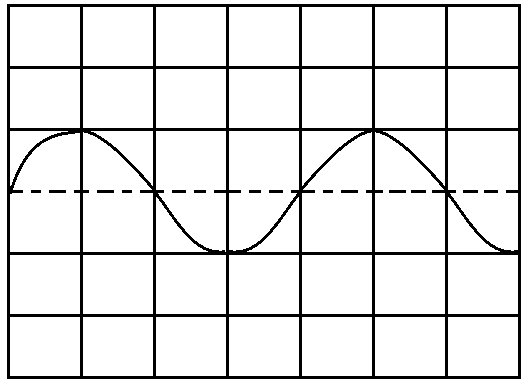
Figure $X$ showa a trace of a sound wave produced by a particular tuning fork:


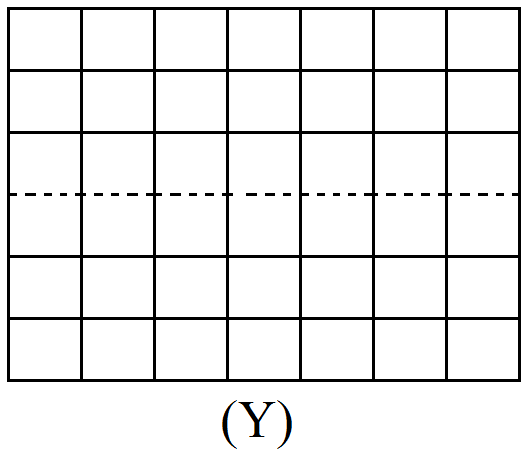
  1. On the graph paper given in Figure $Y,$ draw a trace of the sound wave which has higher frequency than that shown in Figure $X.$
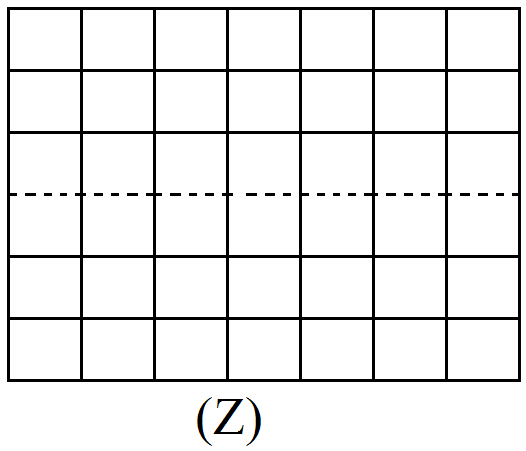
  2. On the graph paper shoen in Figure $Z,$ draw a trace of the sound wave which has a larger amplitude than that shown in Figure $X.$
Explain the general characters of phylum Mollusca. Give one exarnple of following classes of Mollusca; (i) Gastropoda; (ii) Pelecpoda; (iii) Cephalopoda.
One of the forms of a naturally occurring solid compound $P$ is usually used for making the floors of houses. On adding a few drops of dilute hydrochloric acid to $P,$ brisk effervescence are produced. When $50g$ of reactant $P$ was heated strongly, than $22g$ of a gas $Q$ and $28g$ of a solid $R$ were produced as products. Gas $Q$ is the same which produced brisk effervescence on adding dilute $HCl$ to $P.$ Gas $Q$ is said to cause global warming whereas solid $R$ is used for white-washing.
  1. What is $(i)$ solid $P (ii) $ gas $Q, $ and $(iii)$ solid $R.$
  2. What is the total mass of $Q$ and $R$ obtained from $50g$ of $P?$
  3. How does the total mass of $Q$ and $R$ formed compare with the mass of $P$ taken$?$
  4. What conclusion do you get from the comparison of masses of products and reactant$?$
  5. Which law of chemical combination is illustrated by the example given in this problem$?$
You are given a mixture of water, groundnut oil and common salt. How will you separate groundnut oil and common salt from it?
What are the different tissues in alimals.
Describe structure of a chromosome.
Describe the various cropping patterns.