Reproduction in organisms — BIOLOGY STD 12 Science — Question
Gujarat BoardEnglish MediumSTD 12 ScienceBIOLOGYReproduction in organisms5 Marks
Question
Define gametogenesis. How does cell division take place during gamete formation?
✓
Answer
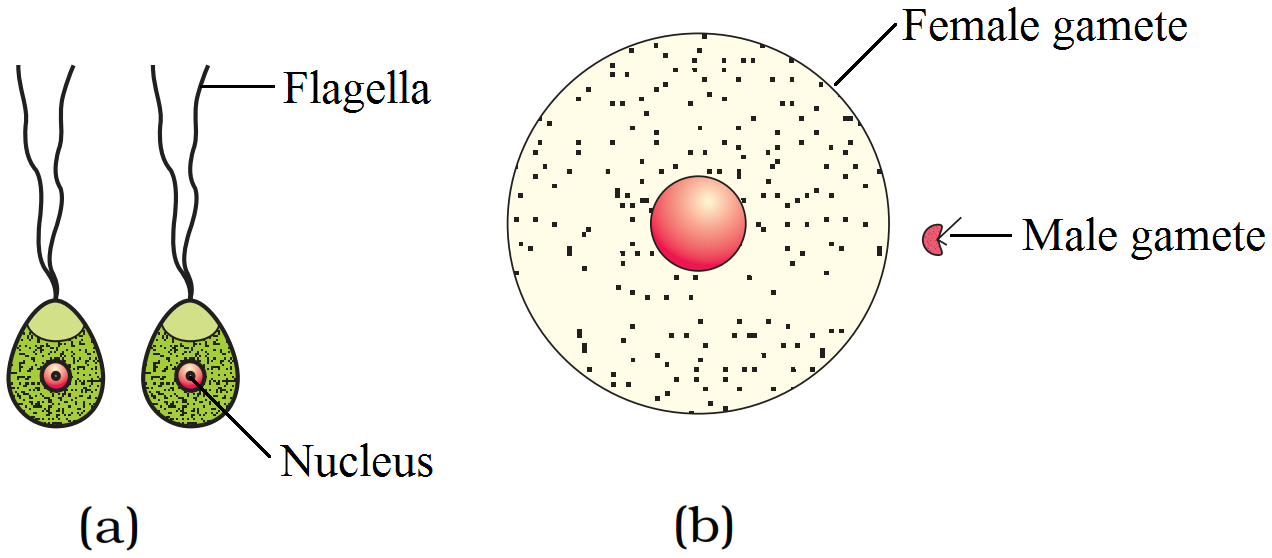
The process of formation of male and female gametes (haploid cells) is called gametogenesis. When the two gametes are similar in appearance and it is not possible to differentiate them into male and female gametes, they are called homogametes or isogametes, e.g. in some algae.
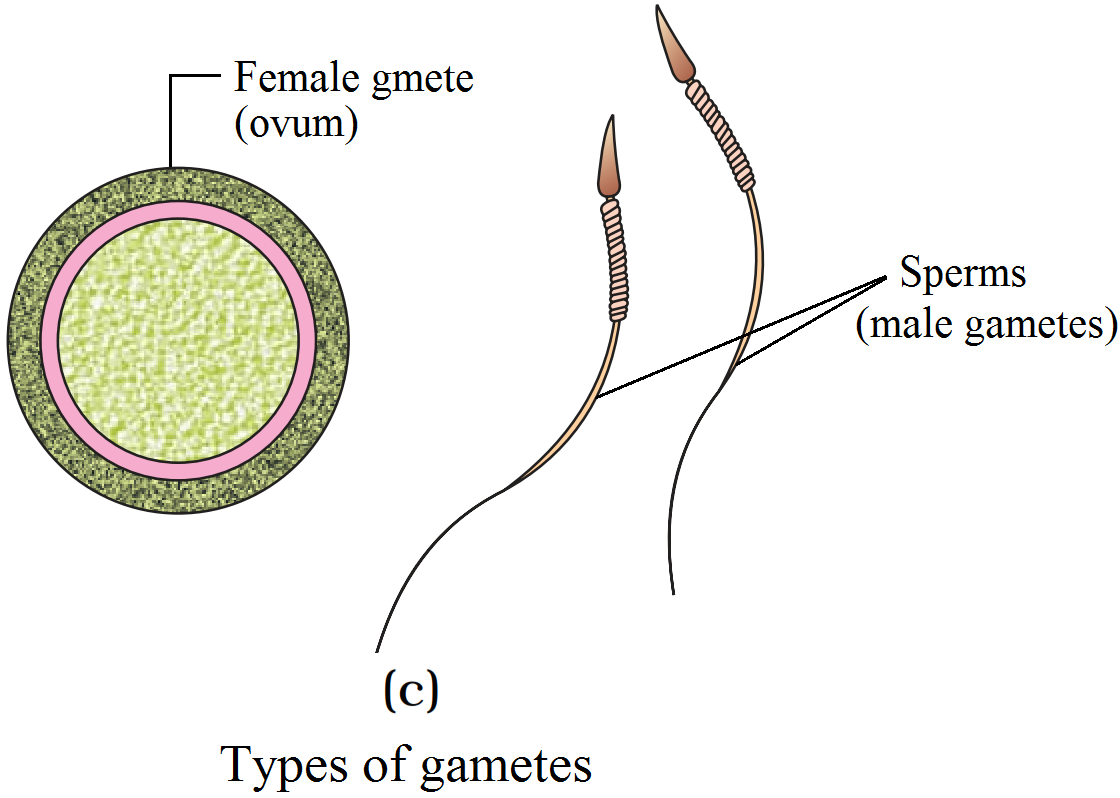
If the male and female gametes are morphologically dissimilar, they are called heterogametes. Among heterogametes, the male reproductive unit is called antherozoid or sperm and the female reproductive unit is known as egg or ovum.
Cell division during gamete formation Organisms such as monerans, fungi, algae and bryophytes have haploid parental body, they produce gametes by mitotic division whereas, organisms belonging to pteridophytes, gymnosperms, angiosperms and most of the animals including human beings have diploid parental body and gametes are thus formed by meiosis.
In such organisms, specialised cells called meiocytes (gamete mother cell) are present, which take part in the production of gametes. Types of gametes:
Isogametes of chadophora (an alga)
Heterogametes of focus (an alga)
Heterogametes of homo sapiens (human being)
At the time of gamete formation, meiocytes undergo meiotic division. As a result of meiotic division, the number of chromosomes in the daughter cells, i.e. in the gametes reduces to half and thus, from the diploid meiocytes, haploid gametes are formed.
Need a full question paper?
Generate a complete, print-ready paper with questions like this in minutes — across 16+ boards, with answer keys.