Question
Define Single Entry System. What are the defects of this system?

Answer

Accounting records that are not maintained according to Double Entry System are known as Accounts from Incomplete Records or Single Entry System of Accounting.
Kohler defines Single Entry System as, “A system of book keeping in which as a rule only records of cash and of personal accounts are maintained, it is always incomplete double entry varying with the circumstances."
Single Entry System is an incomplete and insufficient system of information, hence it has the following disadvantages:
  1. Arithmetical Accuracy cannot be Proved: Trial Balance cannot be prepared hence, arithmetical accuracy of books cannot be proved or tested. Chances of error, mischief or fraud remaining undetected are high.
  2. No Control on Assets: Since assets accounts are not maintained, it is difficult to keep full control, in order to avoid misappropriations of assets.
  3. Correct Profit or Loss cannot be Determined: Trading and Profit and Loss Account cannot be prepared hence, correct profit earned or loss incurred during the accounting period cannot be determined.
  4. Financial Position of the Business cannot be Assessed: In the absence of assets accounts, it is difficult to determine correct financial position of the business on any particular day by preparing a Balance Sheet.
  5. No Internal Check: Since internal check is not possible, the method leaves room for errors and frauds, besides their detection becomes difficult.
  6. Difficult to Ascertain the Value of Business: The records being inadequate, it is difficult to value the business, especially goodwill.
  7. Incomplete and Unscientific System: This system is incomplete and unscientific as both the aspects of a transaction are not recorded and no set rules are followed for recording them.
  8. Comparative Study is Difficult: A major defect of this system is that the financial position of the current year cannot be compared with that of the previous year due to incomplete information of transactions of business.

Need a full question paper?

Generate a complete, print-ready paper with questions like this in minutes — across 16+ boards, with answer keys.

Start Generating Free

Similar questions

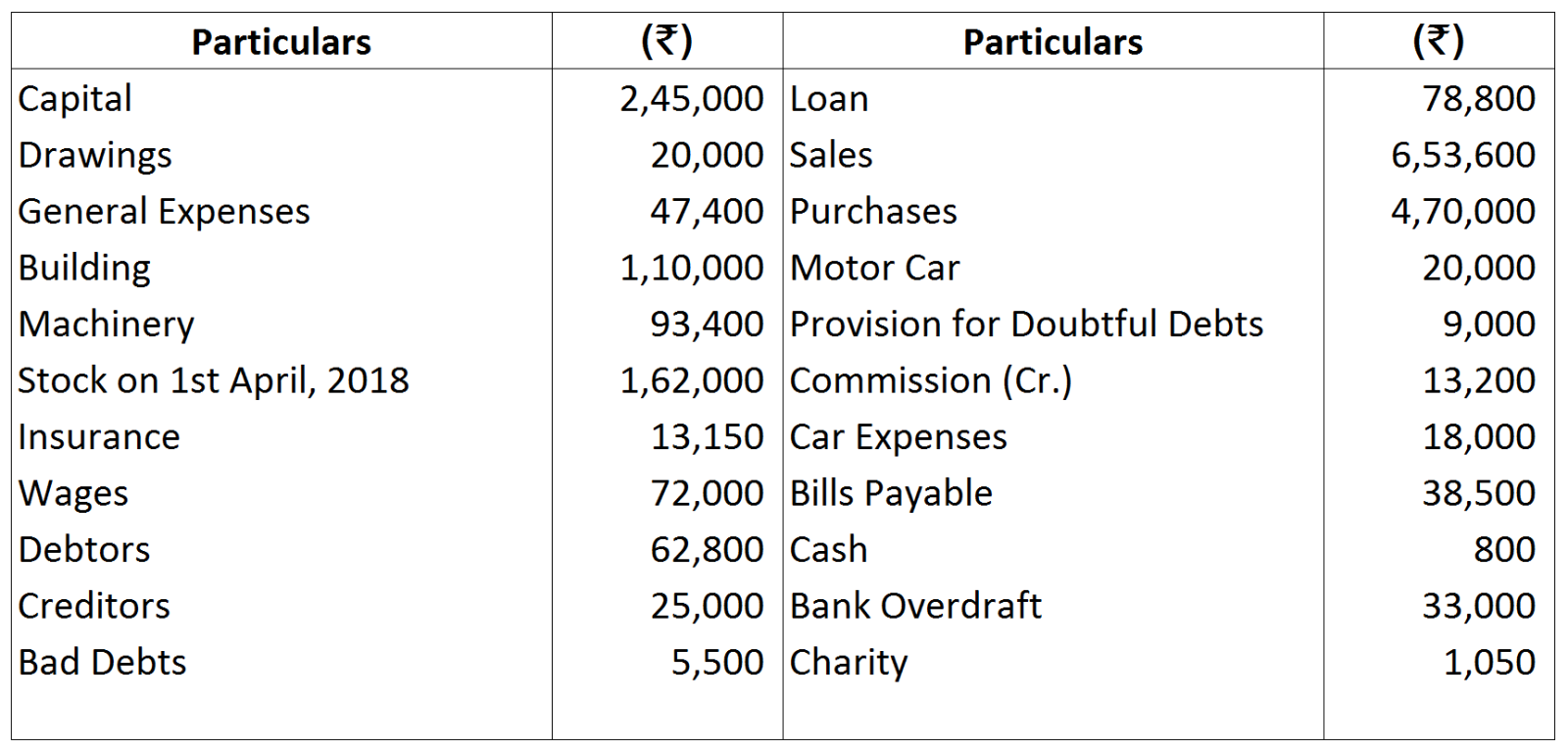
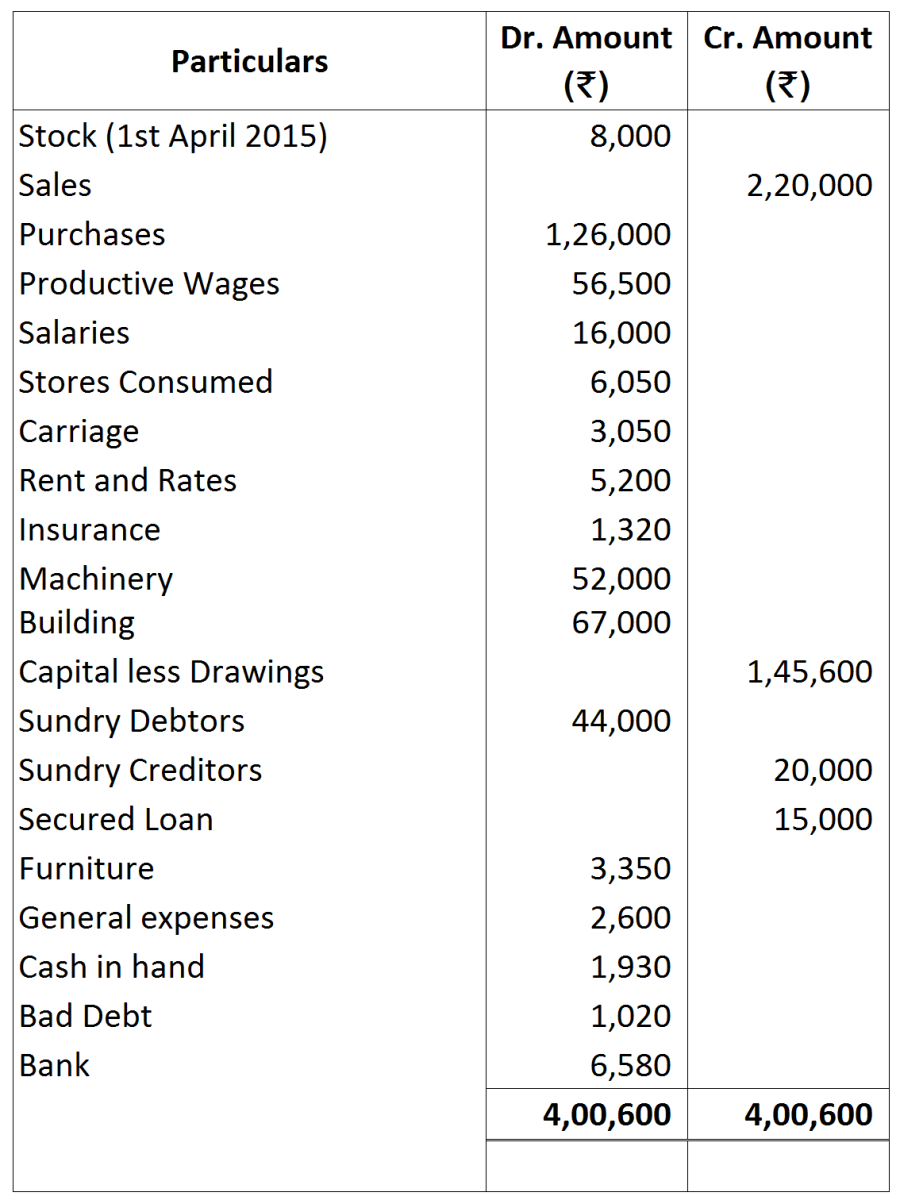
Following is the Trial Balance as on 31st March 2016. Prepare Trading and Profit and Loss Account and Balance Sheet:

Additional Information:
  1. Stock on 31st March 2016 is ₹ 20,600.
  2. Depreciate machinery @ 10% p.a.
  3. Make a Provision @ 5% for Doubtful Debts.
  4. Provide $2\frac{1}{2}\%$ for discount on sundry debtors.
  5. Rent and Rates include security deposit of ₹ 400.
  6. Insurance prepaid ₹ 120.
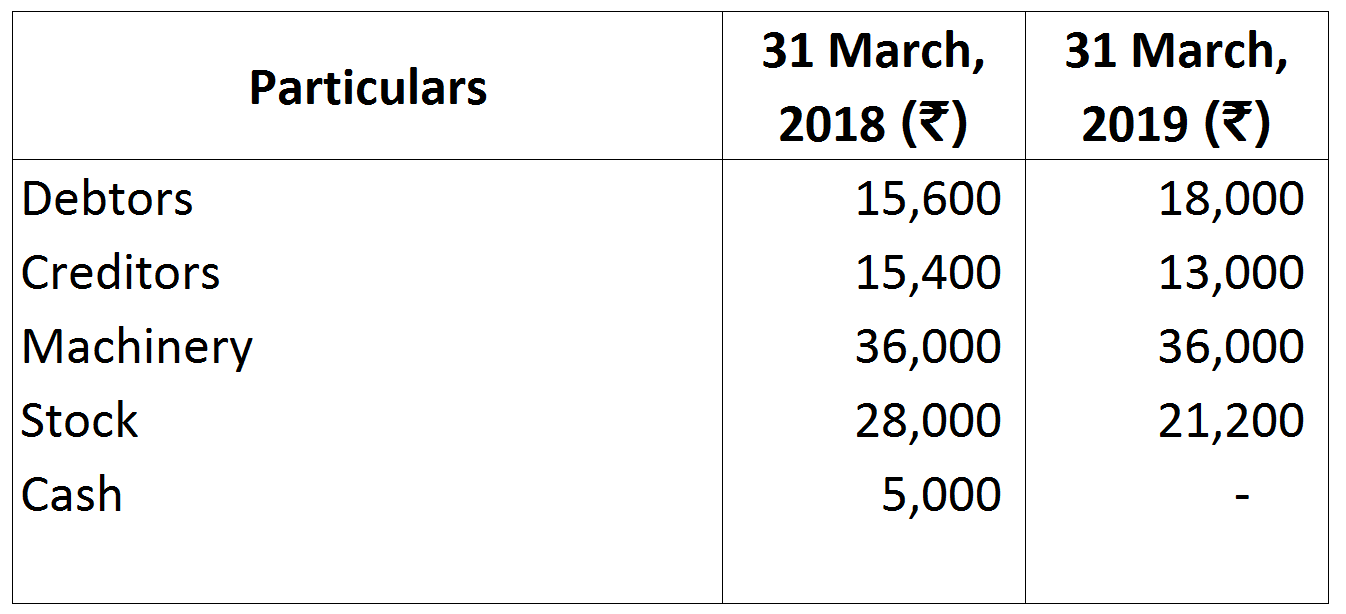
Ashok keeps incomplete records. The position of his business on $1^{st}$ April, $2016$ was as follows:
Cash in Hand $₹\ 2,200;$ Cash at Bank $₹\ 5,400;$ Stock $₹\ 25,100;$ Sundry Debtors $₹\ 18,700;$ Furniture $₹\ 6,000; $Sundry Creditors ₹\ $13,500$.
His position on $31^{st}$ March, $2017$ was as follows:
Cash in Hand $₹\ 1,500$; Cash at Bank $₹\ 8,400;$ B/R $₹\ 3,300;$ Stock $₹\ 26,000$; Sundry Debtors $₹\ 24,600;$ Furniture $₹\ 8,000;$ Sundry Creditors $₹\ 14,200.$
During the year he had withdrawn from the business $₹\ 18,000,$ of which $₹\ 9,200$ were spent in purchasing a Typewriter for the business.
  1. Depreciate furniture and typewriter by $10\%.$
  2. Write off $₹\ 600$ as Bad-Debts.
  3. Make a provision of $5\%$ on Debtors for doubtful debts.
Calculate the profit or loss of his business for the year ended $31^{st}$ March, $201$7 and prepare a final statement of affairs, after the above adjustments.
Pass the Journal entries rectifying the following errors:
  1. Purchases of ₹ 10,000 was omitted to be recorded.
  2. Purchases of office furniture of ₹ 10,000 was recorded in Purchases Book.
  3. Office Rent of ₹ 15,000 was debited to the Personal Account of the landlord.
  4. Old machine sold for ₹ 5,000 was credited to Sales Account.
  5. Bill for ₹ 800 received from Mukesh for repair of machinery was entered in the Purchases Book as ₹ 700.
Mohan commenced business on $1^{st}$ April, $2012$ with a capital of $₹\ 50,000$. On $1^{st}$ January, $2013$, he introduced $₹\ 25,000$ into business of which $₹\ 10,00$0 was borrowed from Ram. His position on $31^{st}$ March, $2013$ was as under:
Assets: Cash in hand $₹\ 4,000; $ Bank (Cr.) $₹\ 6,500;$ Debtors $₹\ 24,000;$ B/R $₹\ 18,600.$
Stock $₹\ 25,400;$ Furniture $₹\ 15,000;$ Prepaid expenses $₹\ 1,000.$
Liabilities : Creditors $₹\ 13,500;$ B/P $₹\ 4,800$; Ram's Loan $₹\ 10,000;$ Outstanding expenses $₹\ 700.$

Actual drawings were not known but his living expenses are $₹\ 1,000$ p.m. Depreciate furniture by $10\%$. Interest on loan is due $@ 12\%$ p.a.
Ascertain his profit or loss for the year $2012-13$ & prepare final statement of affairs.
Following balances were extracted from the books of Vijay on 31st March, 2019:
Stock as on 31st March, 2019 was valued at ₹ 2,30,000.Prepare Trading and Profit and Loss Account for the year ended 31st March, 2019 and Balance Sheet as at that date after giving effect to the following adjustments:
  1. Write off further ₹ 1,800 as Bad Debts and maintain the Provision for Doubtful Debts at 5%.
  2. Depreciate Machinery at 10%.
  3. Provide ₹ 7,000 as outstanding interest on loan.
List the structure of a good report created in Access.
A company whose accounting year is a financial year, purchased on 1st July, 2015 machinery costing ₹ 30,000.
It purchased further machinery on 1st January, 2016 costing ₹ 20,000 and on 1st October, 2016 costing ₹ 10,000.
On 1st April, 2017, one-third of the machinery installed on 1st July, 2015 became obsolete and was sold for ₹ 3,000.
Show how Machinery Account would appear in the books of the company. It being given that machinery was depreciated by Fixed Instalment Method at 10% p.a. What would be the value of Machinery Account on 1st April, 2018?
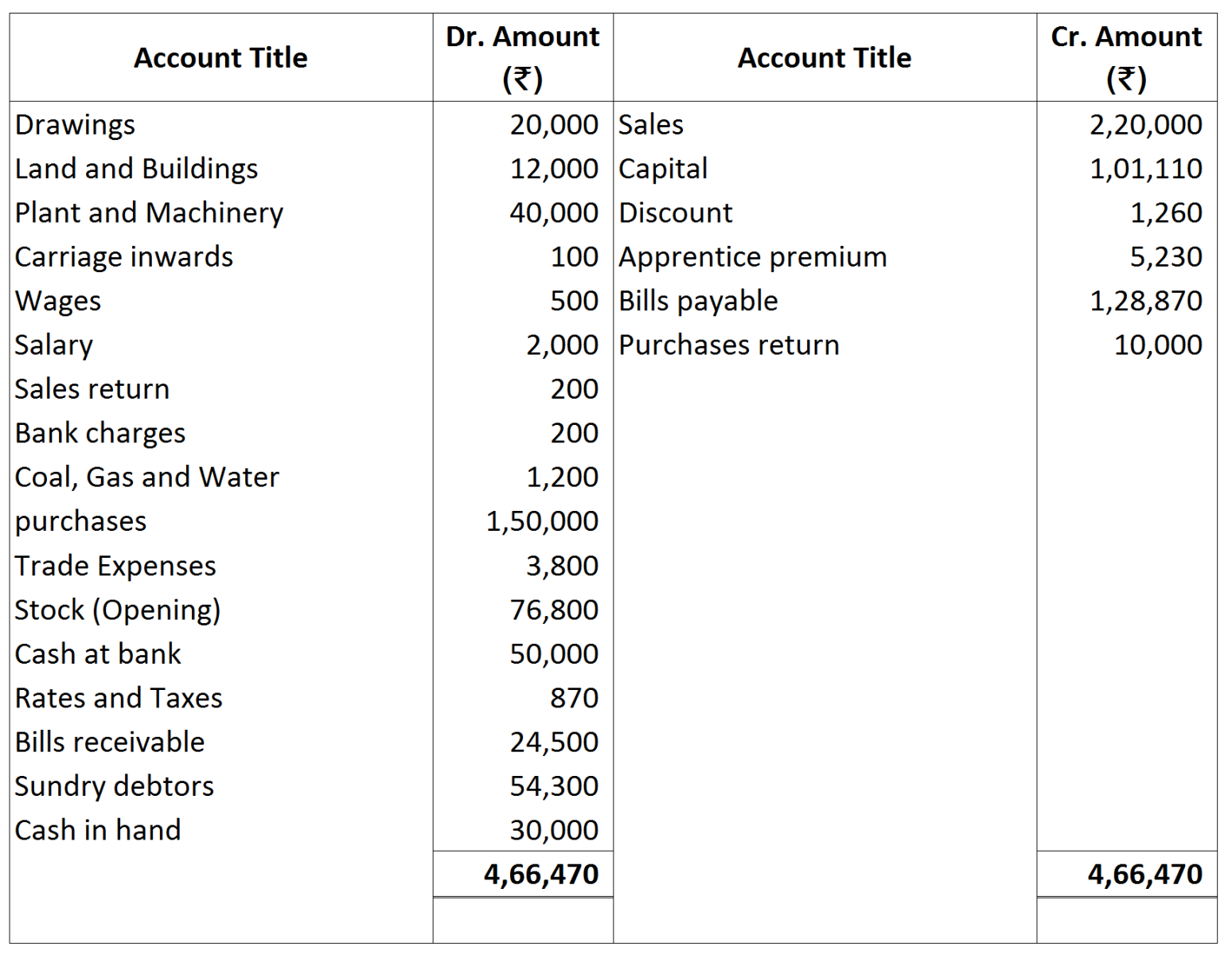
From the following balances extracted from the books of Raga Ltd. prepare a trading and profit and loss account for the year ended March 31, 2017 and a balance sheet as on that date.

​​​​​​The additional information is as under :
  1. Closing stock was valued at the end of the year ₹ 20,000.
  2. Depreciation on plant and machinery charged at 5% and land and building at 10%.
  3. Discount on debtors at 3%.
  4. Make a provision at 5% on debtors for doubtful debts.
  5. Salary outstanding was ₹100 and Wages prepaid was ₹ 40.
  6. The manager is entitled a commission of 5% on net profit after charging such commission
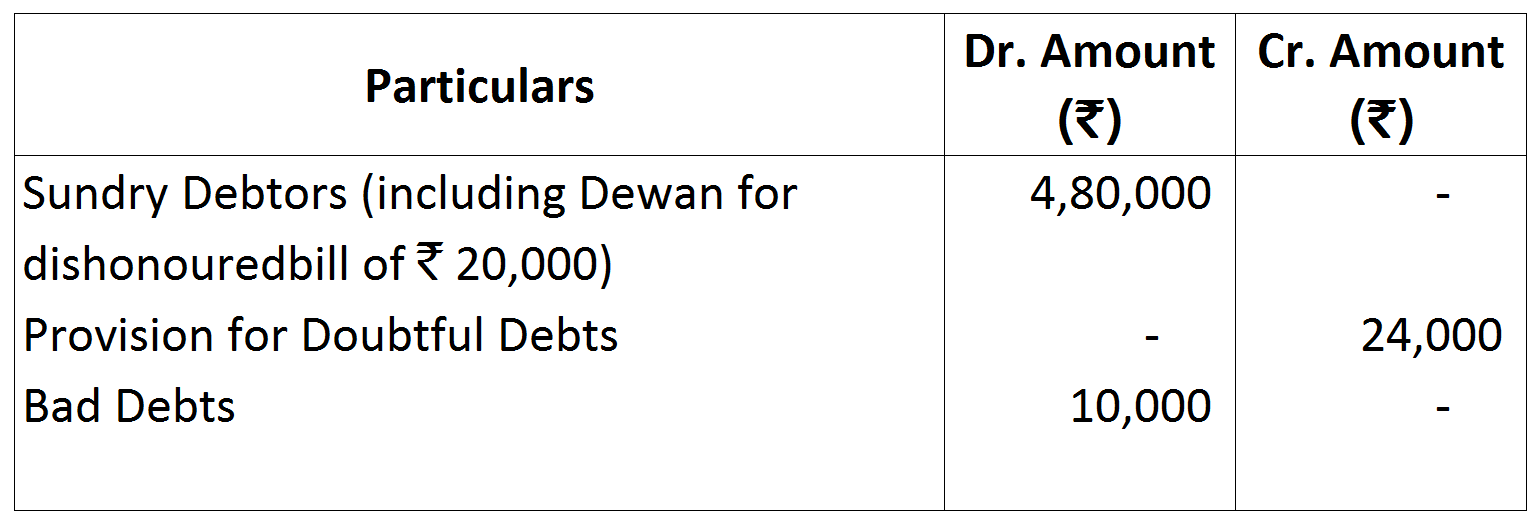
Extracts of Trial Balance as at 31st March, 2017:

Adjustments:
  1. $\frac{3}{4}\text{th}$ of Dewan's bill is irrecoverable.
  2. Create a provision of 6% on Sundry Debtors.
Show the effect on Profit and Loss Account and Balance Sheet.
Anand Mohan has kept incomplete books. From the following particulars, prepare his Final Accounts for the year ending $31^{st}$ March, $2019:$ Received from Debtors $₹\ 37,000;$ Fresh Capital brought in cash $₹\ 20,000;$ Commission Received $₹\ 2,800;$ Cash Sales $₹\ 95,000$. Paid to Creditors $₹\ 35,000$; Cash Purchases $₹\ 26,500$; Ornaments for his wife $₹\ 22,000;$ Wages $₹\ 18,800;$ Rent $₹\ 8,400;$ Salary $₹\ 12,000$. His Other Assets and Liabilities:
  1. Unpaid wages $₹\ 1,500.$
  2. Provide for Doubtful Debts at $5\%$ on Debtors.