Question
Define supply. Distinguish between "increase in supply" and "extension in supply".
| Increase in supply | Extension in supply |
| Occur due to change in factors other than price of the commodity. | Occur due to increase in the price of the commodity. |
| Shown by rightward shift in the supply curve. | Shown by upward movement along the supply curve. |
Diagrammatic representation: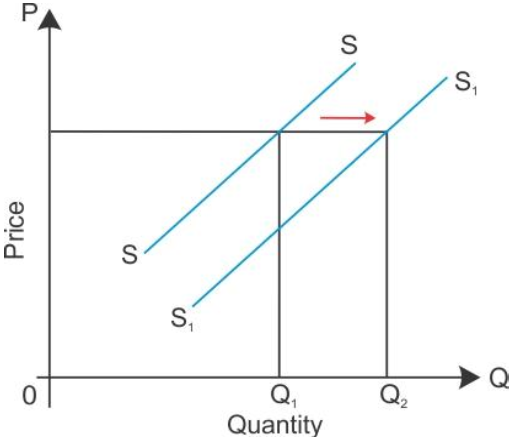 | Diagrammatic representation: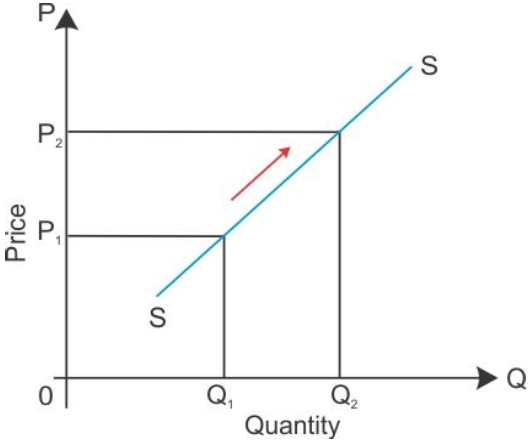 |
Generate a complete, print-ready paper with questions like this in minutes — across 16+ boards, with answer keys.
| Price (₹) | 10 | 11 | 12 | 13 | 14 | 15 | 16 |
| Units Sold | - | 9 | - | 7 | - | 5 | - |
| TR (₹) | 100 | - | 96 | - | 84 | - | 64 |
| MR (₹) | - | - | - | - | - | - | - |
| Income (Y) | 100 | 200 | 300 |
| Consupmtion (C) | 80 | 160 | 240 |
| S. No. | | (₹in lakhs) |
| (i) | Net value added at factor cost. | 100 |
| (ii) | Net value added at factor cost. | 75 |
| (iii) | Excise duty. | 20 |
| (iv) | Subsidy. | 5 |
| (v) | Depreciation. | 10 |
| S. No. | | (₹in lakhs) |
| (i) | Sales. | 180 |
| (ii) | Rent. | 5 |
| (iii) | Subsidy. | 10 |
| (iv) | Change in stock. | 15 |
| (v) | Purchase of raw materials. | 100 |
| (vi) | Profits. | 25 |