Question
Define the following:
  1. Sol
  2. Aerosol
  3. Emulsion
  4. Foam
Given one example of each.

Answer

  1. Sol: Sol is a colloid in which tiny solid particles are dispersed in a liquid medium.

Examples are ink and soap solution.

  1. Aerosol: Aerosol is a colloid in which a solid or liquid is dispersed in a gas.

Examples are hairspray and fog.

  1. Emulsion: An emulsion is a colloid in which minute droplets of one liquid are dispersed in another liquid which is not miscible with it.

Examples are milk and butter.

  1. Foam: A foam is a colloid in which a gas is dispersed in a liquid medium.

Examples are soap bubbles and shaving cream.

Need a full question paper?

Generate a complete, print-ready paper with questions like this in minutes — across 16+ boards, with answer keys.

Start Generating Free

Similar questions

Two objects having equal masses are moving with uniform velocities of 2m/s and 6m/s respectively. Calculate the ratio of their kinetic energies.
Give reasons for:
Meristematic cells have a prominent nucleus and dense cytoplasm but they lack vacuole.
A train travels the first 15km at a uniform speed of 30 km/h; the next 75km at a uniform speed of 50km/h; and the last 10km at a uniform speed of 20km/h.
Calculate the average speed for the entire train journey.
What are different types of tissues in plants? Describe simple tissues.

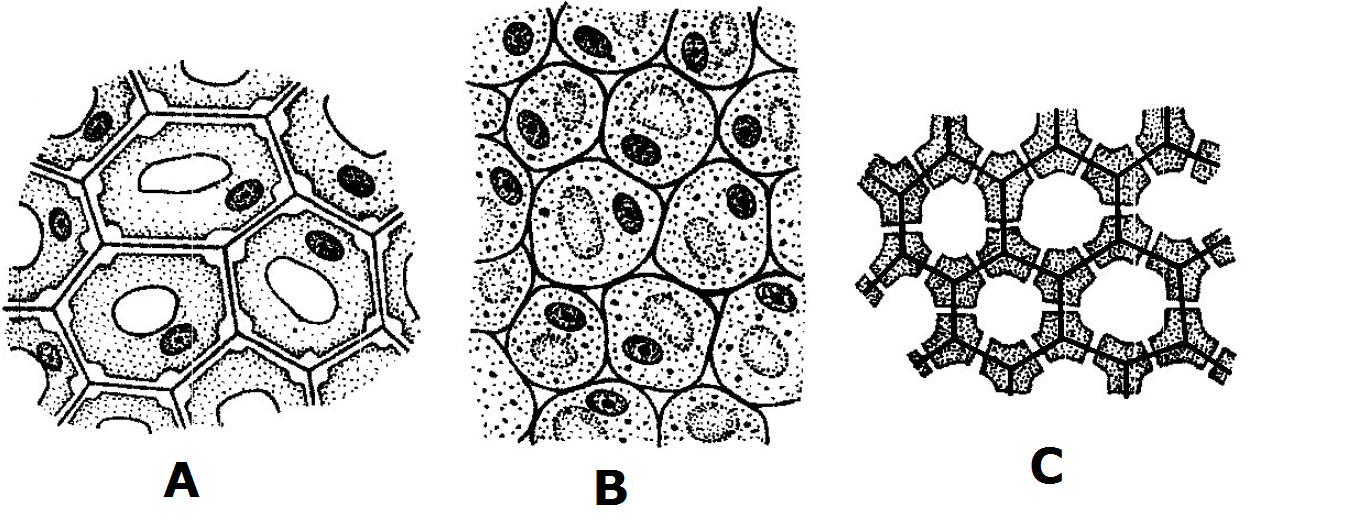
  1. Identify Figure A, B and C.
  2. Which one of them has heavy deposition of lignin?
  3. Which one of them provides both mechanical strength as well as flexibility?
  4. Which one of them can be modified to form air cavities in awuatic plants?
  5. Which one of them is commercially exploited to obtain Hemp and Jute?
Discuss why pesticides are used in very accurate concentration and in very appropriate manner?
State the law of conservation of mass. Give one example to illustrate this law.

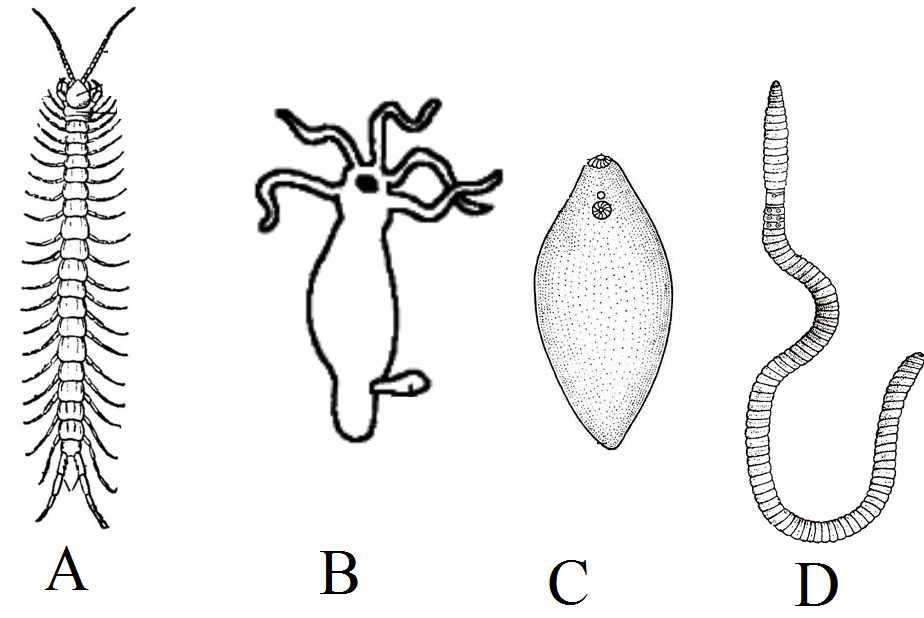
  1. Identify figure A to D.
  2. Which one of them is (i) diplobalstic; (ii) Coelomate?
  3. Which triplobalstic animal is (i) Acoelomate; (ii) Coelomate?
  4. Which one belong to phylum (i) Cnidaria; (ii) Platyhelminthes; (iii) Annelids; (iv) Arthropoda?
  5. Which one of them has (i) Organ level organization? (ii) Organ system level organization?
  6. Which one of them has excretory organs in the form of (i) Flame cells; (ii) Nephridia?
  7. Which one of them has trachea as the respiratory organ? 
Obtain a relation for the distance travelled by an object moving with a uniform acceleration in the interval between 4th and 5th seconds.

Discuss:

  1. Principles of treatment.
  2. Vaccination.