Question
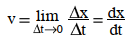
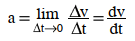
Define the instantaneous velocity and instantaneous acceleration and explain the difference.
Need a full question paper?

Generate a complete, print-ready paper with questions like this in minutes — across 16+ boards, with answer keys.

Start Generating Free

Similar questions

A cylinder rotating at an angular speed of $50rev/s$ is brought in contact with an identical stationary cylinder. Because of the kinetic friction, torques act on the two cylinders, accelerating the stationary one and decelerating the moving one. If the common magnitude of the acceleration and deceleration be one revolution per second square, how long will it take before the two cylinders have equal angular speed?
A Carnot engine absorbs 1000J of heat energy from a reservoir at 12.7°C and rejects 600J of heat energy during each cycle. Calculate. (i) efficiency of the engine, (ii) temperature of sink, (iii) amount of useful work done per cycle.
A particle is performing simple harmonic motion along x-axis with amplitude 4.0cm and time period 1.2s. What is the minimum time taken by the particle to move from x = +2cm to x = +4cm and back again?
A long, vertical wire carrying a current of 10A in the upward direction is placed in a region where a horizontal magnetic field of magnitude $2·0 \times 10^{-3}T$ exists from south to north. Find the point where the resultant magnetic field is zero.
An enclosure of volume four litres contains a mixture of $8g$ of oxygen, $14g$ of nitrogen and $22g$ of carbon dioxide. If the temperature of the mixture is $27°C$, find the pressure of the mixture of gases. Given $R = 8.315J-K^{-1}mol^{-1}$.
In one-dimensional elastic collision of equal masses, the velocities are interchanged. Can velocities in a onedimensional collision be interchanged if the masses are not equal?
A set of 65 turning forks is so arranged that each gives $3$ beats per second with the previous one and the last sounds the octave of first. Find the frequency of first and last forks?
A football is kicked into the air vertically upwards. What is its
  1. acceleration, and
  2. velocity at the highest point?
An object P is focused by a microscope M. A glass slab of thickness 2.1cm is introduced between P and M. If the refractive index of the slab is 1.5, by what distance should the microscope be shifted to focus the object again?
The displacement $($in metre$)$ of a particle moving along $x-$axis is given by $x = 18t + 5r^2$. Calculate:
  1. The instantaneous velocity at $t = 2s$.
  2. Average velocity between $t = 2s$ and $t = 3s$.
  3. Instantaneous acceleration.