Question
Define the term 'Mobility' of charge carriers in a conductor. Write its S.I. unit.

Answer

Magnitude of the drift velocity of charge carrier per unit Electric field is called mobility.
Alternate Answer
$\mu = \frac{|\text{V}_{d}|}{\text{E}}\text{ or } \frac{\text{e}\tau}{\text{m}}$
SI unit $= m^2$ / (volt second) or $ms^{-1}N^{-1}C.$

Need a full question paper?

Generate a complete, print-ready paper with questions like this in minutes — across 16+ boards, with answer keys.
Start Generating Free

Similar questions

Frictional force between solids operates even when they do not move with respect to each other. Do we have viscous force acting between two layers even if there is no relative motion?
Answer the following questions, which help you understand the difference between Thomson’s model and Rutherford’s model better.
Is the probability of backward scattering (i.e., scattering of α-particles at angles greater than 90°) predicted by Thomson’s model much less, about the same, or much greater than that predicted by Rutherford’s model?
State de-Broglie hypothesis.
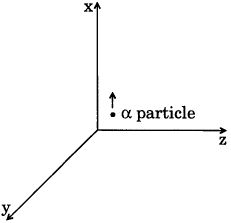
A beam of a particles projected along + x-axis, experiences a force due to a magnetic field along the + y-axis. What is the direction of the magnetic field?
  1. a. Calculate the energy released if ${ }^{238} U$ emits an \$lalpha\$-particle.
  2. Calculate the energy to be supplied to ${ }^{238} \mathrm{U}$ it two protons and two neutrons are to be emitted one by one. The atomic masses of ${ }^{238} \mathrm{U},{ }^{234} \mathrm{Th}$ and ${ }^4 \mathrm{He}$ are $238.0508 \mathrm{u}, 234.04363 \mathrm{u}$ and 4.00260 u respectively.
Where on the surface of Earth is the angle of dip $90^{\circ}$?
Galileo was punished by the Church for teaching that the sun is stationary and the earth moves around it. His opponents held the view that the earth is stationary and the sun moves around it. If the absolute motion has no meaning, are the two, viewpoints not equally correct or equally wrong?
Write approximate wavelength range of micro waves.
What is the basic reason of refraction?
The plates of a parallel-plate capacitor are given equal positive charges. What will be the potential difference between the plates? What will be the charges on the facing surfaces and on the outer surfaces?