Question
Describe how petroleum was formed in the earth.

Answer

Petroleum oil (and natural gas) was formed by the decomposition of the remains of extremely small plants and animals buried under the sea millions of years ago. It is believed that millions of years ago, the microscopic plants and animals which lived in seas, died. Their bodies sank to the bottom of the sea and were soon covered with mud and sand. The chemical effects of pressure, heat and bacteria, converted the remains of microscopic plants and animals into petroleum oil and natural gas just as they converted forest trees into coal. This conversion took place in the absence of oxygen or air. The petroleum thus formed got trapped between two layers of impervious rocks (non-porous rocks) forming an oil trap.

Need a full question paper?

Generate a complete, print-ready paper with questions like this in minutes — across 16+ boards, with answer keys.

Start Generating Free

Similar questions

What do you mean by a precipitation reaction? Explain giving an example.
Many players are seen consuming some food stuffs during breaks of the games.
Place the white paper on the drawing board and place a bar magnet in the middle of the paper. Sprinkle some iron filings on it
Image
(i) Tap the board gently, what do you observe?
(ii) Why do the iron filings arrange themselves in a pattern as shown in the figure above?
Calculate the image distance for an object of height $12\ mm$ at a distance of $0.20\ m$ from a concave lens of focal length $0.30\ m,$ and state the nature and size of the image.
Concave lens and Convex lens.
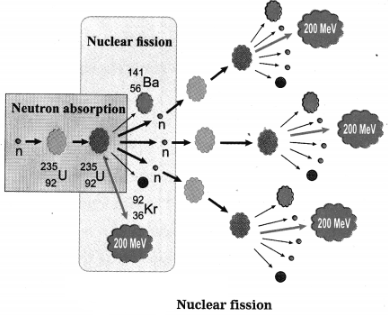
Observe the figure and answer the questions given below.
Image
(a) Name the reaction.
(b) Where is this reaction used?
(c) Which element is used in it?
(OR)
Identify the process shown in figure and name it.
Identify periods of elements and blocks of elements from given electronic configuration?
  1. 2, 8, 2
  2. 2, 8, 7
  3. 2, 1
The calorific value and ignition temperature of fuel A are $55 \mathrm{~kJ} / \mathrm{g}$ and $80^{\circ} \mathrm{C}$, respectively. These values for fuel B are $80 \mathrm{~kJ} / \mathrm{g}$ and $10^{\circ} \mathrm{C}$, respectively. On burning, the fuel A produces $\mathrm{CO}_2$ and $\mathrm{H}_2 \mathrm{O}$ while the fuel B produces $\mathrm{CO}_2, \mathrm{CO}$ and $\mathrm{SO}_2$. Give three points of relative and disadvantages of these two fuels.
In what ways are puberty and adolescence result of the activity of some glands in the human body?
Draw a simple diagram of the human eye and label clearly the cornea, iris, pupil, ciliar muscles, eye-lens, retina, optic nerve and blind spot.