Question
Describe “Indirect” method of ascertaining Cash Flow from operating activities.
Answer

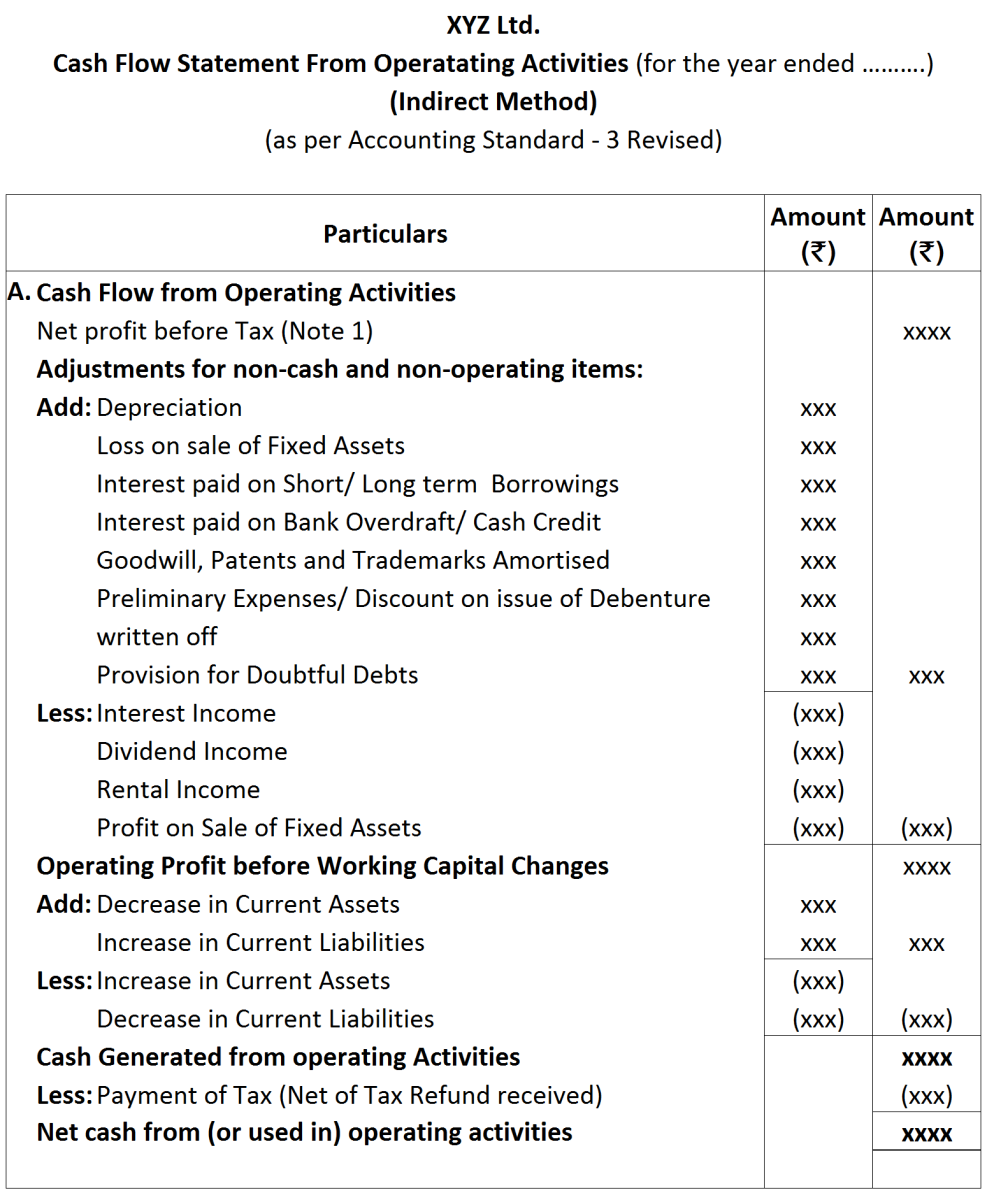
Indirect Method of cash flow statment: In indirect method, the net income figure from the income statement is used to calculate the amount of net cash flow from operating activities. Since income statement is prepared on accrual basis in which revenue is recognised when earned and not when received therefore net income does not represent the net cash flow from operating activities and is necessary to adjust EBIT for those items which effect net income although no actual cash has been paid or received against them.
Indirect Method: Following is the indirect method formula which is used to calculate cash flow from operating activities.

Need a full question paper?

Generate a complete, print-ready paper with questions like this in minutes — across 16+ boards, with answer keys.
Start Generating Free

Similar questions

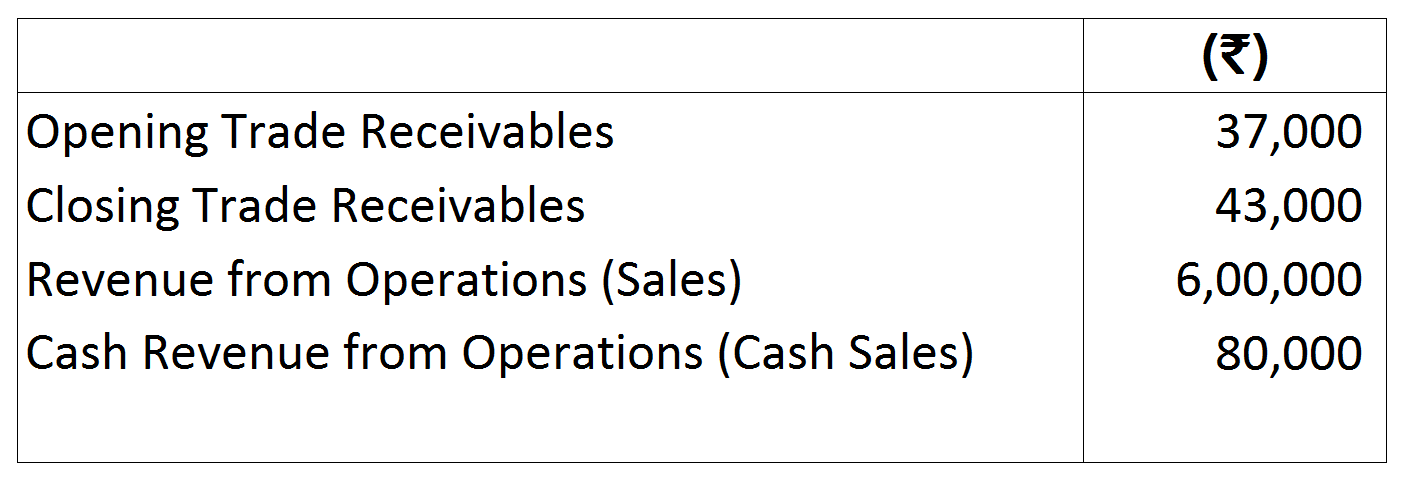
From the following information, calculate Trade Receivables Turnover Ratio:
From the following information, calculate Change in Inventory of Work-in-Progress:
Opening and Closing Work-in-Progress ₹ 1,00,000 and ₹ 1,15,000 respectively.
From the following information, calculate Oprating Ratio:
Cost of Revenue
From Operation (Cost of Goods Sold).
52,000
Operating Expenses.
18,000
Revenue from Operation  
Gross Sales. 88,000
Sales Return. 8,000
R Ltd. purchased the assets of S Ltd. for ₹ 5,00,000. It also agreed to take over the liabilities of S Ltd. amounted to ₹ 2,00,000 for a purchase consideration of ₹ 2,80,000. The payment of S Ltd. was made by issue of 9% Debentures of ₹ 100 each at par.
Pass necessary journal entries in the books of R Ltd.
Current Liabilities of a company are ₹ 6,00,000. Its Current Ratio is 3 : 1 and Liquid Ratio is 1 : 1. Calculate value of Inventory.
Give necessary journal entries:
The Directors of Devendra Ltd. resolved on 1st January, 2010 that Equity Shares of ₹ 10 each, ₹ 8 paid-up be forfeited for non-payment of final call of ₹ 2. On 1st February, 60 of these shares were reissued @ ₹ 7 per share as fully paid-up.
‘B’ Ltd. took over the assets of ₹ 14,00,000 and liabilities of ₹ 4,00,000 of C Ltd. for a purchase consideration of ₹ 9,19,000. ₹ 17,000 were paid by a bank draft in favour of C Ltd. and the balance was paid by issue of equity shares of ₹ 10 each at a premium of 10% in favour of C Ltd.Pass necessary journal entries for the above transactions in the books of B Ltd.
In a company, rate of Gross Profit on cost is 20%. Its Gross Profit is ₹ 4,00,000. Current Liabilities are 50% of the Current Assets, and Current Assets are ₹ 12,00,000. Calculate the Working Capital Turnover Ratio.
G Ltd. has 800 lakhs, 10% debentures of ₹ 100 each due for redemption on March 31, 2003. Assume that Debenture Redemption Reserve has a balance of ₹ 3,40,00,00,000 on that date. Record necessary entries at the time of redemption of debenture.
To provide employment to the youth and to develop Baramula district of Jammu and Kashmir, Jyoti Power Ltd. decided to setup a power plant. For raising funds the company decided to issue 8,50,000 equity shares of ₹ 10 each at a premium of ₹ 3 per share. The whole amount was payable on application. Applications for 20,00,000 shares were received. Applications for 3,00,000 shares were rejected and shares were allotted to the remaining applicants on pro-rata basis.
Pass necessary Journal entries for the above transactions in the books of the company and identify any two values which the company wants to propagate