Questions

3 Marks Question

🎯

Test yourself on this topic

39 questions · timed · auto-graded

Question 13 Marks
Following are the Balance Sheets of Krishtec ltd. for the year ended $31^{st}$ March $2011$ and $2012$:
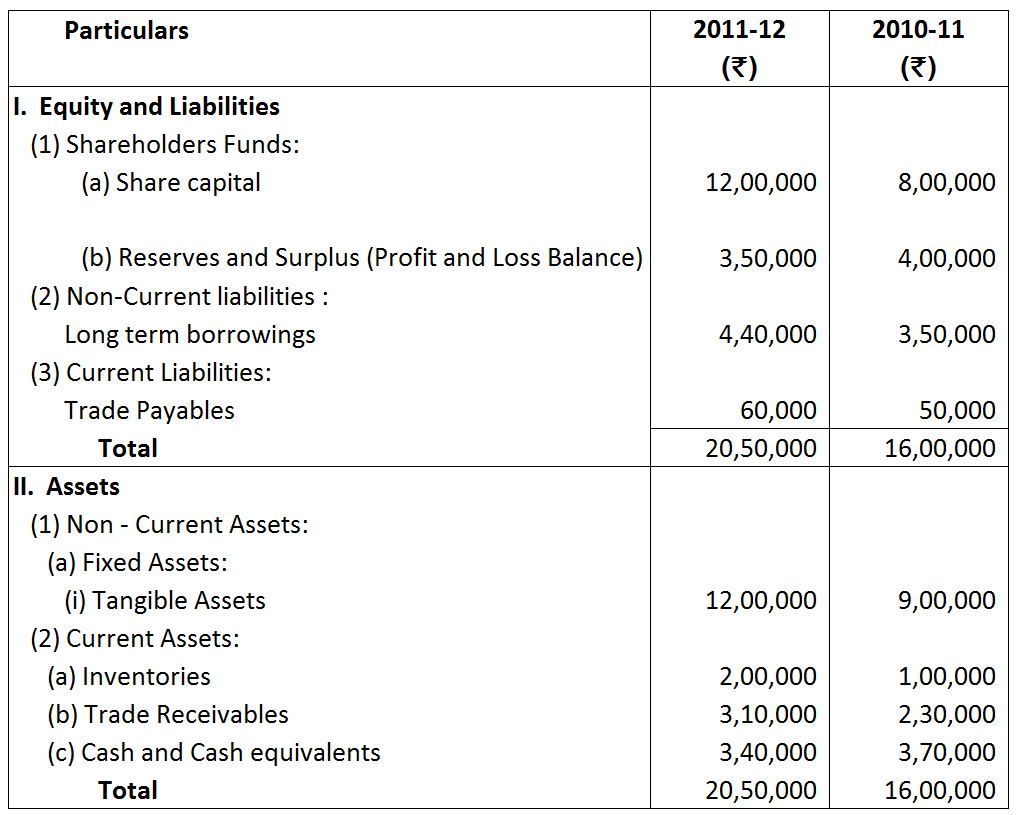
Prepare a Cash Flow Statement after taking into account the following adjustments:
  1. "The company paid interest ₹ $36,000$ on its long term borrowings.
  2. Depredation charged on tangible fixed assets was ₹ $1,20,000$.
View full question & answer
Question 23 Marks
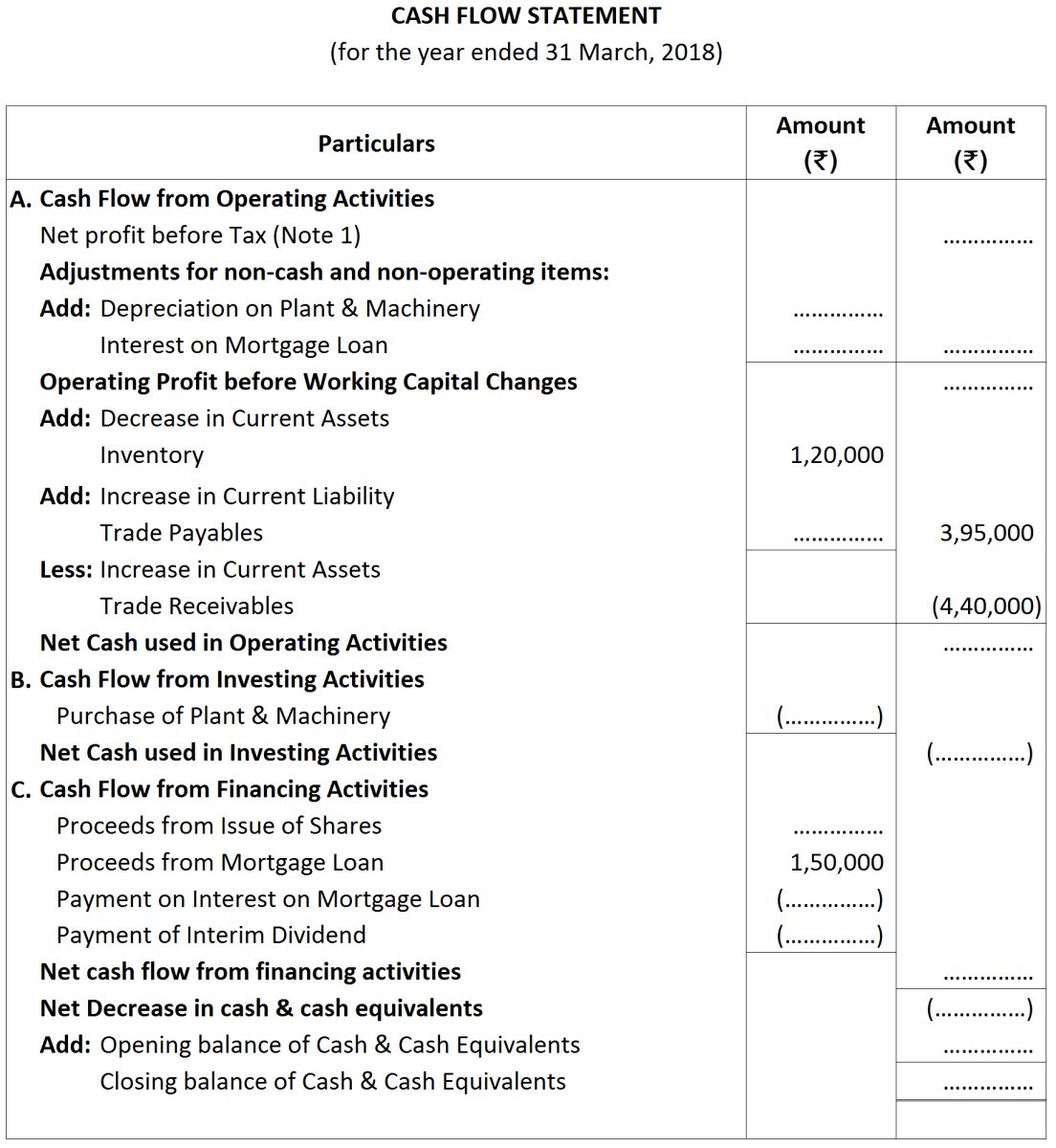
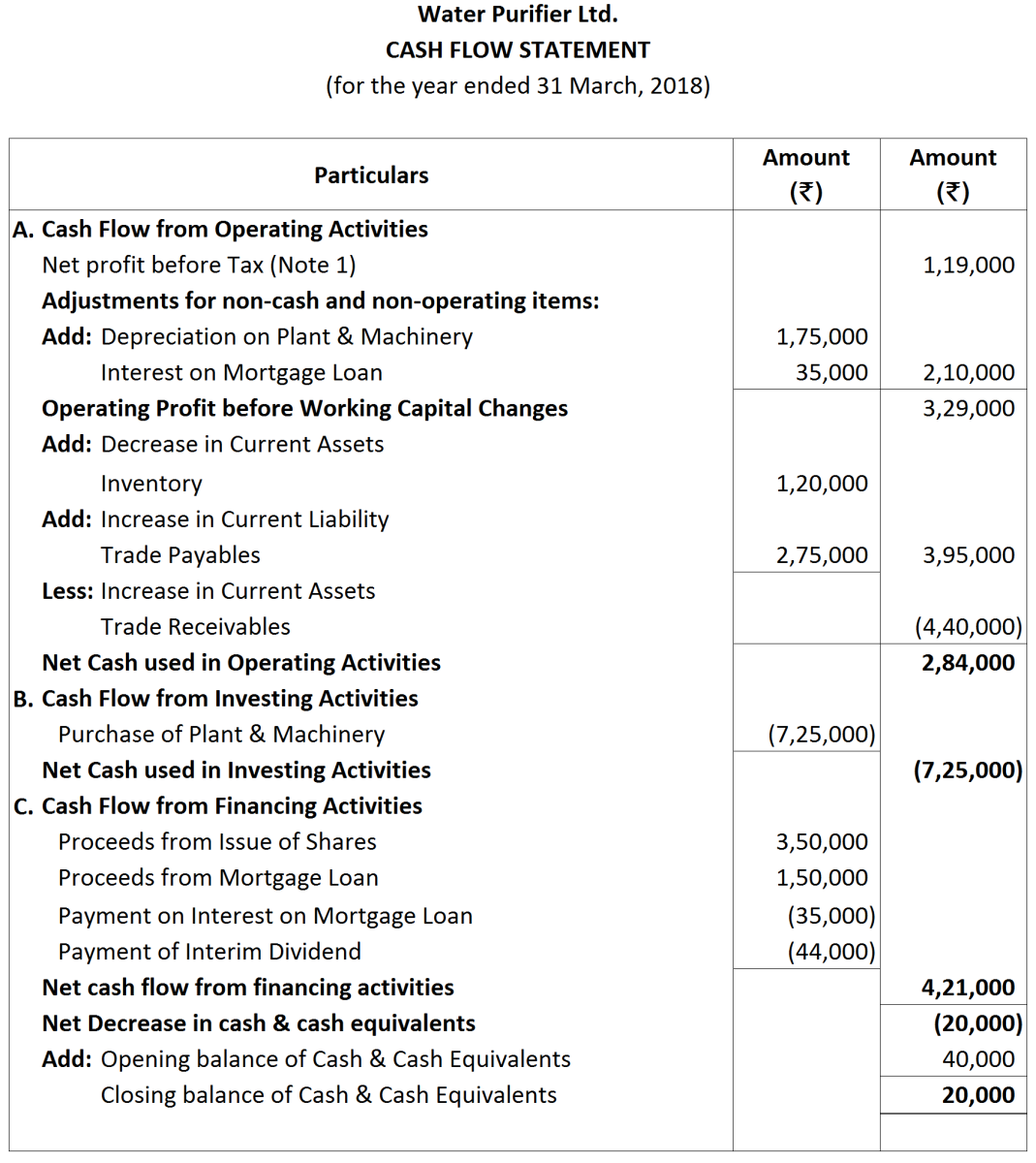
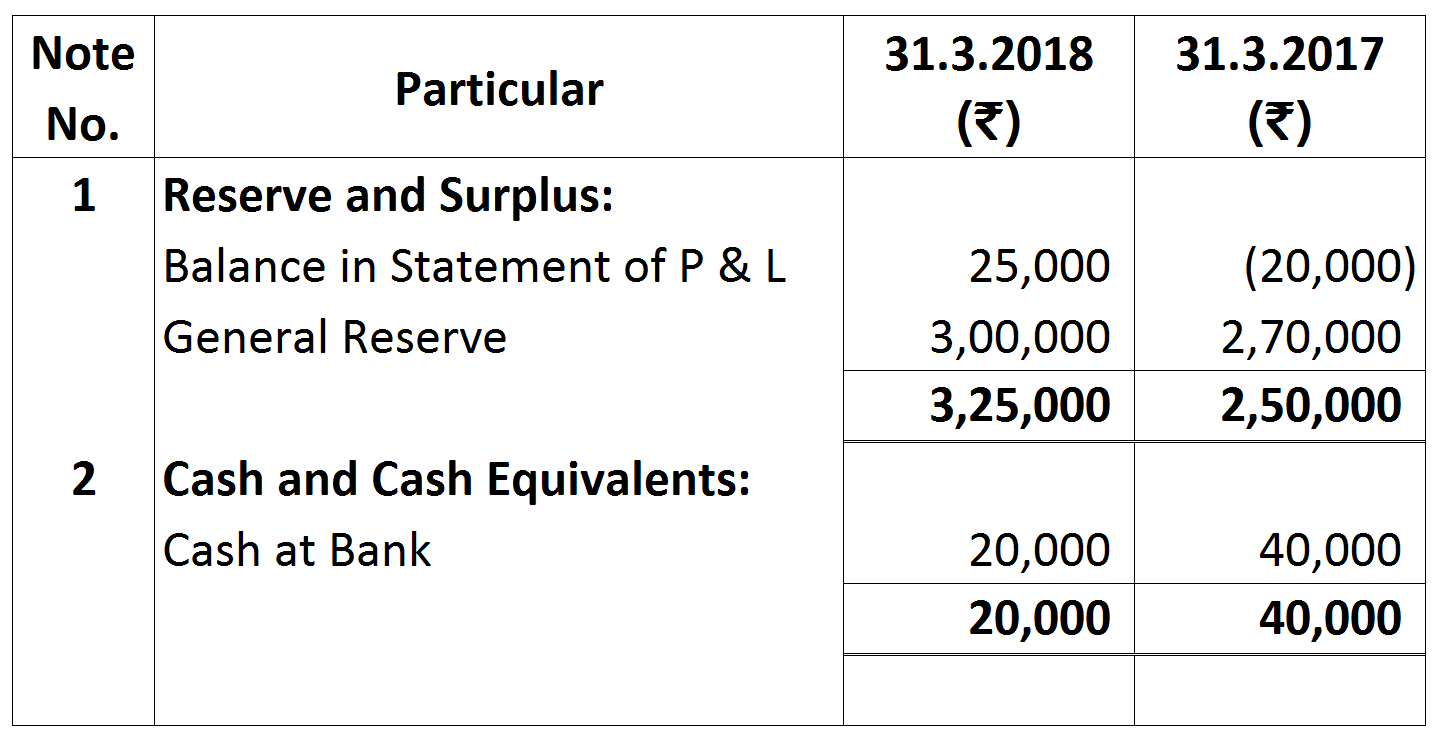
From the given notes to accounts and cash flow statement of Water Purifier Ltd. complete the missing figures:
Notes to Accounts:

Additional Information:
  1. Depreciation charged on plant & Machinery for the year 2017-18 was ₹ 1,75,000. During the year 2017-18, Plant and Machinery of ₹ 7,25,000 was purchased.
  2. Interest on Mortgage Loan paid during the year amounted to ₹ 35,000.
  3. Interim Divident paid during the year ₹ 44,000.
Answer

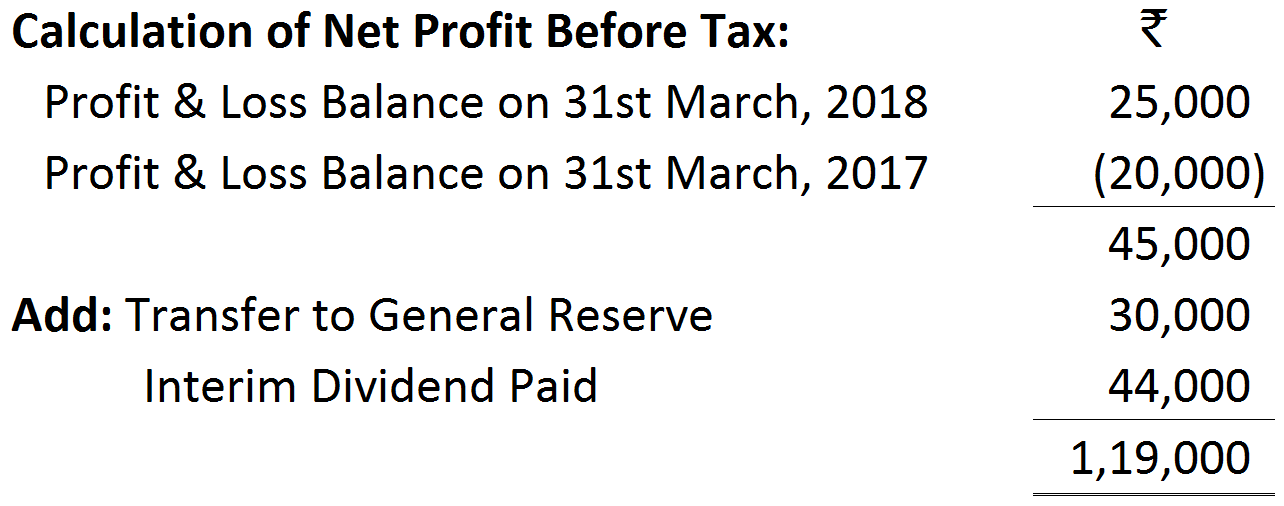
Working Note:
* Net Cash Flow from financing activities ₹ 4,21,000 is the balancing figure of Cash Flow Statment.
View full question & answer
Question 33 Marks
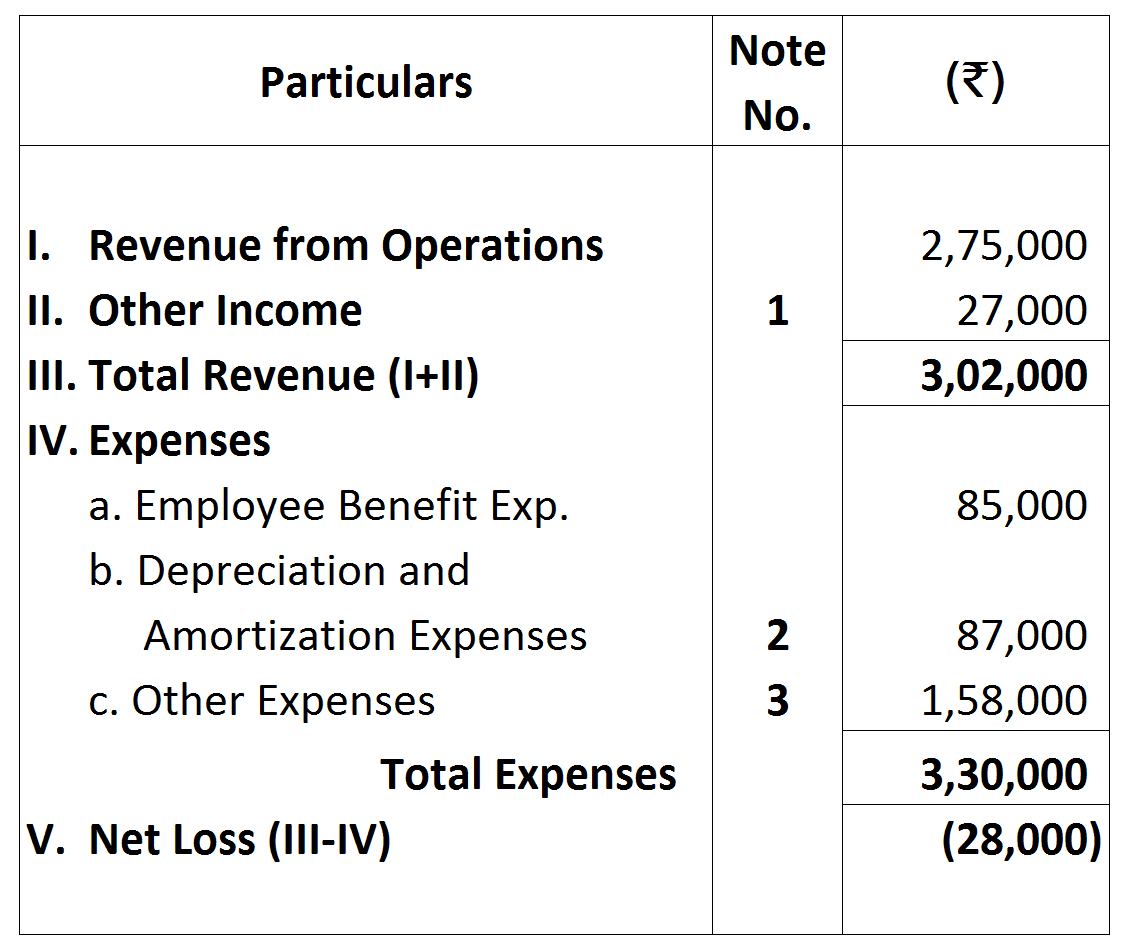
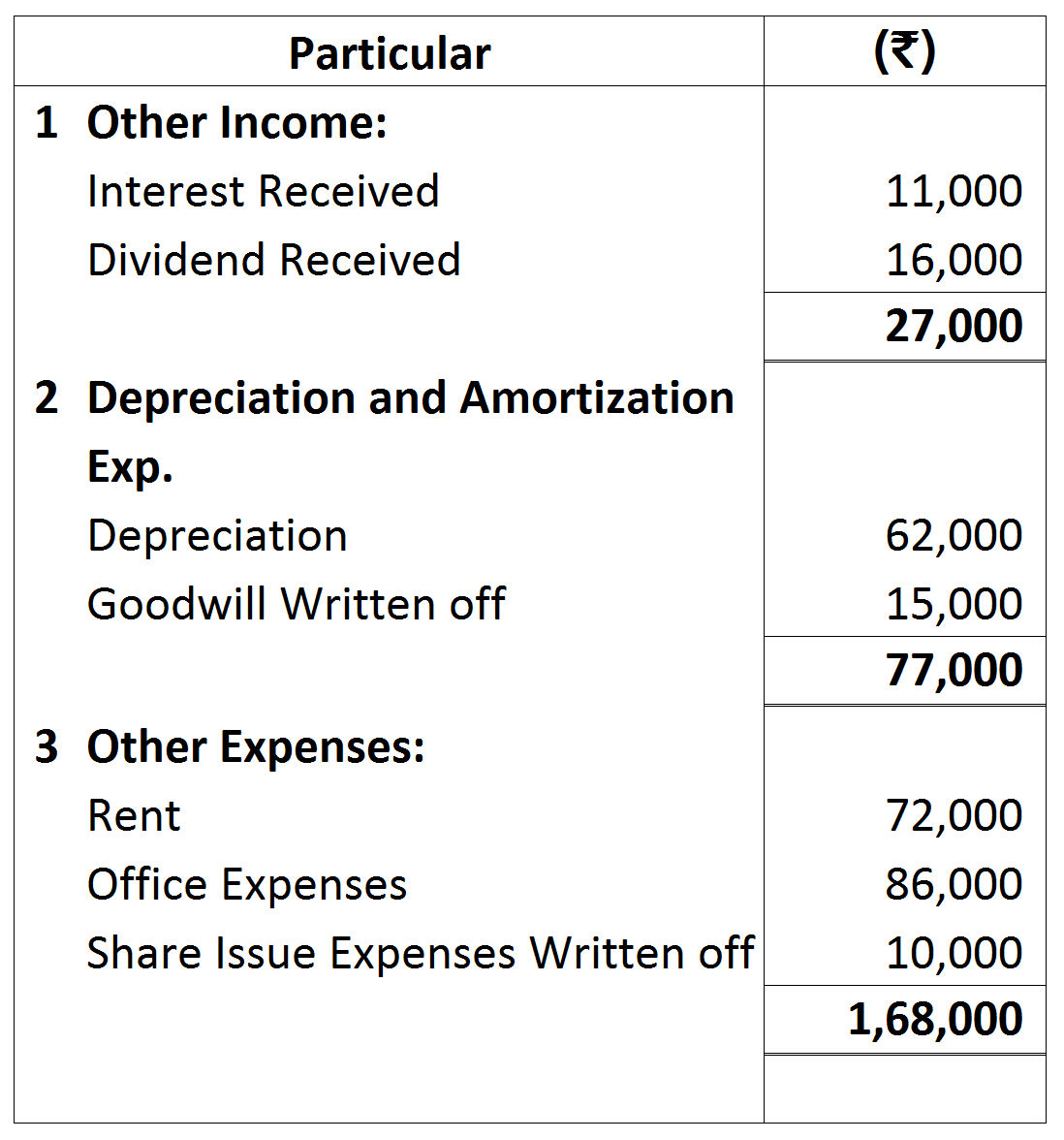
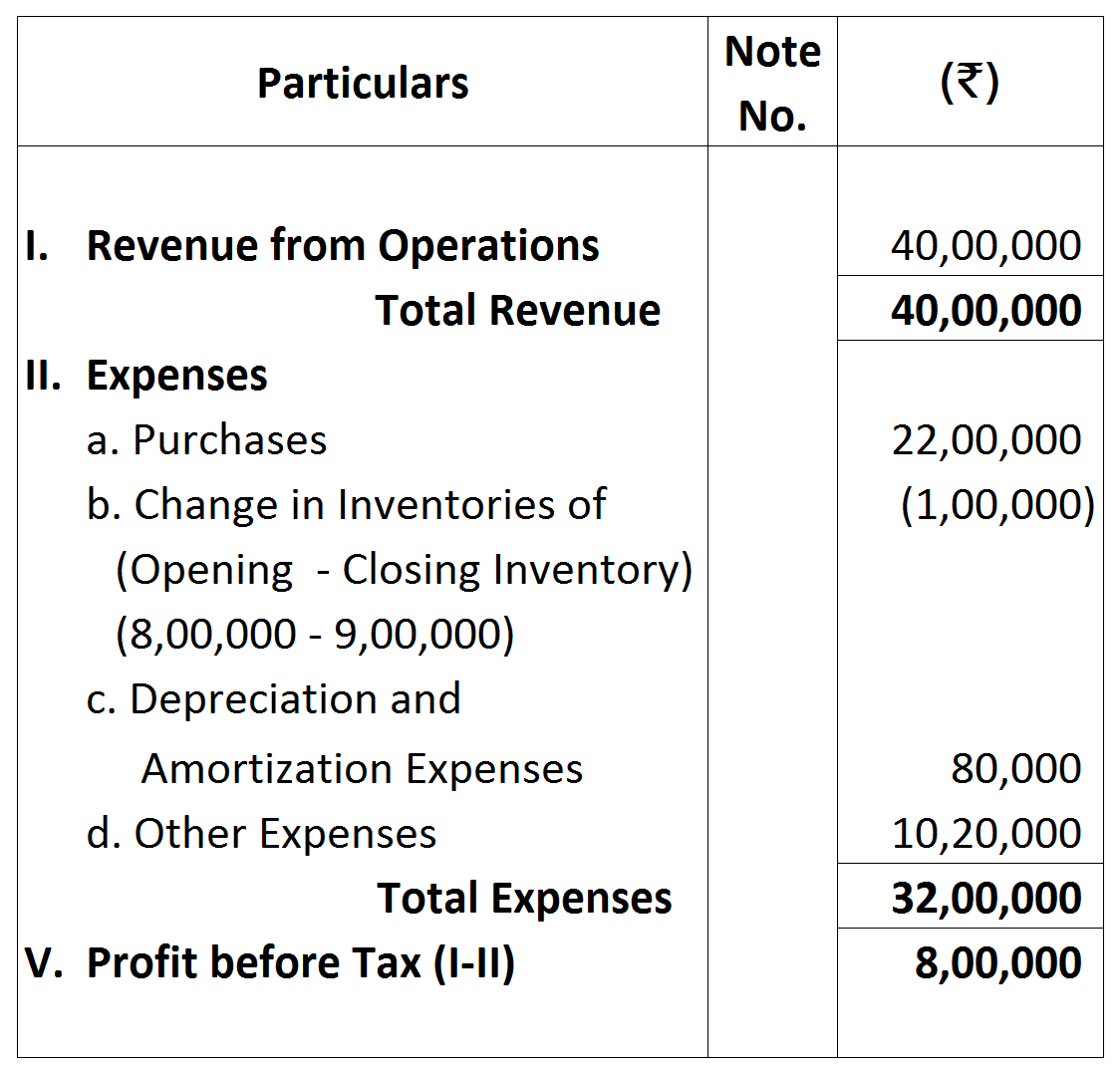
The following is the Statement of Profit and Loss of Z Ltd. for the year ended March 31, 2018:

Additional Information:
  1. Sundry Creditors increased by ₹ 40,000 during the year.
  2. Sundry Debtors increased by ₹ 70,000 during the year.
  3. Outstanding wages decreased by ₹ 10,000 during the year.
  4. Bills Receivable decreased by ₹ 5,000 during the year.
  5. Prepaid expenses decreased by ₹ 20,000 during the year.
Compute net Cash from operations by the indirect method.
View full question & answer
Question 43 Marks
D.K. Ltd. provides you the following information:
Non-Current Investments as on 31-3-2017 ₹ 1,20,000
Non-Current Investments as on 31-3-2018 ₹ 40,000
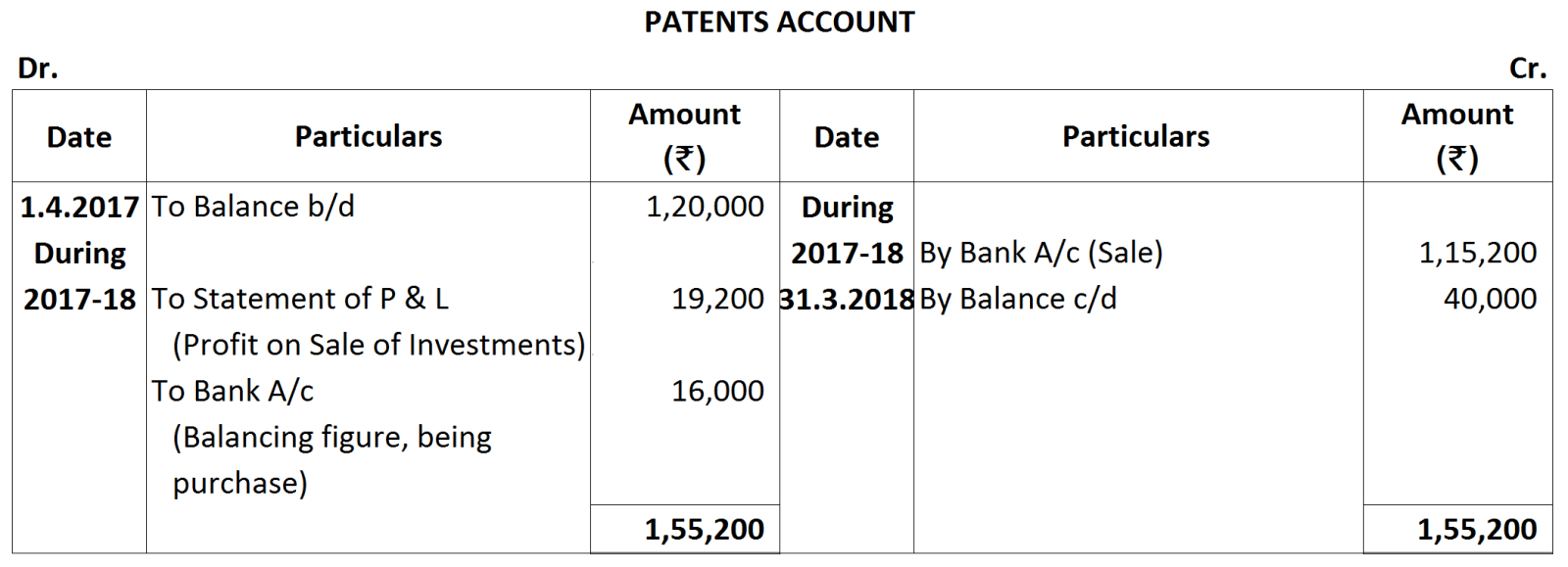
During the year 2018, the company sold 80% of its original investments at a profit of 20% on book value. Calculate sources and uses of cash.
Answer
   
80% of ₹ 1,20,000 = 96,000
+ Profit 20% = 19,200
    1,15,200
Uses: Non-Current Investment A/c should be prepared to find out the uses of Cash:

Therefore, Uses of Cash (purchase of Non-Current Investments)= ₹ 16,000
View full question & answer
Question 53 Marks
State clearly what would constitute the operating activities for each of the following enterprises:
  1. Hotel.
  2. Film production house.
  3. Financial enterprise.
  4. Media enterprise.
  5. Steel manufacturing unit.
  6. Software development business unit.
Answer
  1. Hotel:
  1. Receipts from sale of goods to customer.
  2. Payment of wages and salaries, electricity, food items and other items used in accommodation.
  1. Film Production House:
  1. Receipts from selling film rights of a film to the distributors.
  2. Payment to the staff, actors, actresses, directors, etc.
  1. Financial Enterprises:
  1. Receipts from repayment of loans, interest incomes from investments, etc.
  2. Repayment of loans, recovery expenditure for recover of loans etc, salaries of employees.
  1. Media Enterprises:
  1. Receipts from advertisements.
  2. Payments to staff, reporters, photographers, etc.
  1. Steel Manufacturing Unit:
  1. Receipts from sale of steel sheets, steel castings, steel rods, etc.
  2. Payment for iron, coal, salaries to staff, etc.
  1. Software Business Unit:
  1. Receipts from sale of software and renewal of licenses.
  2. Payment of salaries to their employees, etc.
View full question & answer
Question 63 Marks
What is meant by outflow of cash while preparing Cash Flow Statement?
Answer
Cash Outflow arises when the net effect of transaction is decrease in the amount of Cash and Cash Equivalents.
View full question & answer
Question 83 Marks
How are the various activities classified (as per AS-3 revised) while preparing cash flow statement?
Answer
As per the Revised Accounting Standard 3 (AS-3), preparation of Cash Flow Statement for each period is mandatory. AS-3 also specifies the classification of all inflows and outflows basically under the following heads:
  1. Cash Flow from Operating Activities.
  2. Cash Flow from Investing Activities.
  3. Cash Flow from Financing Activities.
View full question & answer
Question 93 Marks
Classify the following transaction as Operating Activities for a finanical company and a non-financial company:
  1. Purchase of shares on a stock Exchage.
  2. Dividend received on Shares.
  3. Dividend paid on shares
  4. Loans given.
  5. Loans takes.
  6. Interest paid on borrowings.
Answer
 
OPERATING ACTIVITY
 
Financial Company
Non-Financial Company
(a)
Purchase of Shares on a Stock Exchange
-
(b)
Dividend received on shares
-
(d)
Loans given
-
(e)
Loans taken
-
(f)
Interest paid on borrowings
-
A financial company deals with securities like shares, bonds, debentures, etc on a regular basis. These securities form part of their stock and hence purchase and sale of these securities will be categorised under Operating Activity. But, Dividend paid by them will be the part of Financing Activities.
However, for a non-financial company issue of shares, debentures, etc form part of financing activities as such issue will increase the capital employed in the business.
View full question & answer
Question 103 Marks
Anand Ltd., arrived at a net income of ₹ 5,00,000 for the year ended March 31, 2017. Depreciation for the year was ₹ 2,00,000. There was a profit of ₹ 50,000 on assets sold which was transferred to Statement of Profit and Loss account. Trade Receivables increased during the year ₹ 40,000 and Trade Payables also increased by ₹ 60,000. Compute the cash flow from operating activities by the indirect approach.
View full question & answer
Question 113 Marks
Identify the transactions as belonging to:
  1. Operating Activities.
  2. Investing Activities.
  3. Financing Activities.
  4. Cash and Cash Equivalents.
  1. Cash Sale of Goods.
  2. Cash Received against Revenue from Services rendered.
  3. Cash Purchase of Goods.
  4. Cash Paid against Services Taken.
  5. Patents Purchased.
  6. Marketable Securities.
  7. Bank Overdraft.
  8. Proceeds from Issue of Debentures.
  9. Purchase of Shares.
  10. Repayment of Long-term Loan.
  11. Commission Received.
  12. Redemption of Debentures.
  13. Interest on Debentures.
  14. Interest on Investments.
  15. Income Tax Paid.
  16. Income Tax Paid on Gain of Sale of Asset.
  17. Cash Received from Debtors.
  18. Cash Paid to Creditors.
Answer
OPERATING ACTIVITY
INVESTING ACTIVITY
FINANCING ACTIVITY
CASH AND CASH EQUIVALENTS
(a). Cash Sale of Goods
(e). Patents Purchased
(g). Bank Overdraft
(f). Marketable Securities
(b). Cash Received against Revenue from Services rendered
(i). Purchase of Shares
(h). Proceeds from Issue of Debentures
 
(c). Cash Purchase of Goods
(n). Interest on Investments
(j). Repayment of Long-term Loan
 
(d). Cash paid against Services Taken
(p). Income Tax paid on Gain on Sale of Asset
(l). Redemption of Debentures
 
(k). Commission Received
 
(m). Interest on Debentures
 
(o). Income Tax paid


(q). Cash Received from Debtors


(r). Cash Paid to Creditors


View full question & answer
Question 133 Marks
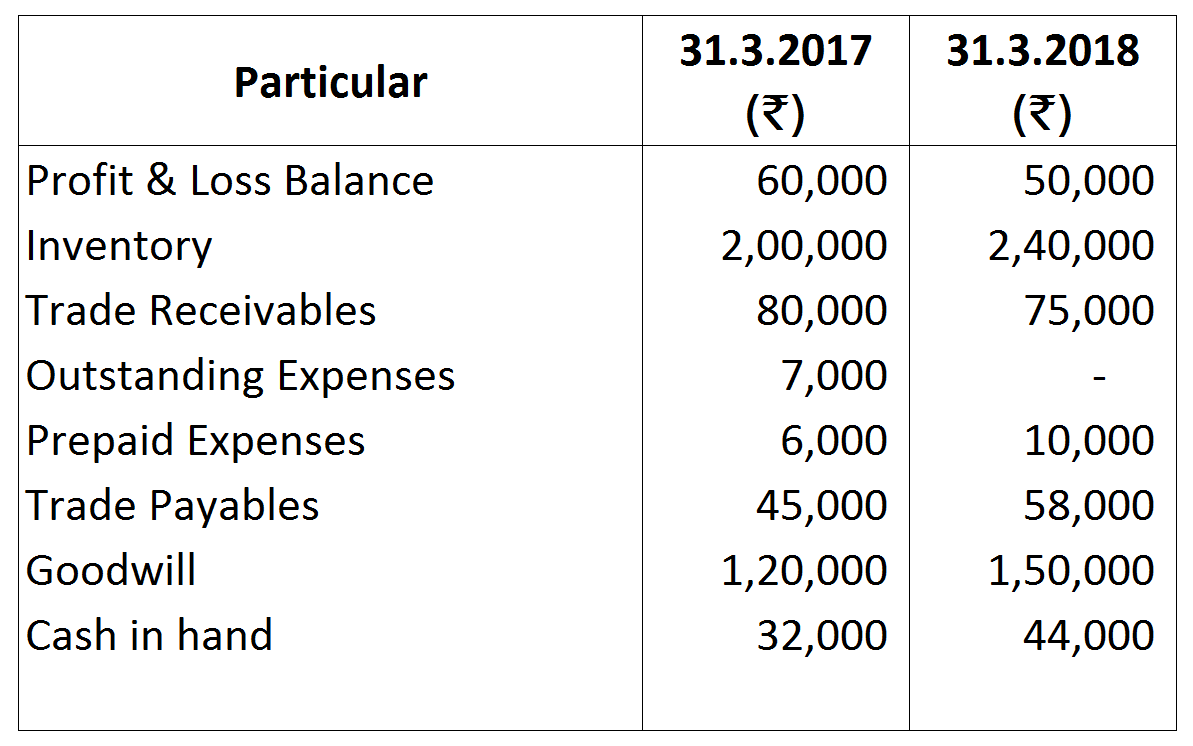
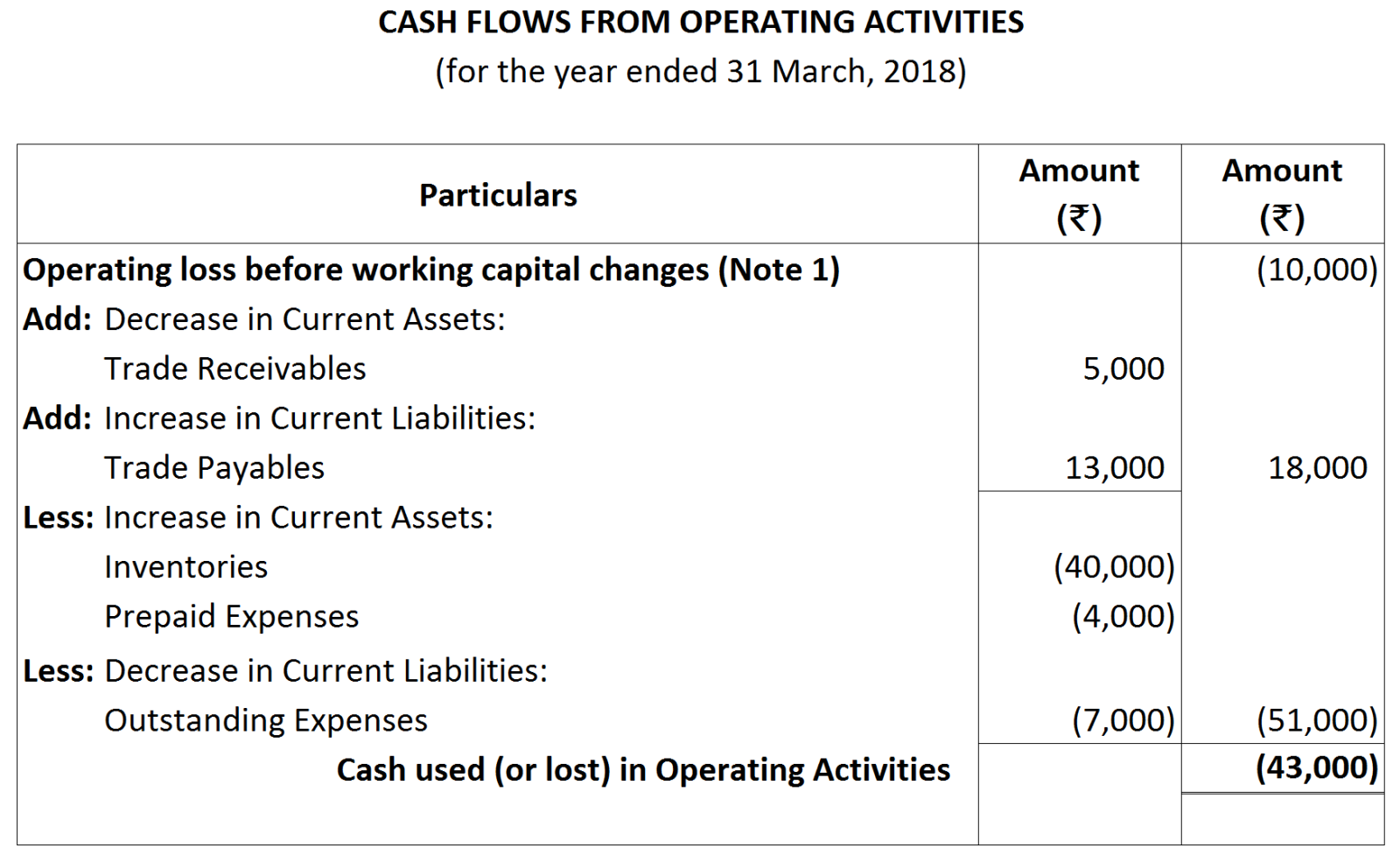
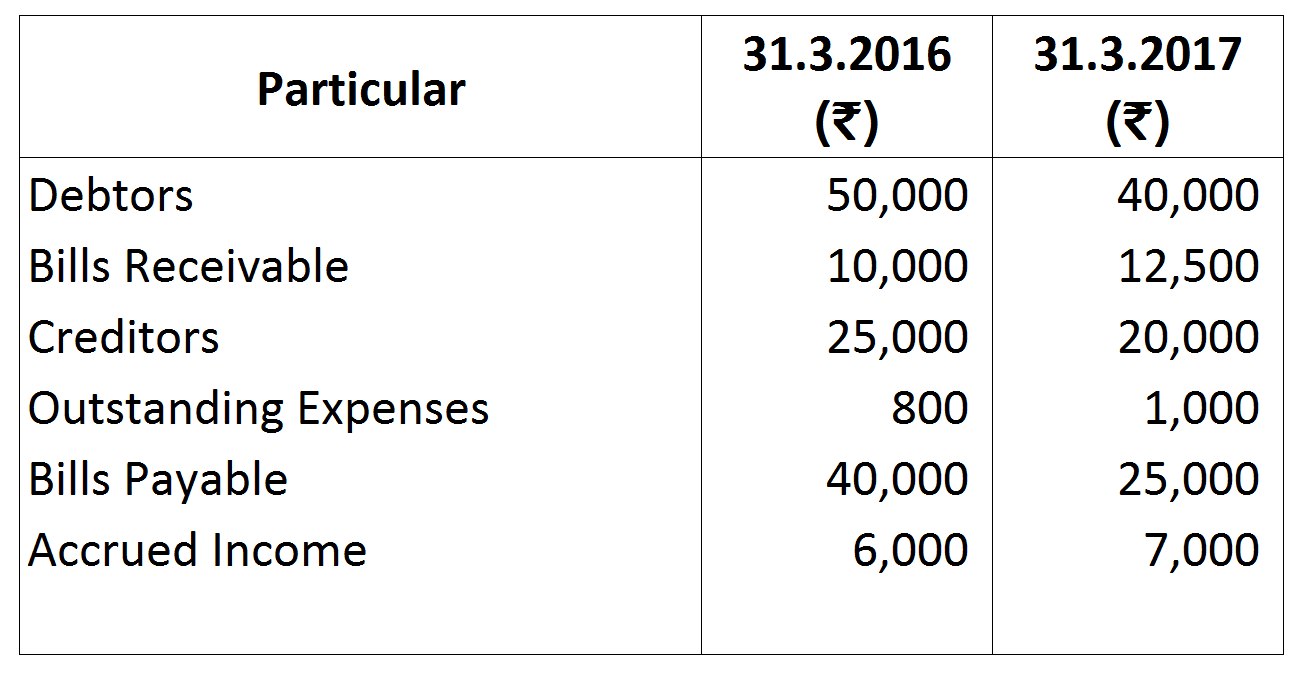
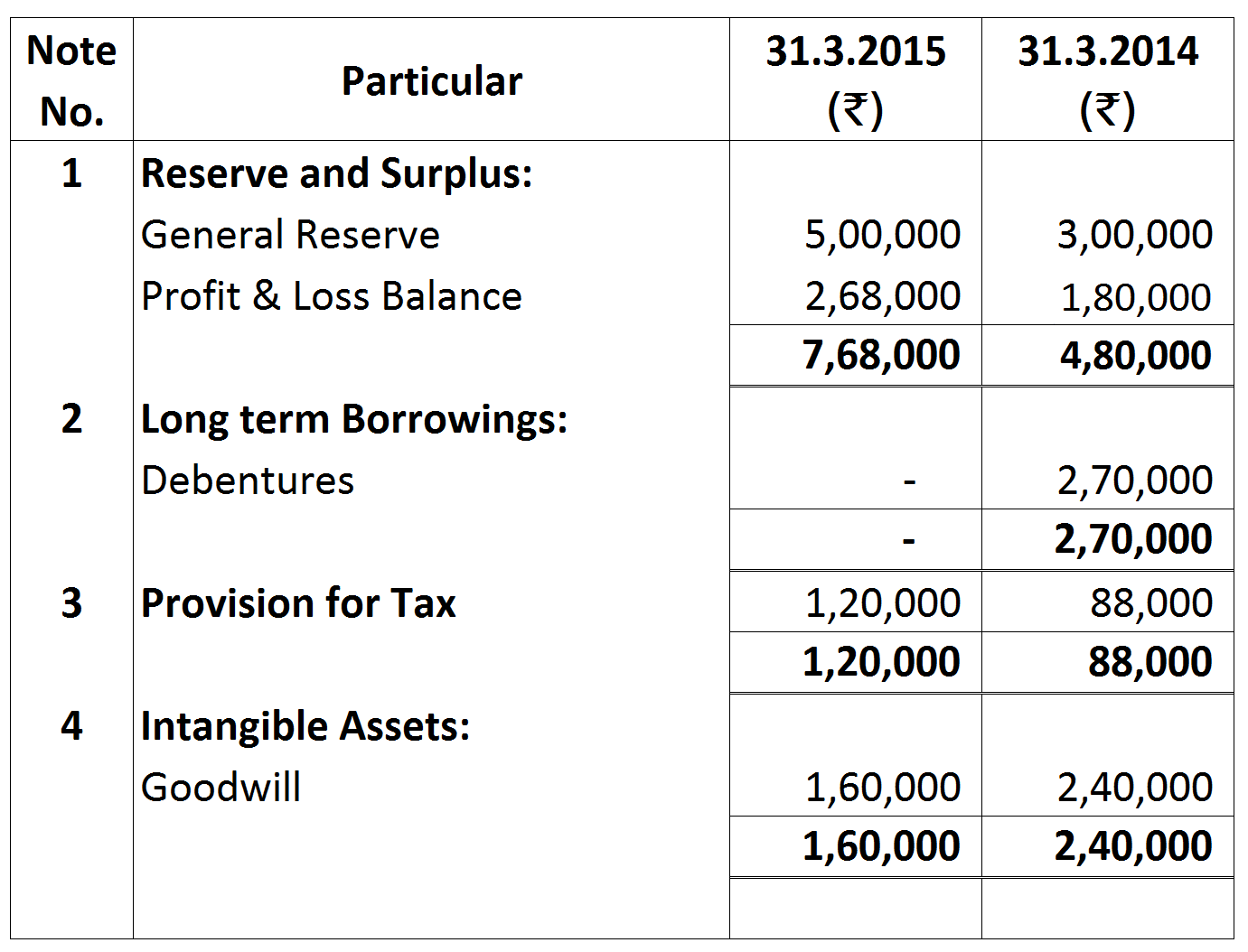
Calculate 'Cash from operating activities' from the following:
Answer

Note:
Profit & Loss Balance on 31st March, 2018 50,000
less: Profit & Loss Balance on 31st March, 2017 (60,000)
Operating Loss for the year 10,000
Hint: Increase in Goodwill is treated as purchase of Goodwill. Hence, it will not affect 'Cash from operating activities'.
View full question & answer
Question 143 Marks
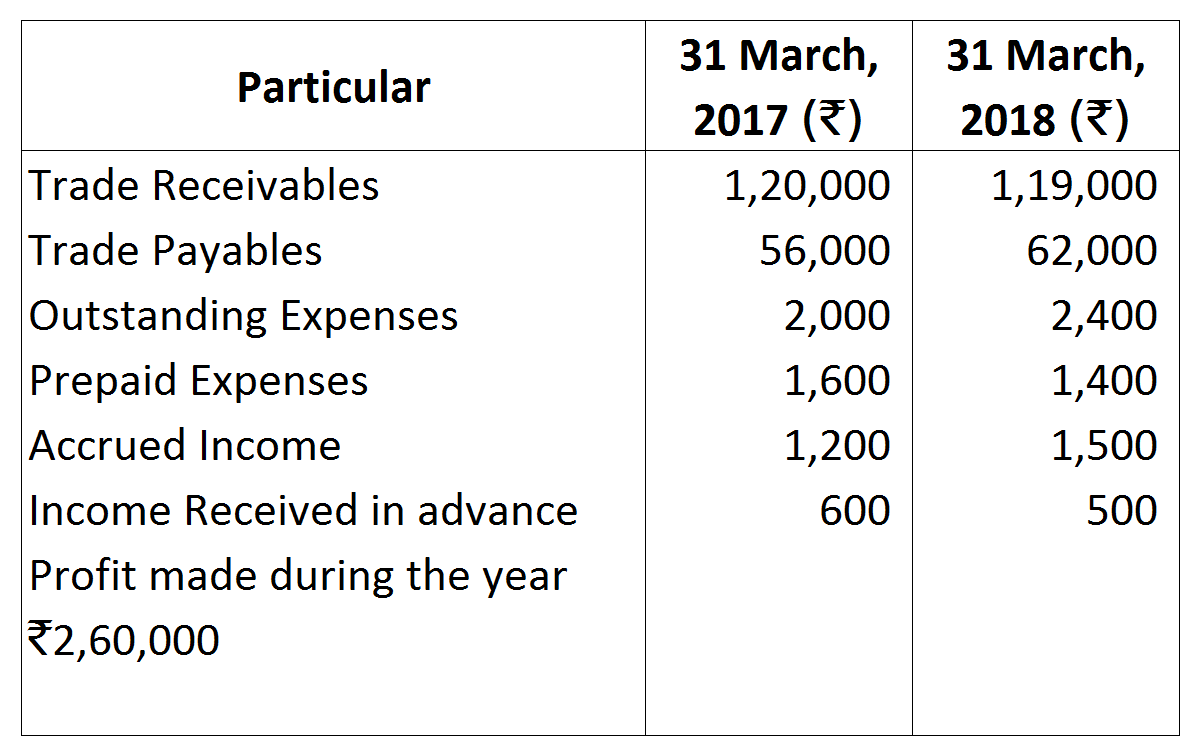
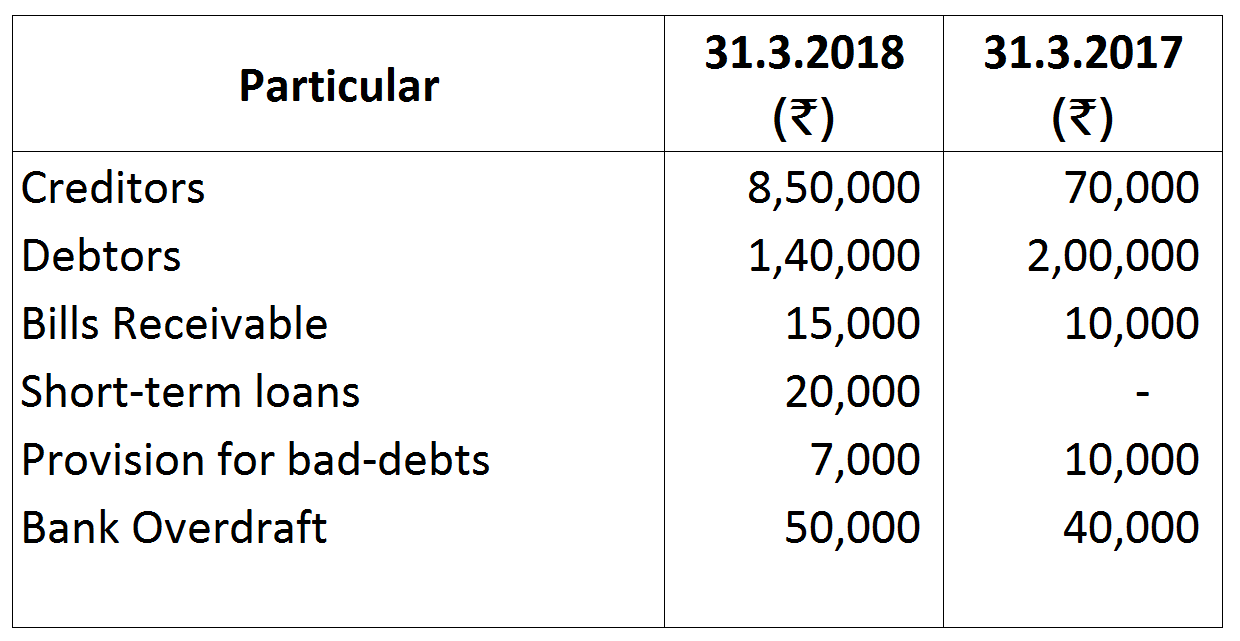
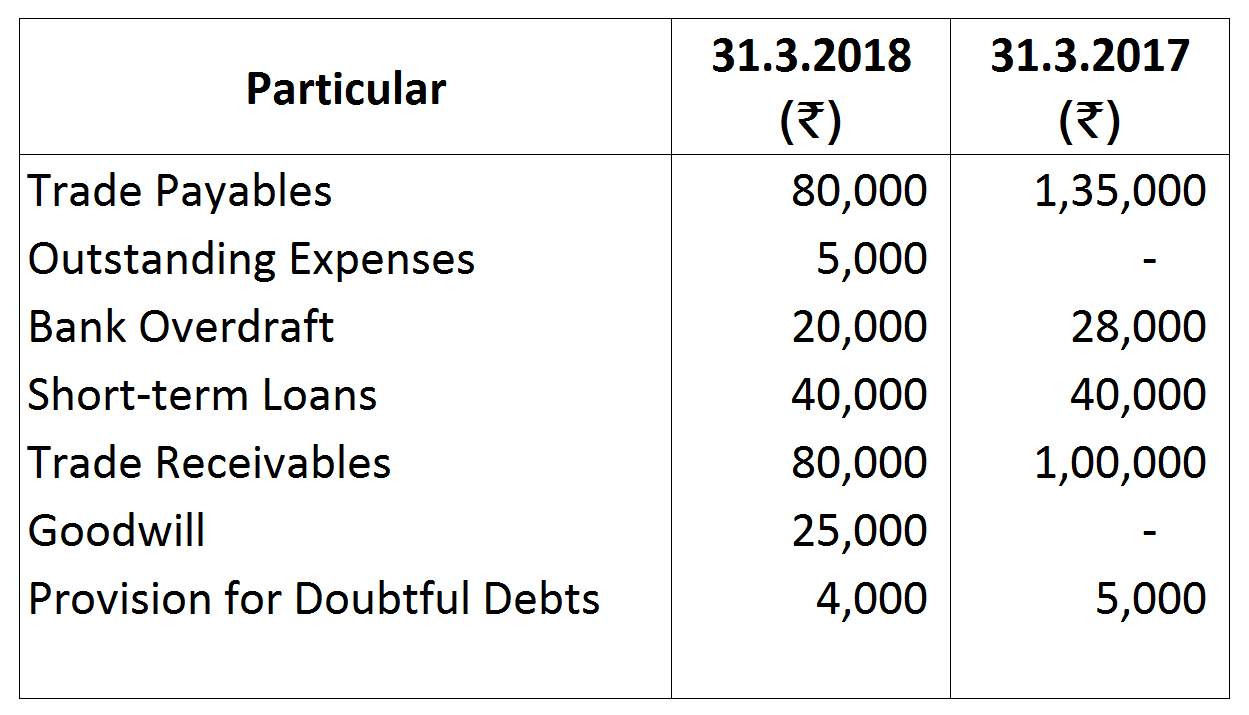
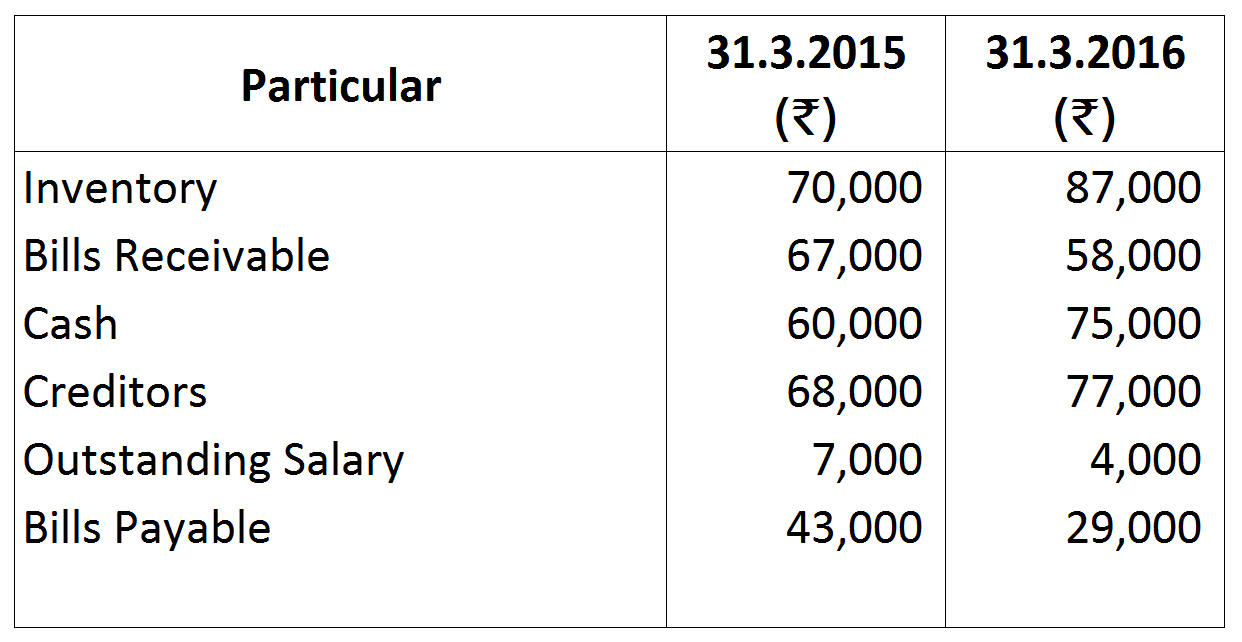
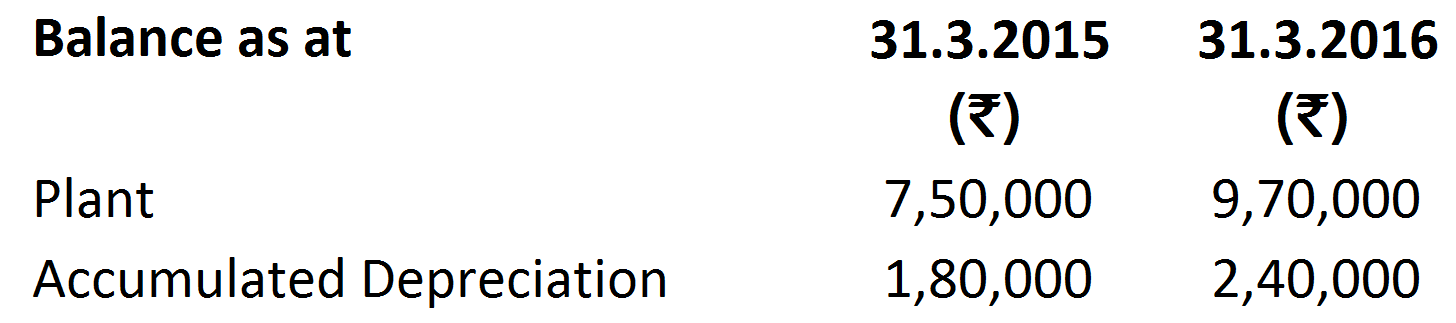
Following is the position of Current Assets and Current Liabilities of X Ltd.:

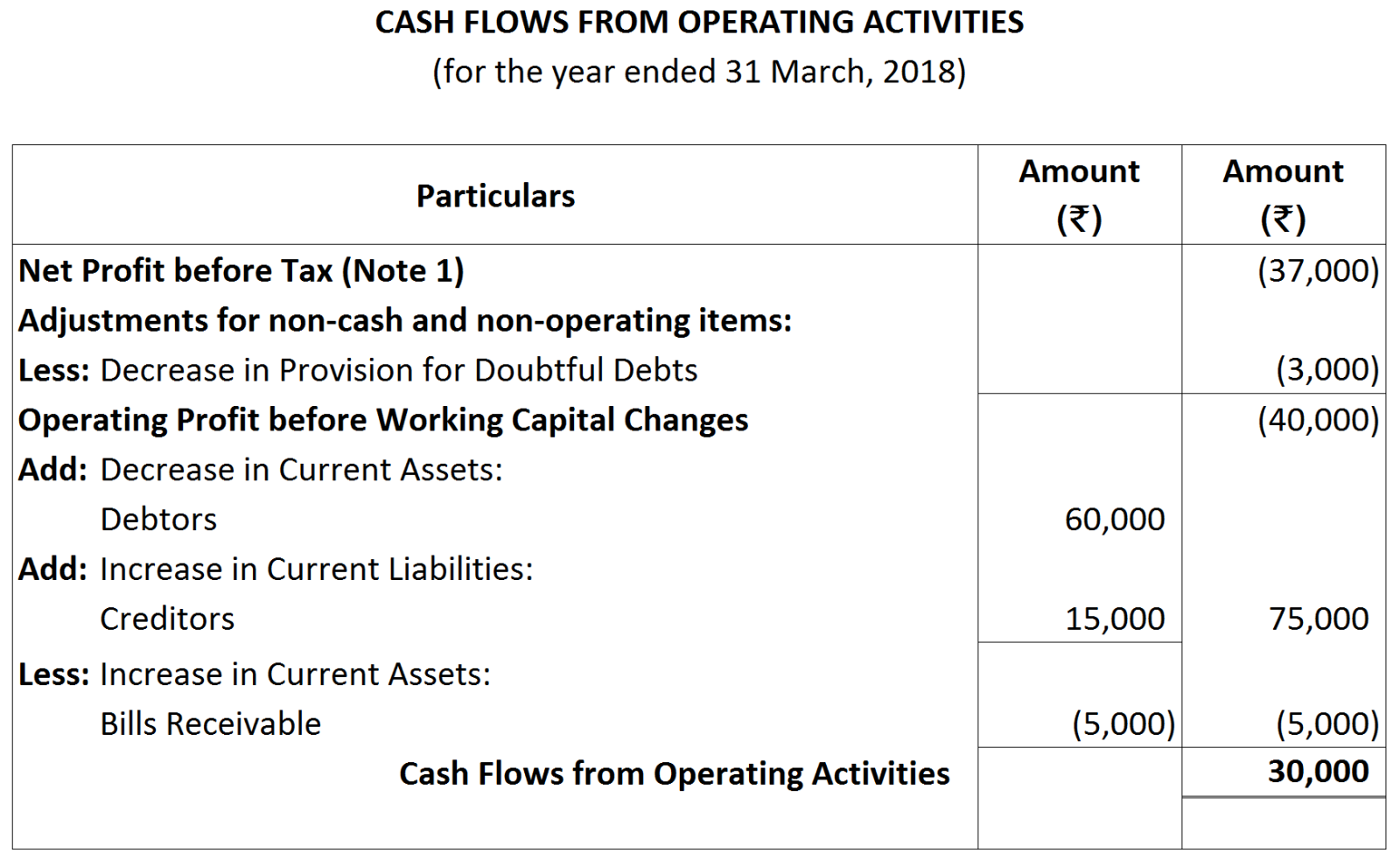
The company incurred a loss of ₹ 37,000 during the year. Calculate 'Cash from operating activities'.
Answer

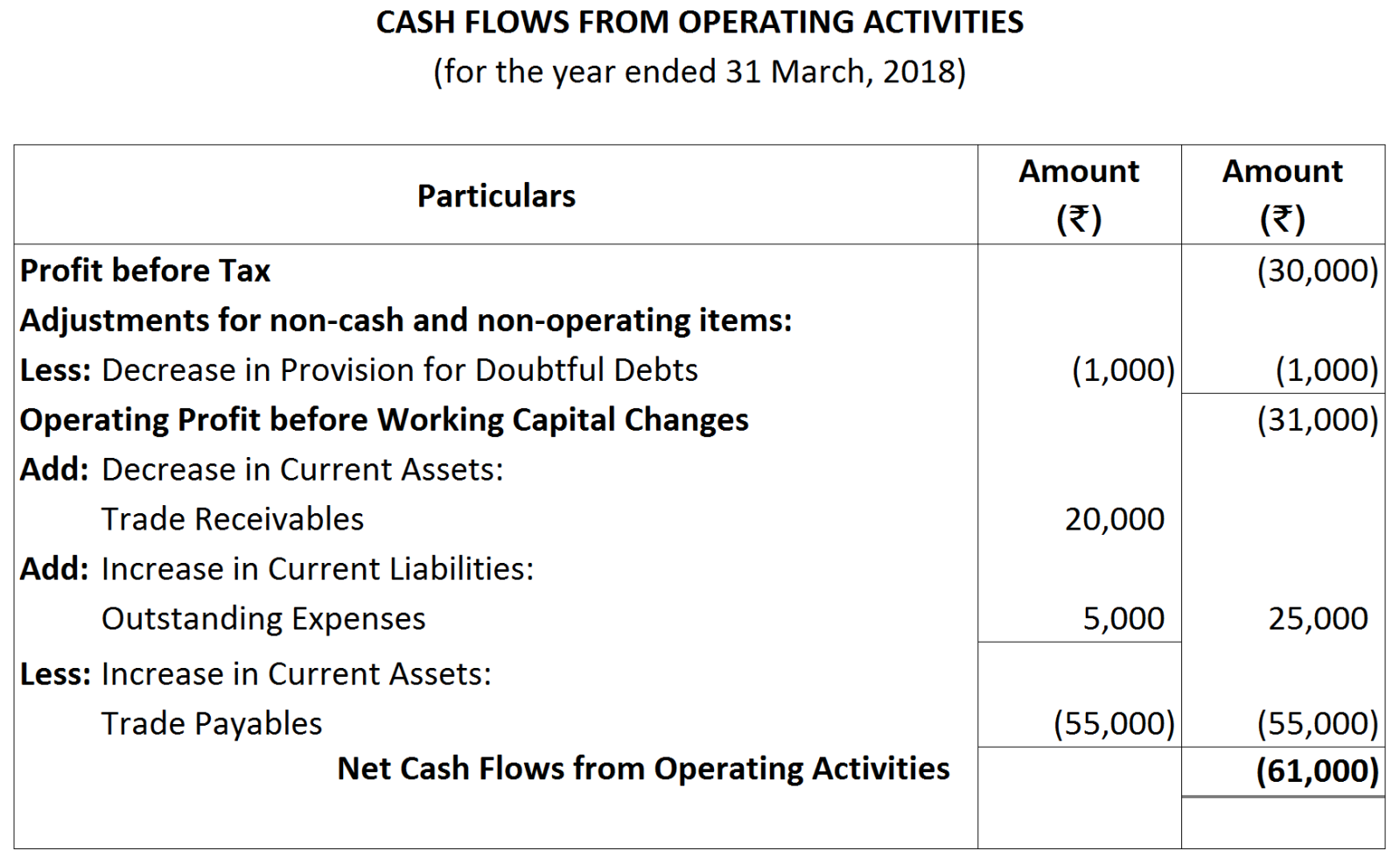
Note: Short-term Loan will be treated as financing activity.
View full question & answer
Question 153 Marks
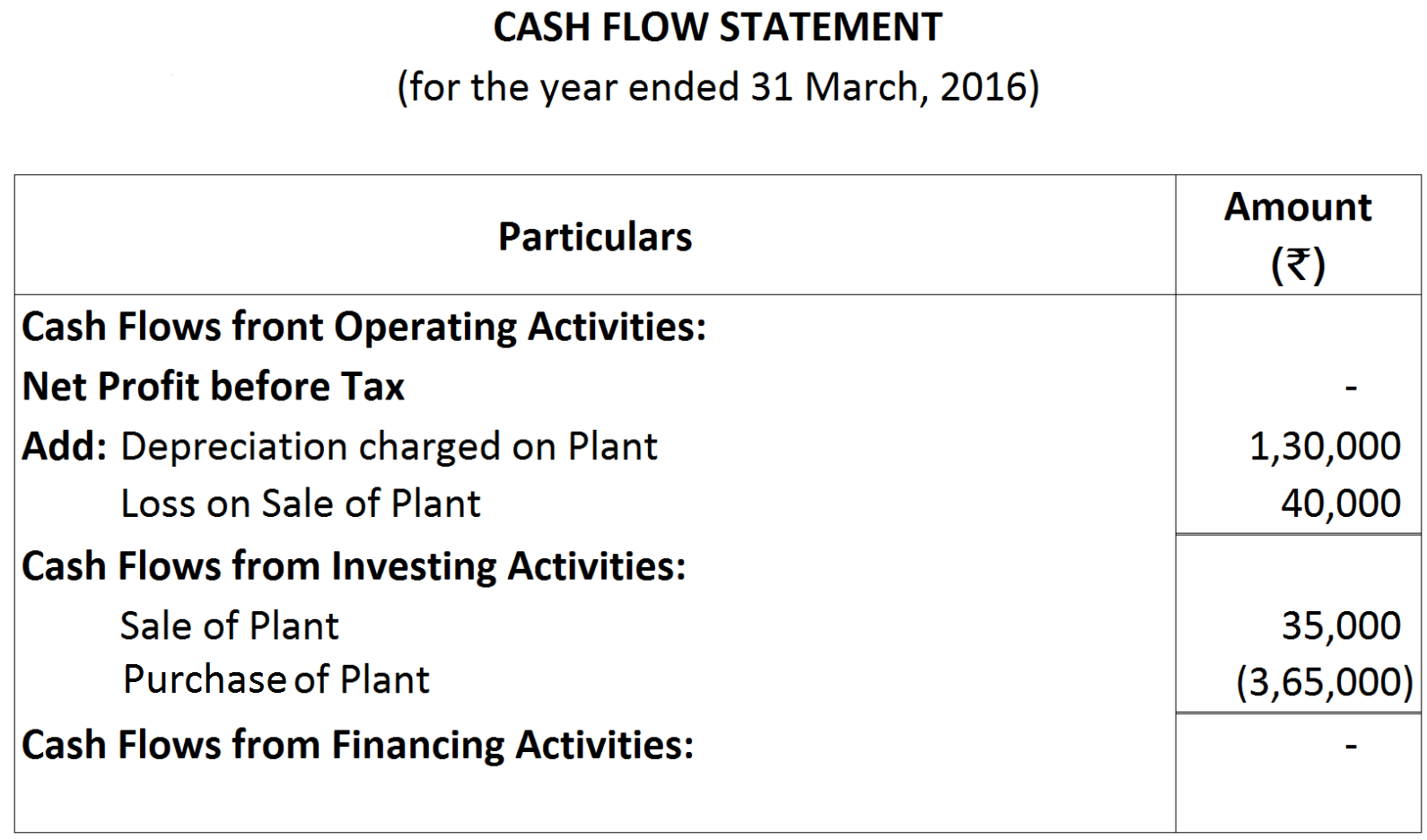
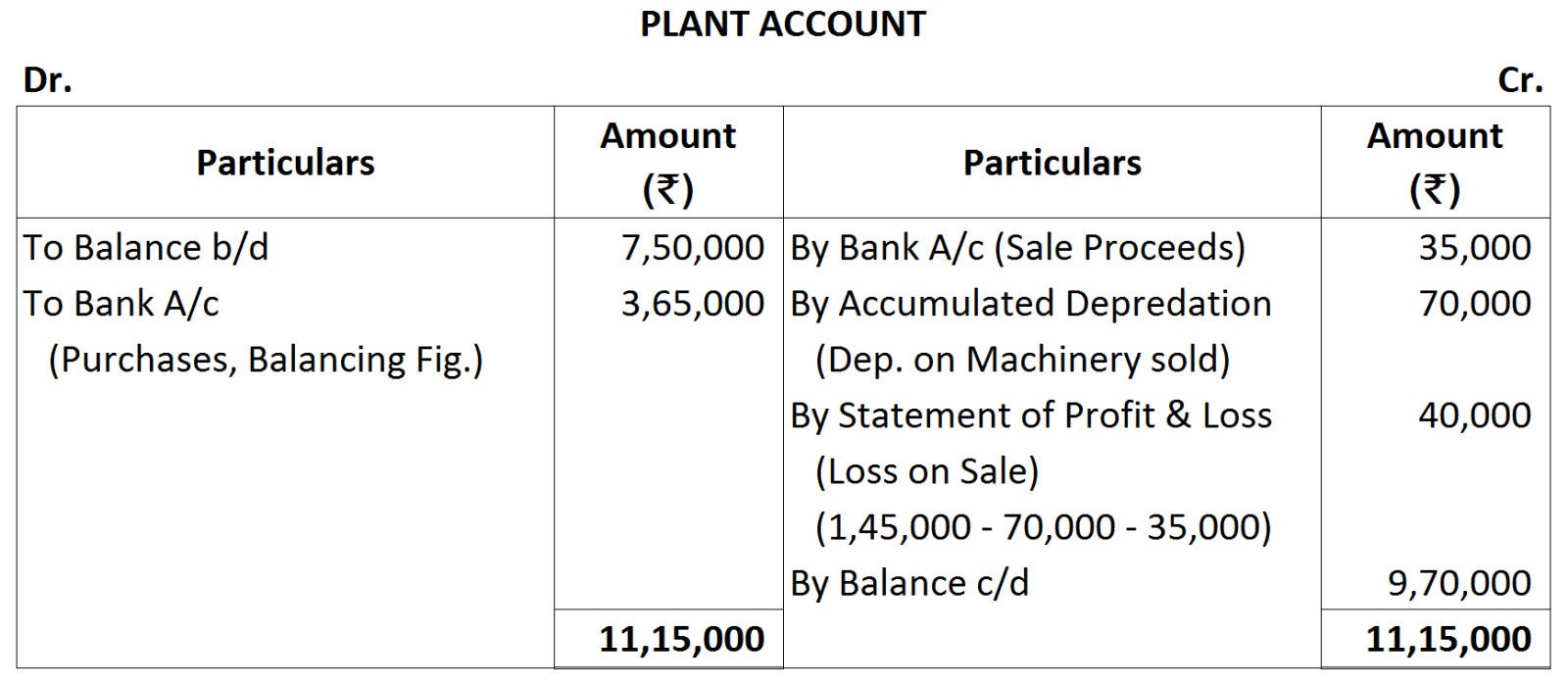
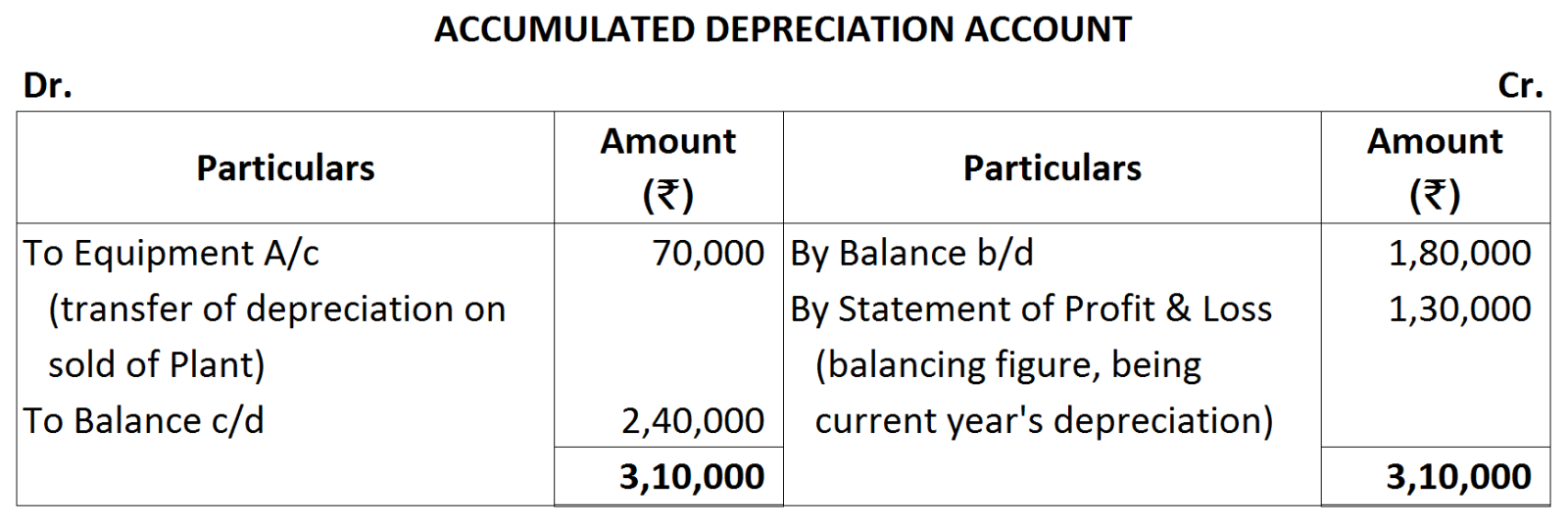
The following balances appeared in Plant Account and Accumulated Depreciation Account in the books of Bharat Ltd. Additional Information:Plant costing ₹ 1,45,000; accumulated depreciation thereon ₹ 70,000, was sold for ₹ 35,000.
You are required to:
  1. Compute the amount of Plant purchased, depreciation charged for the year and loss on sale of plant.
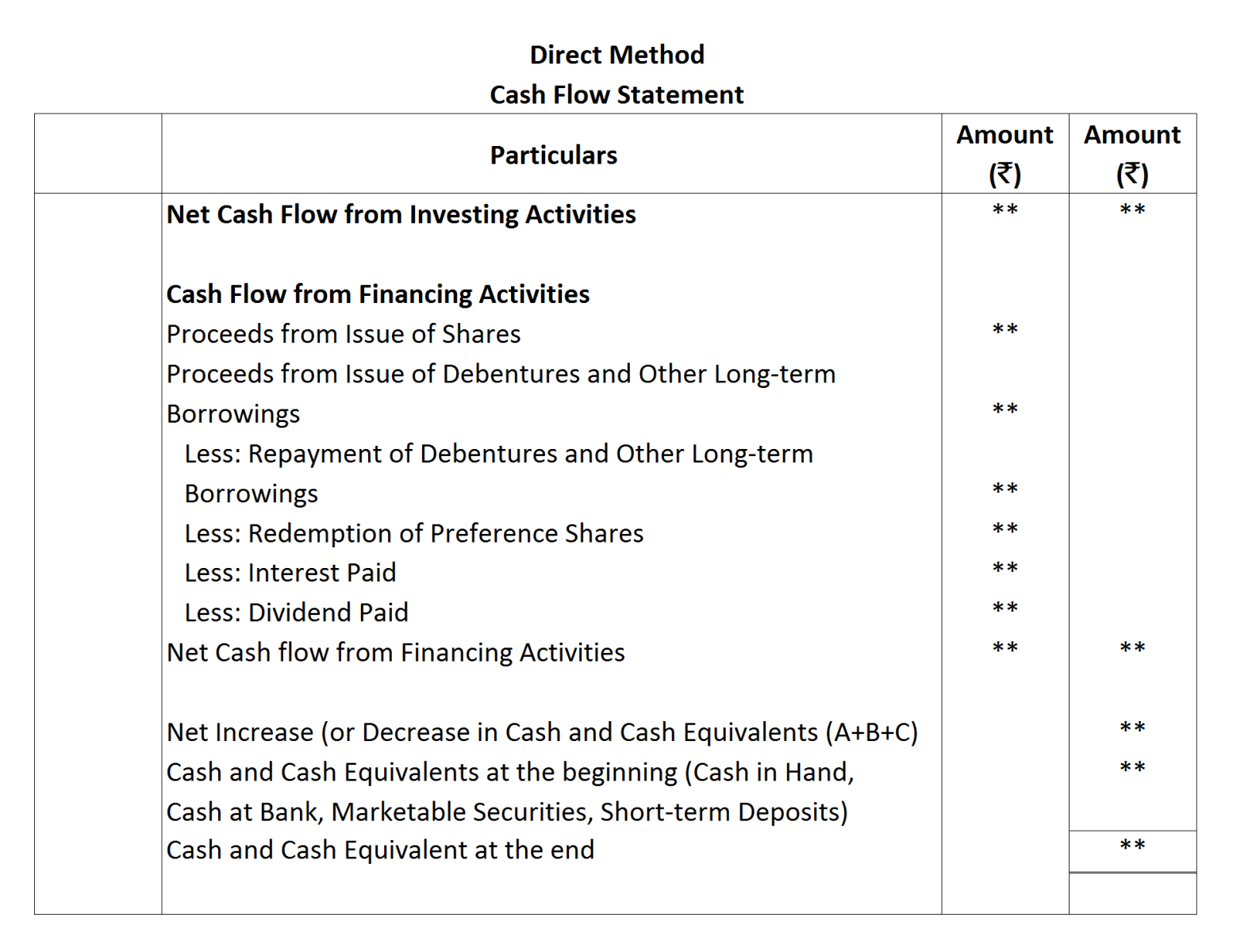
  2. Show how each of the items related to the plant will be shown in the cash flow statement.
Answer
  1. Calculation of Plant Purchased:

Calculation of Current year's depreciation:
  1. Cash Flow Statement for the year ending 31st March, 2016
View full question & answer
Question 163 Marks
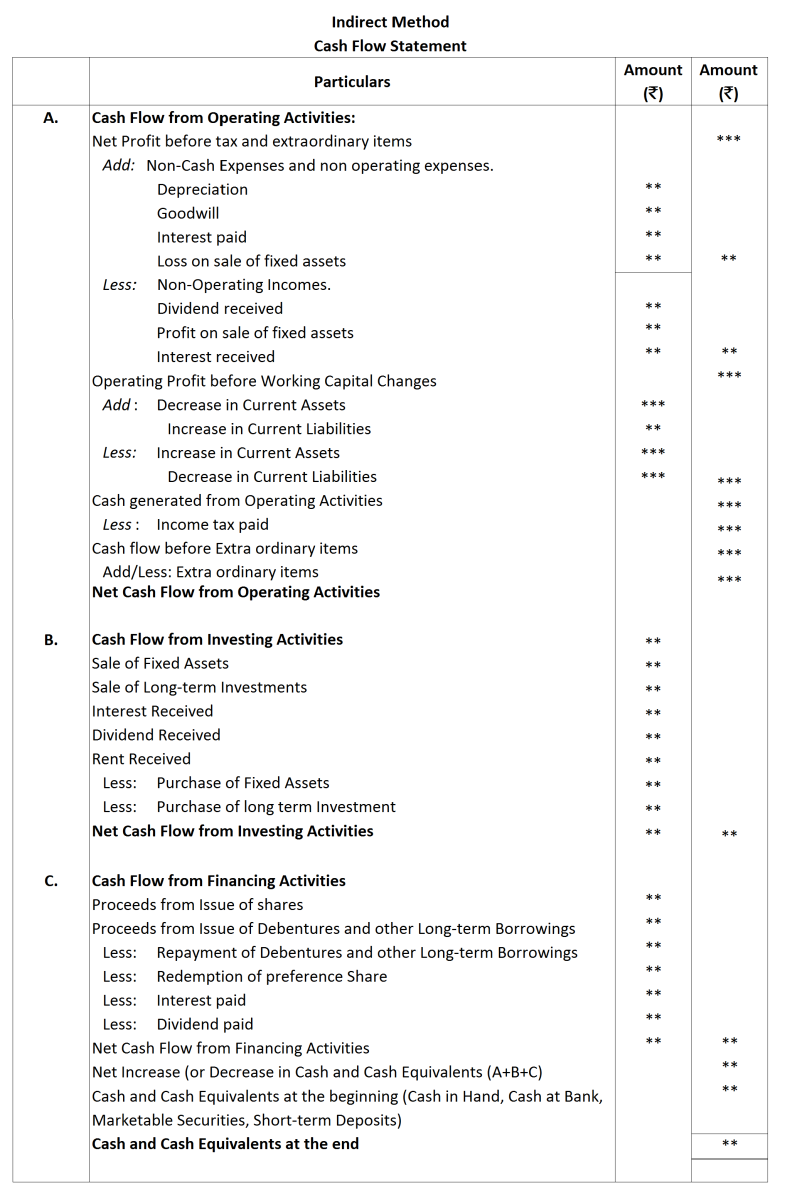
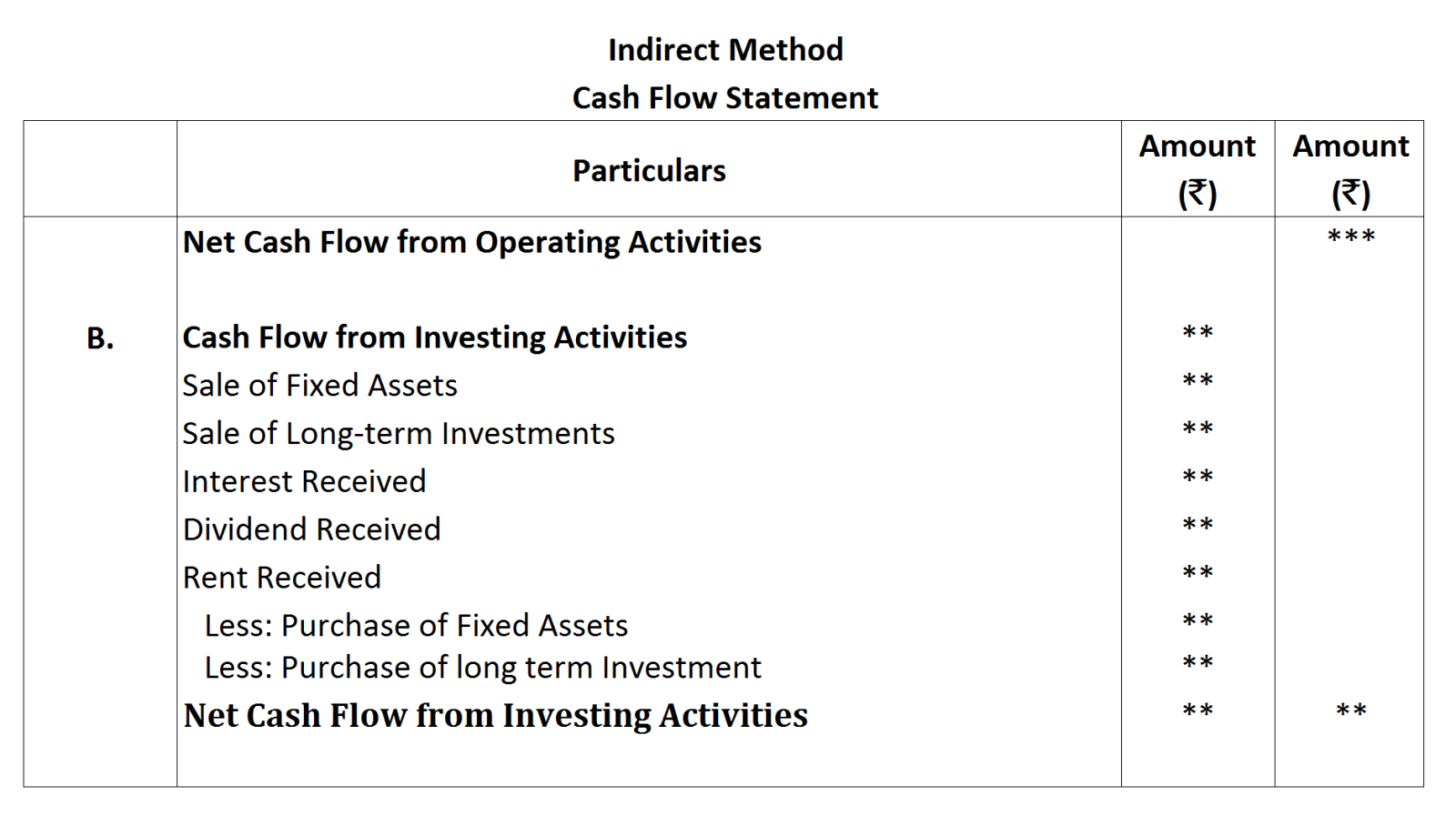
Describe “Indirect” method of ascertaining Cash Flow from operating activities.
Answer
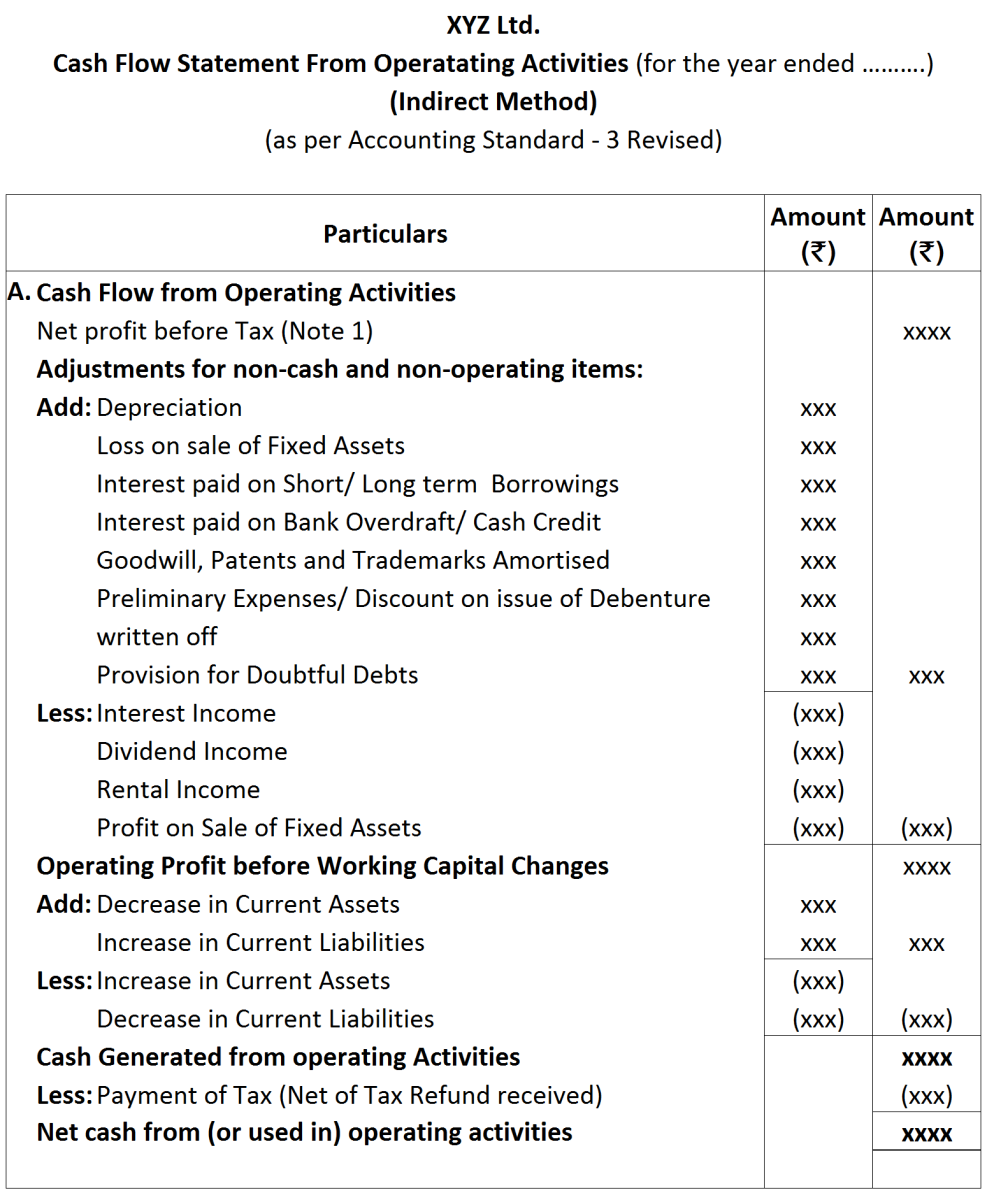
Indirect Method of cash flow statment: In indirect method, the net income figure from the income statement is used to calculate the amount of net cash flow from operating activities. Since income statement is prepared on accrual basis in which revenue is recognised when earned and not when received therefore net income does not represent the net cash flow from operating activities and is necessary to adjust EBIT for those items which effect net income although no actual cash has been paid or received against them.
Indirect Method: Following is the indirect method formula which is used to calculate cash flow from operating activities.
View full question & answer
Question 173 Marks
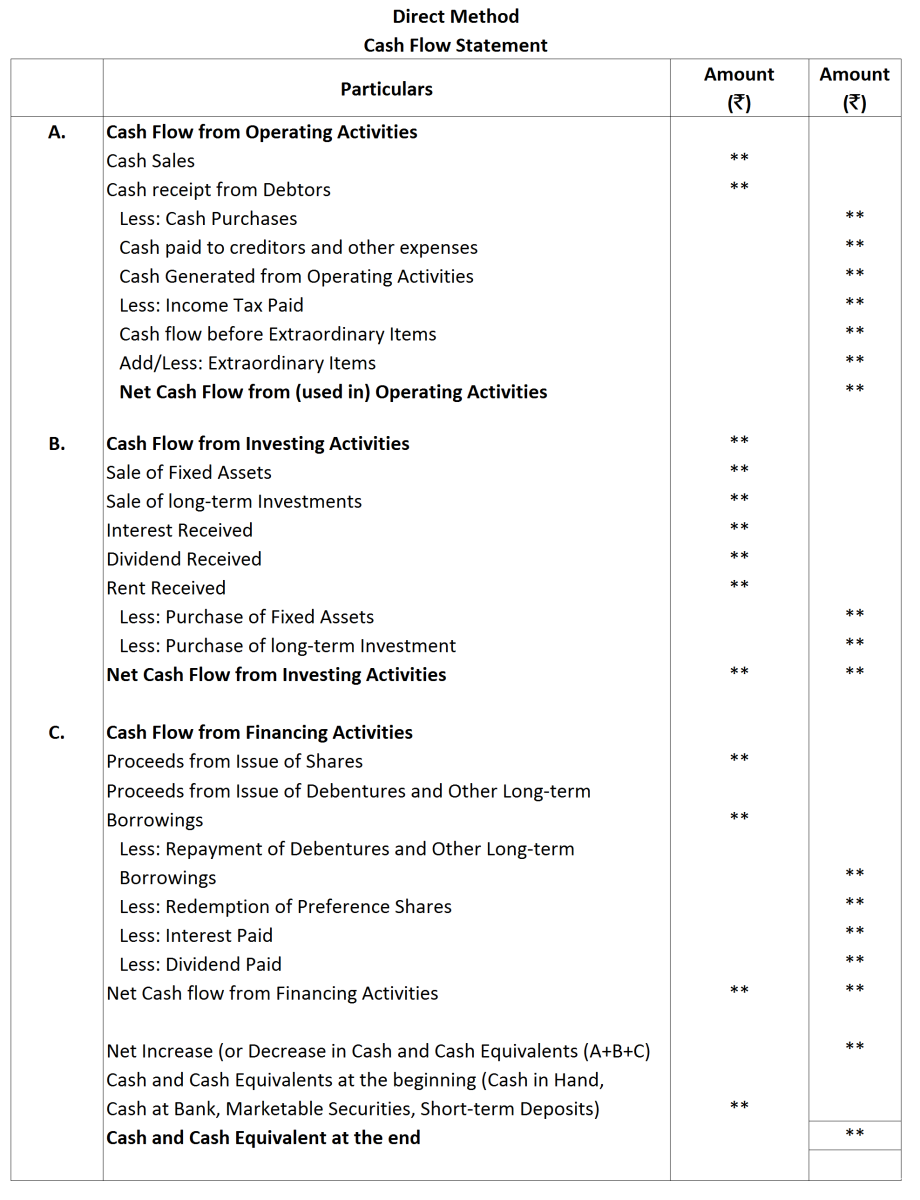
Describe the procedure to prepare Cash Flow Statement.
Answer
The procedure to prepare Cash Flow Statement is described in the following steps in their chronological order.
Step 1: Ascertain the cash flows from operating activities.
Step 2: Ascertain the cash flows from investing activities.
Step 3: Ascertain the cash flows from financing activities.
Step 4: Ascertain net increase or decrease by summing up the amounts of Steps 1, 2, and 3.
Step 5: Write the opening balance of cash and cash equivalents and deduct it from the amount ascertained in Step 4. The resulting figure arrived is the Closing Balance of Cash and Cash Equivalents.
There are two methods viz. Direct Method and Indirect Method for the preparation of Cash Flow Statement.

Note: Preparation of Cash Flow Statement using Direct Method has been excluded from the prescribed syllabus. The format is given since the question has not specified the method explicitly. Students can refer to the direct method for the knowledge purpose.
View full question & answer
Question 183 Marks
For each of the following transactions, calculate the resulting Cash Flow and state the nature of Cash Flow, i.e. whether it is Operating, Investing or Financing:
  1. Acqured machinery for ₹ 2,50,000 paying 20% by cheque and executing a bond for the balance payable.
  2. Paid ₹ 2,50,000 to acqire shares in Informa Tech Ltd.and received a dividend of ₹ 50,000 after acquisition.
  3. Sold machinery of original cost of ₹ 2,00,000 with an accumulated depreciation of ₹ 1,60,000 for ₹ 60,000.
Answer
  1. Investing Activity: 50,000
  2. Investing Activity: 2,00,000
  3. Investing Activity: 60,000
View full question & answer
Question 193 Marks
X Ltd. provides you the following information:
Non-Current Investments as on 31-3-2017
₹ 50,000
Non-Current Investments as on 31-3-2018
₹ 60,000
During the year 2018, X Ltd. purchased investments costing ₹ 25,000 and sold some investments at a loss of 20% on book value. Calculate sources of cash.
Answer
Cost of Investments Sold:
 
Non-Current Investments at the beginning of the period (as on 1.4.2017)
50,000
Add: Purchased during the year
25,000
 
75,000
Less: Non-Current Investments at the end of the period (as on 31.3.2018)
(60,000)
Cost of Investments Sold
15,000
Sources of Cash:
Cost of Investments sold
15,000
Less: Loss 20%
(3,000)
Cash Inflow
12,000
View full question & answer
Question 203 Marks
State which of the following would result in inflow, outflow or no flow of cash:
  1. A long-term loan from a bank.
  2. Repayment of long-term loan.
  3. Payment of interest on loan.
  4. Conversion of debentures into preference shares.
  5. Interest received on investments.
  6. Interest due on debentures.
  7. Receipt of accrued interest.
  8. Purchase of securities of a company.
  9. Buy-back of Equity Shares.
  10. Purchase of Goodwill.
  11. Goodwill written off.
  12. Patents written off.
Answer
Transaction
Effect on Cash or Cash Equivalents
Reason
1.
Inflow
Cash is increased.
2.
Outflow
Cash is decreased.
3.
Outflow
Cash is decreased.
4.
No effect
Cash is not affected.
5.
Inflow
Cash is increased
6.
No effect
Cash is not affected.
7.
Inflow
Cash is increased.
8.
Outflow
Cash is decreased.
9.
Outflow
Cash is decreased.
10.
Outflow
Cash is decreased.
11.
No effect
Cash is not affected.
12.
No effect
Cash is not affected.
View full question & answer
Question 213 Marks
Give the classification of the Cash Flow for preparing Cash Flow Statement.
Answer
As per Accounting Stnndard-3 (Revised) changes resulting in inflows and outflows of Cash are classified into three types of activities namely:
  1. Cash Flows from Operating Activities.
  2. Cash Flows from Investing Activities.
  3. Cash Flows from Financing Activities.
View full question & answer
Question 223 Marks
Following are the extracts from the Balance Sheet of MAH-Ltd. as at 31st March, 2018:
Particulars
31st March, 2018 ₹
31st March, 2017 ₹
Surplus, i.e., Balance in Statement of Profit and Loss
Dividend Payable
10,00,000
50,000
5,00,000
……
Additional Information: Proposed Dividend for the years ended 31st March, 2017 and 2018 are ₹ 4,00,000 and ₹ 5,00,000 respectively.
Prepare the Note to show Net Profit before Tax and Extraordinary Items.
View full question & answer
Question 233 Marks
State which of the following would result in inflow/ outflow or no flow of cash and cash Equivalesnts:
  1. Sale of Fixed Assests, Book value ₹ 1,00,000 at profit of ₹ 10,000.
  2. Sale fof goods aganits cash.
  3. Purchase of machinery for cash.
  4. Purchase of Land and Building for ₹ 10,00,000. Consideration paid by issue of debentures.
  5. Issued fully paid Bonus Shares.
  6. Cash withdrawn form Bank
  7. Payment of Interim Dividend.
  8. Proposed Dividend.
Answer
Inflow
Outflow
No Flow
(a). Sale of Fixed Assets
(c). Purchase of Machinery for cash
(d). Purchase of Land and Building. Consideration paid by issue of Debentures.
(b). Sale of goods against cash
(g). Payment of Interim Dividend
(e). Issued fully paid bonus shares
 
 
(f). Cash withdrawn from Bank
 
 
(h). Proposed Dividend
View full question & answer
Question 243 Marks
State the uses of cash flow statement.
Answer
The uses of cash flow statement are as follows:
  1. It is useful for short term financial planning about inflows and outflow of cash.
  2. It helps in analysing the reason for the change in cash and cash equivalent balances of a company.
  3. It assists in determining and assessing liquidity and solvency positions of a company.
  4. It enables to analyse and study the trends of receipts and payments of cash from various activities of a company and thereby helps in drafting various policy measures and short term planning.
  5. It enables the segregation of cash flows from operating, investing and financing activities of the business separately.
  6. It assists in making decision about distribution of profit with reference to the availability of cash.
View full question & answer
Question 253 Marks
From the following particulars, calculate cash flows from investing activities:
Dividend received on shares held as Investments
₹ 10,000
Interest received on debentures held as Investments
₹ 8,000
Dividend paid on equity share capital
₹ 50,000
View full question & answer
Question 263 Marks
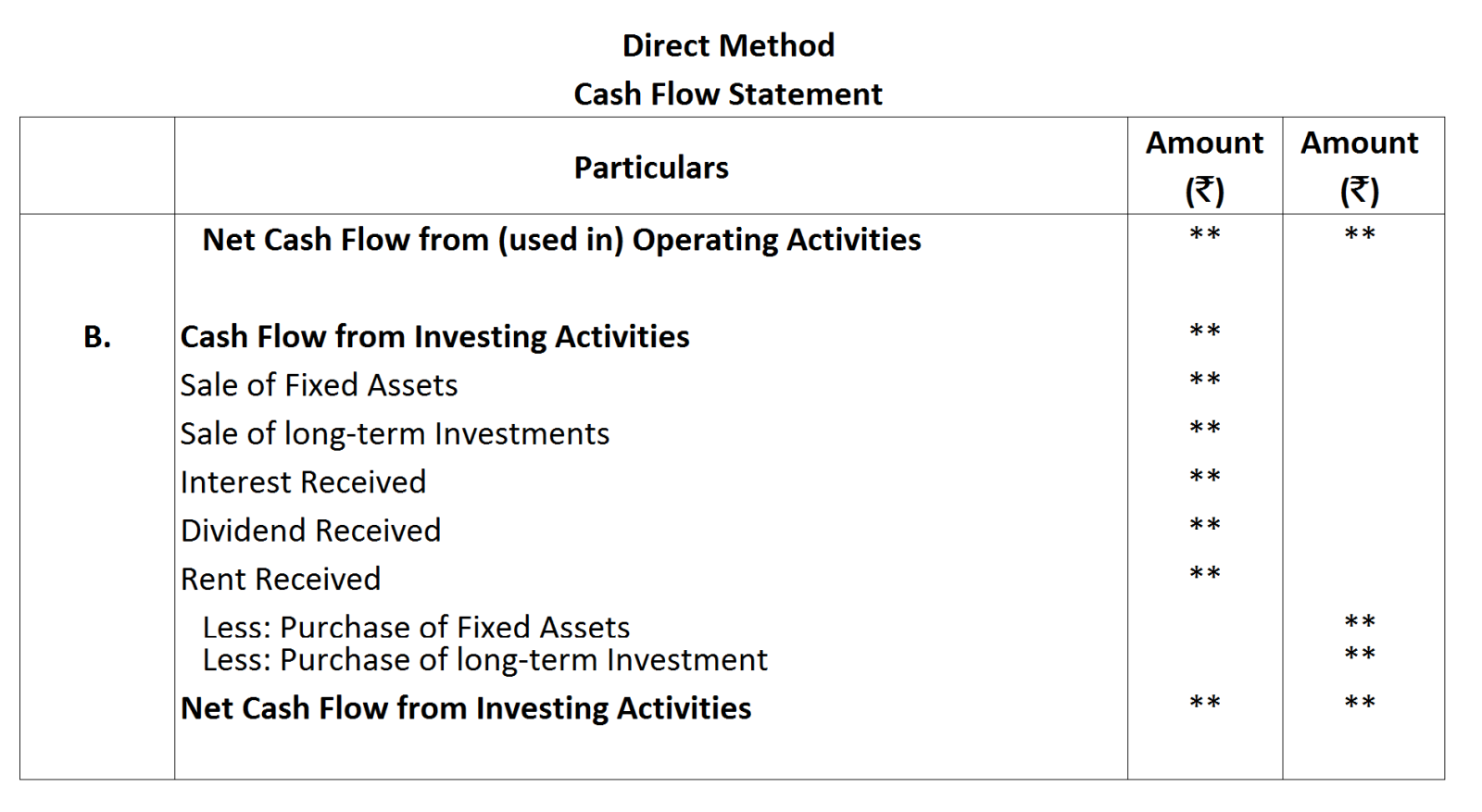
Explain the major Cash Inflows and outflows from investing activities.
Answer
Investing activities are those activities that are related to sales and purchases of long-term fixed assets like, land and building, plant and machinery, furniture, etc. These fixed assets are not held for resale. The activities like sale and purchase of investments that are not included in the cash equivalents are also included in Investing activities. Any income arising from such investments (assets) are regarded a part of investing activities.
As per the AS3, the major cash inflows and outflows from investing activities are as follows:
  1. Cash payments to acquire fixed assets (including intangibles like, goodwill). These payments include capitalised cost of research and development and self constructed fixed assets.
  2. Cash receipts from disposal of fixed assets (including intangible assets).
  3. Cash payments to acquire shares, warrants, or debt instruments of other enterprises and interest in joint venture (other than payments of those instruments consider as cash equivalents and are held for the trading purposes).
  4. Cash receipts from disposal of shares, warrants or debt instruments of other enterprises and interest from joint ventures (other than receipts from those held for trading purposes).
  5. Cash advances and loans made to third parties (other than advances, and loans made by financial enterprises). These will be treated as cash flows from the operating activities.
  6. Cash receipts from repayment of advances and loans made to third parties (other than advances and loans of financial enterprises). These will be treated as cash flows from operating activities.
  7. Cash receipts from insurance company for any property involved in accident. Any income arising from fixed assets or investments like interest, dividend, rent etc. In case of financial enterprises interest and dividend is treated as operating activities.

Note: Preparation of Cash Flow Statement using Direct Method has been excluded from the prescribed syllabus. The format is given since the question has not specified the method explicitly. Students can refer to the direct method for the knowledge purpose.
View full question & answer
Question 273 Marks
“The nature/ type of enterprise can change altogether the category into which a particular activity may be classified.” Do you agree? Illustrate your answer.
Answer
Yes, the nature or type of an enterprise can change altogether the category into which a particular activity may be classified. This can be better understood with the help of an example of two firms. One engaged in real estate and the other engaged in general business. For the firm that is engaged in real estate business purchase and sales of building will be part of the operating activity on the other hand firm that is engaged in general business purchase and sales of building will be part of the investing activity. Hence, it can be said that the classification of activities depends on the nature and type of enterprise.
View full question & answer
Question 283 Marks
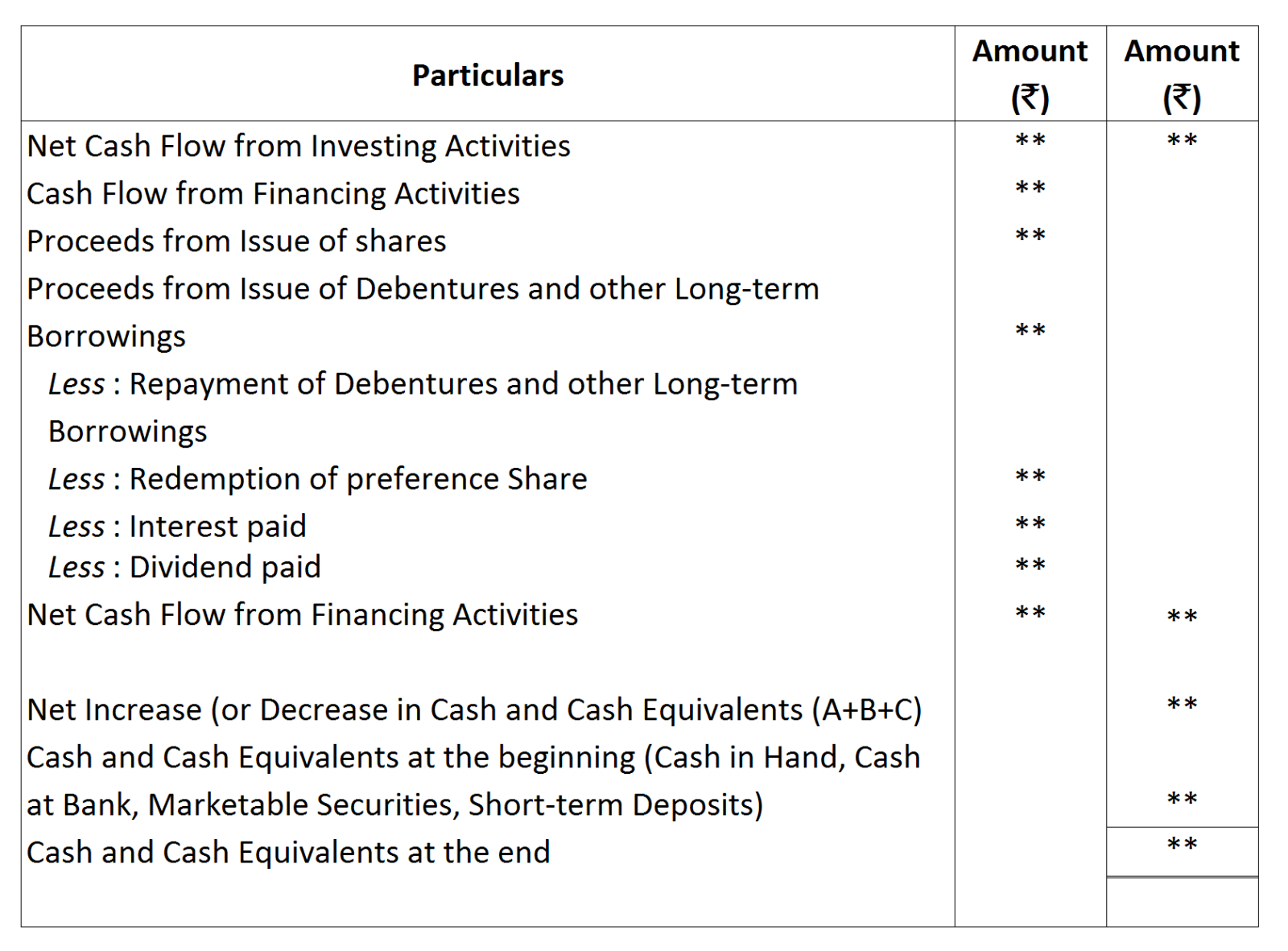
Following is the position of Current Assets and Current Liabilities of Z Ltd.

The Company incurred a loss of ₹ 30,000 during the year. Calculate Cash from operating activities.
Answer

Hint: Goodwill will be treated as purchase of Goodwill. Hence, it will not affect Cash from operating activities.
View full question & answer
Question 293 Marks
Explain the major Cash Inflows and outflows from financing activities.
Answer
Financing activities are those activities that are related to capital or long term funds of an enterprise. These activities results in the change in the capital and borrowed funds.
As per the AS3, the major cash inflows from financing activities are as follows:
  1. Cash proceeds from issue of shares and other similar instruments.
  2. Cash proceeds from issue of debentures, loans, notes, bonds, and other short and long-term borrowings.
As per the AS3, the major cash outflows from financing activities are as follows:
  1. Cash repayments of the amount borrowed in form of debentures, loans, notes bonds, and other short and long-term borrowings.
  2. Buy-back of shares and debentures.
  3. Interest paid on debentures, loans, and advances.
  4. Dividend paid to the preference shareholders and equity shareholders.
An important point that must be noted is that the purchase and sale of securities, interest paid or received and dividend received is treated as cash flow from operating activities for an investment company. But dividend paid is treated as cash flow from financing activities.
View full question & answer
Question 303 Marks
Classify the following transactions as:
  1. Operating Activities,
  2. Investing Activities,
  3. Financing Activities,
  4. Cash and Cash Equivalents.
  1. Purchase of Shares.
  2. Buy-back of Equity Shares.
  3. Payment of Share issue expenses.
  4. Discount allowed to Customers.
  5. Discount received from Suppliers.
  6. Increase in balance of Cash Credit.
  7. Repayment of Long-term Loan.
  8. Repayment of Short-term Loan.
  9. Proceeds from Short-term Borrowings.
  10. Dividend paid on Preference Shares.
  11. Short-term deposits in Bank.
  12. Rent received by a Company whose main business is Real Estate Business.
  13. Rent received by a Company whose main business is manufacturing.
Answer
1.
Purchase of Shares.
Investing Activities
2.
Buy-back of Equity Shares.
Financing Activities
3.
Payment of Share issue expenses.
Financing Activities
4.
Discount allowed to Customers.
Operating Activities
5.
Discount received from Suppliers.
Operating Activities
6.
Increase in balance of Cash Credit.
Financing Activities
7.
Repayment of Long-term Loan.
Financing Activities
8.
Repayment of Short-term Loan.
Financing Activities
9.
Proceeds from Short-term Borrowings.
Financing Activities
10.
Dividend paid on Preference Shares.
Financing Activities
11.
Short-term deposits in Bank.
Cash and Cash Equivalents
12.
Rent received by a Company whose main business is Real Estate Business.
Operating Activities
13.
Rent received by a Company whose main business is manufacturing.
Investing Activities
View full question & answer
Question 313 Marks
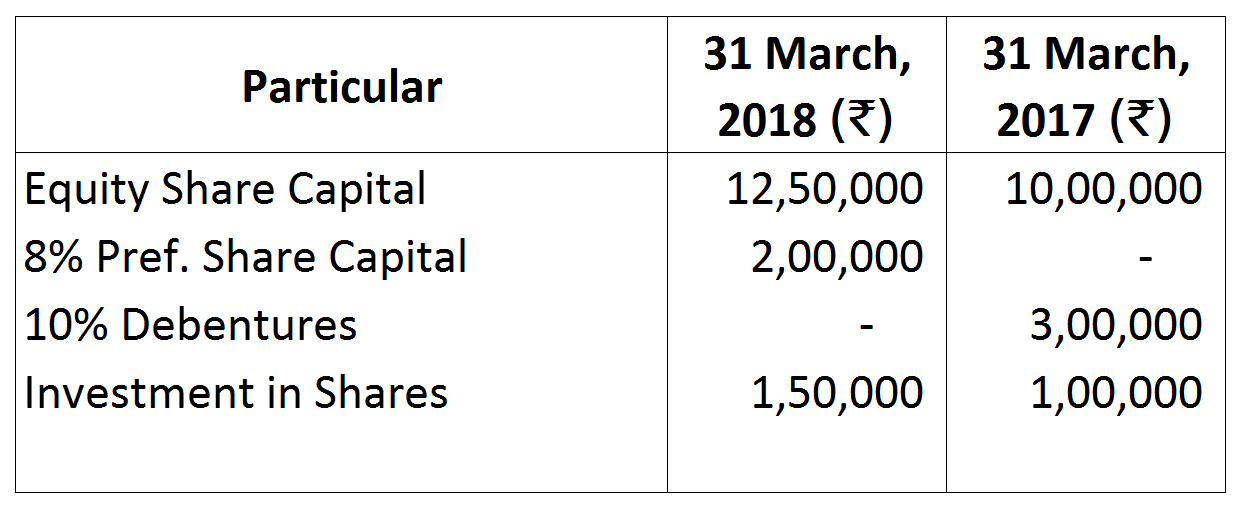
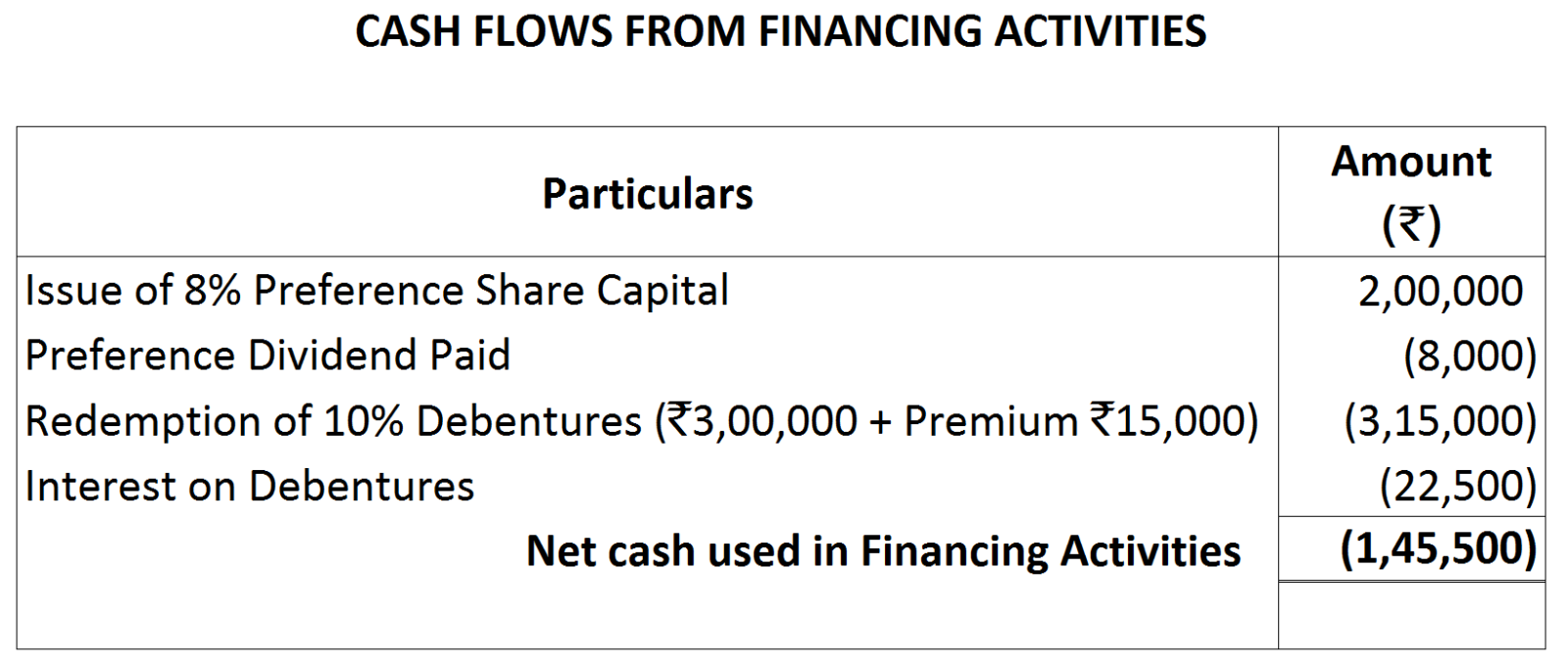
Sony Ltd. provides you the following information. Calculate Cash flows from financing activities:

Additional Information:
  1. During the year 2017-18, Sony Ltd. issued bonus shares in the ratio of 4 : 1 by capitalising reserve.
  2. 10% Debentures were redeemed on 1 Jan., 2018 at a premium of 5%.
  3. Preference Dividend paid ₹ 8,000.
  4. Dividend received on Investments ₹ 10,000.
Answer

Working Notes:
  1. There will be no cash flow due to issue of bonus shares.
  2. Investment in Shares and dividend received on investments will not be recorded in cash flow from financing activities.
View full question & answer
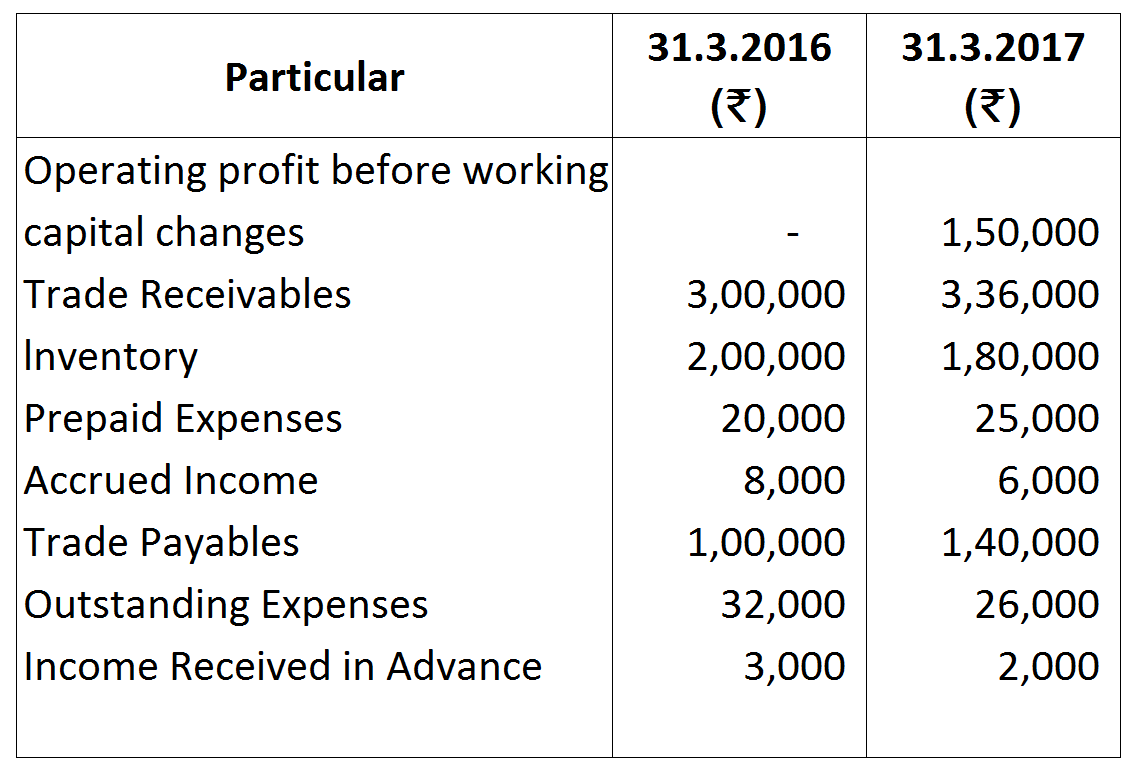
Question 323 Marks
Calculate 'Cash from operating activities' from the following balances:

Operating profit before working capital changes was ₹ 1,30,000
View full question & answer
Question 333 Marks
Raj Ltd. had a profit of ₹ 17,50,000 for the year ended 31.3.2016 after considering the following:
 
Depreciation on building 1,30,000
Depreciation on plant and machinery 40,000
Goodwill written off 25,000
Loss on sale of machinery 9,000
Following was the position of current assets and current liabilities of the company as at 31.3.2015 and 31.3.2016.
Calculate cash flow from operating activities.
View full question & answer
Question 343 Marks
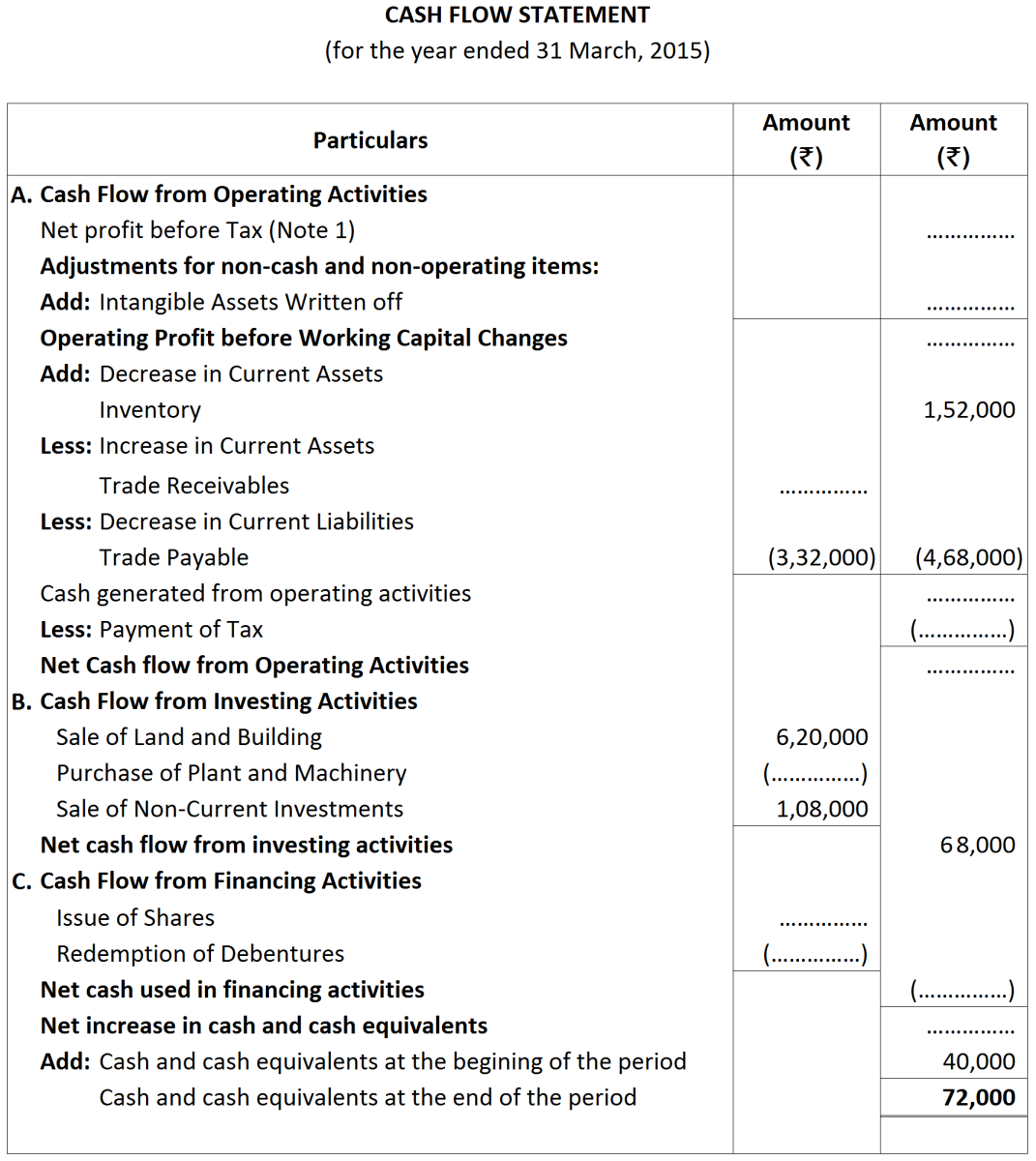
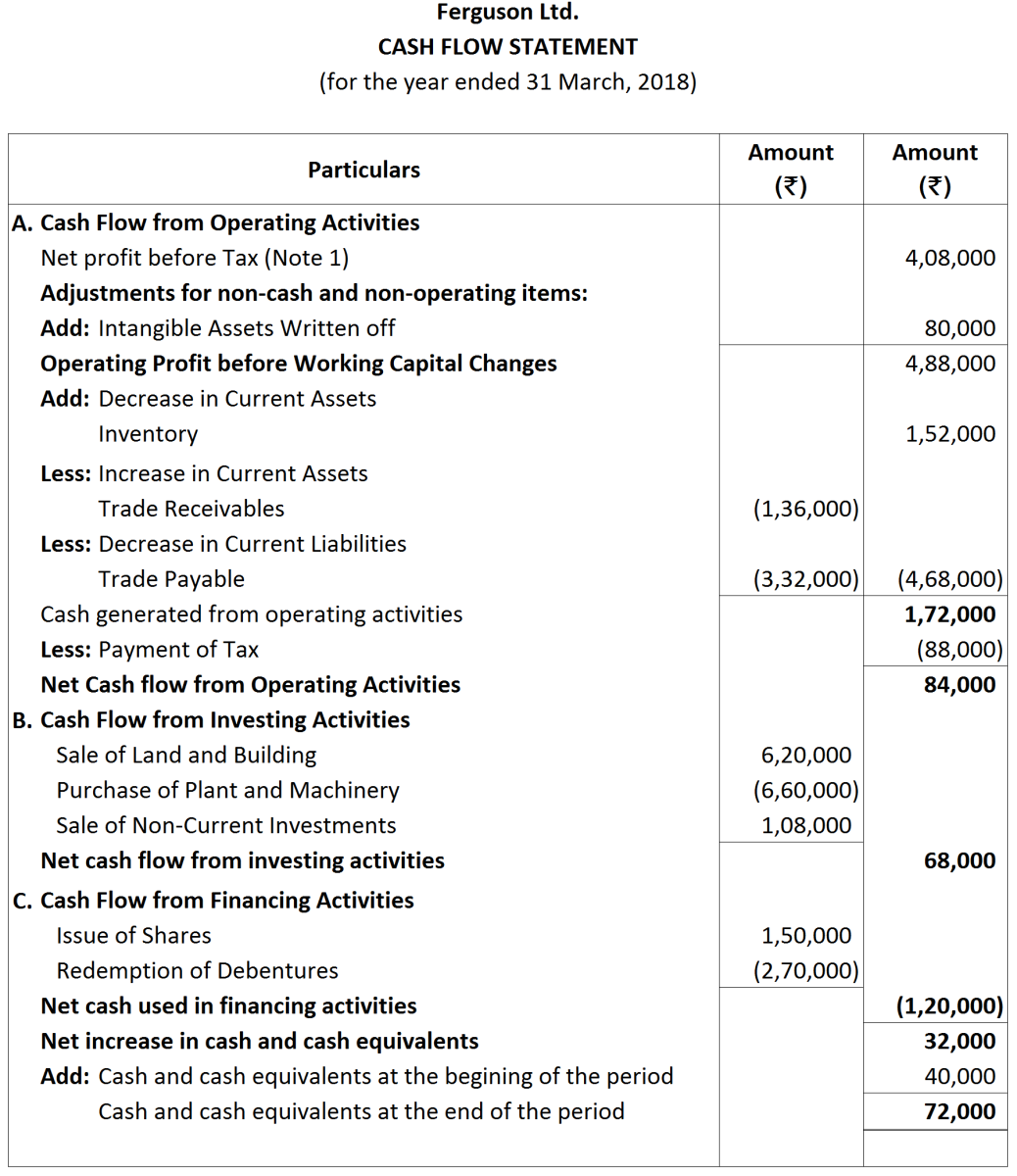
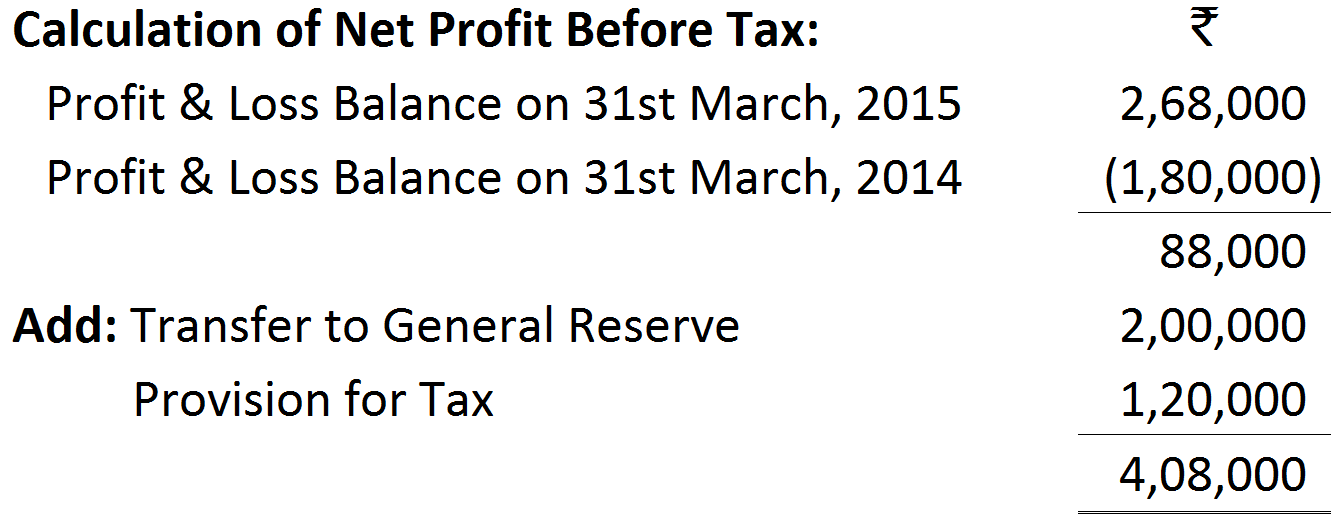
From the given notes to accounts and cash flow statement of Ferguson Ltd. complete the missing figures:
Answer


Net Profit before Tax ₹ 4,08,000; Cash Flow from Operating Activities ₹ 84,000; Cash Flow from Investing Activities ₹ 68,000; Cash used in Financing Activities ₹ 1,20,000.
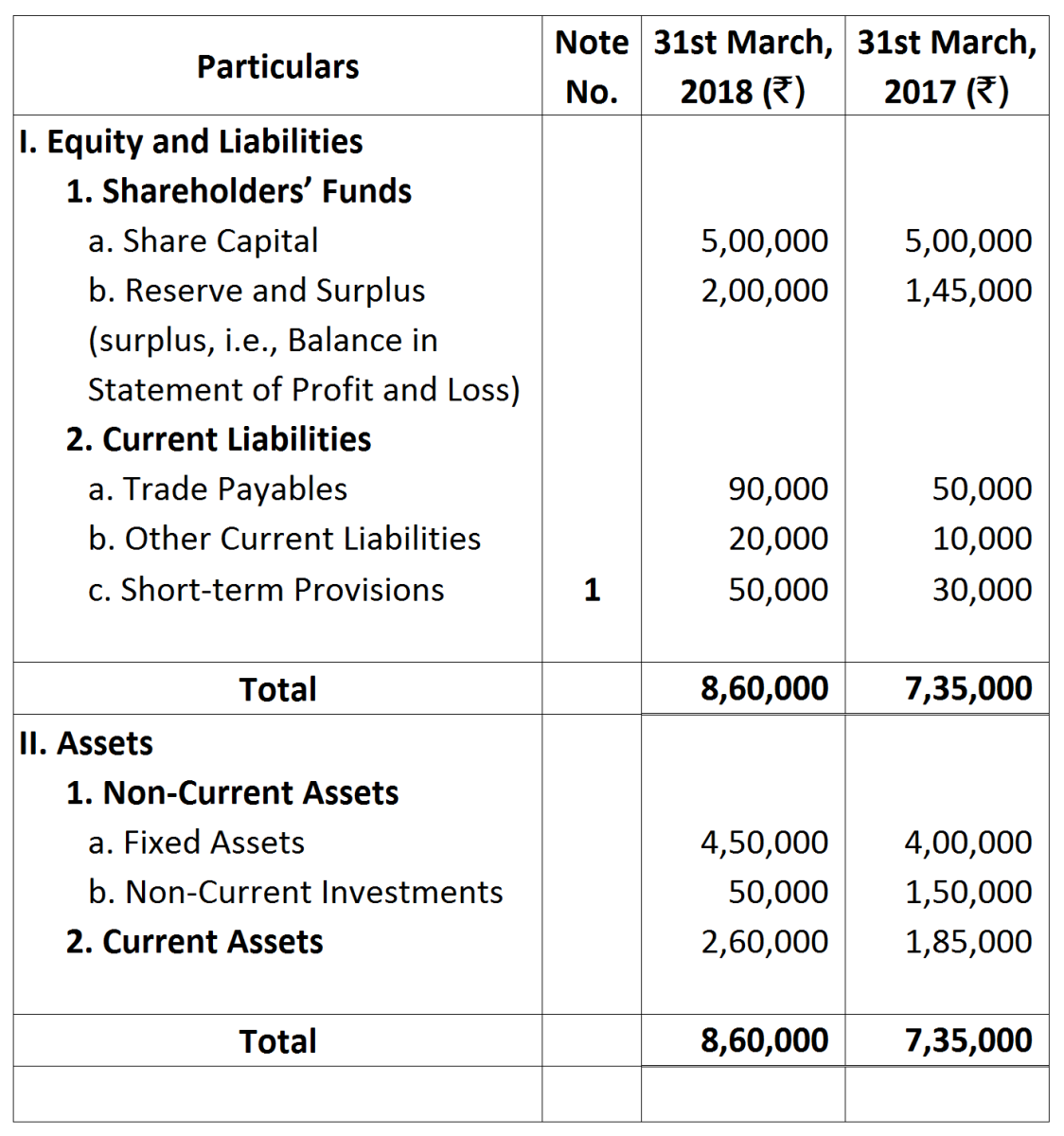
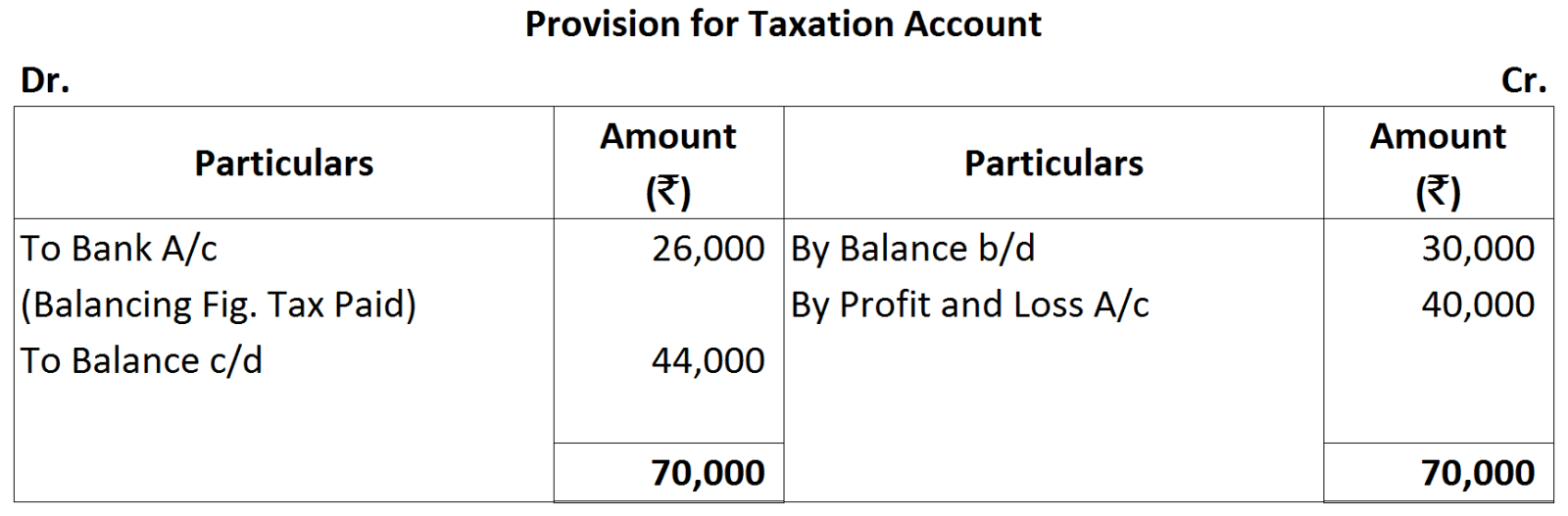
Hint: Cash used in Financing Activities is the balancing figure of Cash Flow Statement.
View full question & answer
Question 353 Marks
What is Cash Flow Statement? What are the objectives of preparing it?
Answer
Cash Flow Statement is a statement that shows inflows (receipts) and outflows (payments) of Cash and Cash Equivalents of an enterprise during a specified period of time.
The objectives of Cash Flow Statement are:
  • To determine the sources (receipts) of Cash and Cash Equivalents under operating, investing and financing activities of the enterprise.
  • To determine applications (payments) of Cash and Cash Equivalents under operating, investing and financing activities of the enterprise.
  • To determine net change in Cash and Cash Equivalents being the difference between sources (receipts) and applications (payments) under operating, investing and financing activities between the dates of two Balance Sheets.
View full question & answer
Question 363 Marks
Calculate Net Profit before Tax and Extraordinary Items of Premier Sales Ltd. from its Balance Sheet as at 31st March, 2018:

Additional Information:
  1. Proposed Dividend for the years ended 31st March, 2017 and 2018 are ₹ 50,000 and ₹ 75,000 respectively.
  2. Interim Dividend paid during the year was ₹ 10,000.
View full question & answer
Question 373 Marks
Following is the extract from the Balance Sheet of Zee Ltd.:
Particulars
31st March, 2018 ₹
31st March, 2017 ₹
Equity Share Capital
10% Preference Share Capital
Surplus, i.e., Balance in Statement of Profit and Loss
Unpaid Dividend
8,00,000
6,00,000
7,20,000
20,000
8,00,000
6,00,000
4,00,000
……
Additional Information:
  1. Proposed equity dividends for the year 2016-17 and 2017-18 are ₹ 1,60,000 and 2,00,000 respectively.
  2. An Interim Dividend of ₹ 40,000 on Equity Shares was paid.
Show Net Profit before Tax and Extraordinary Items.
View full question & answer
Question 383 Marks
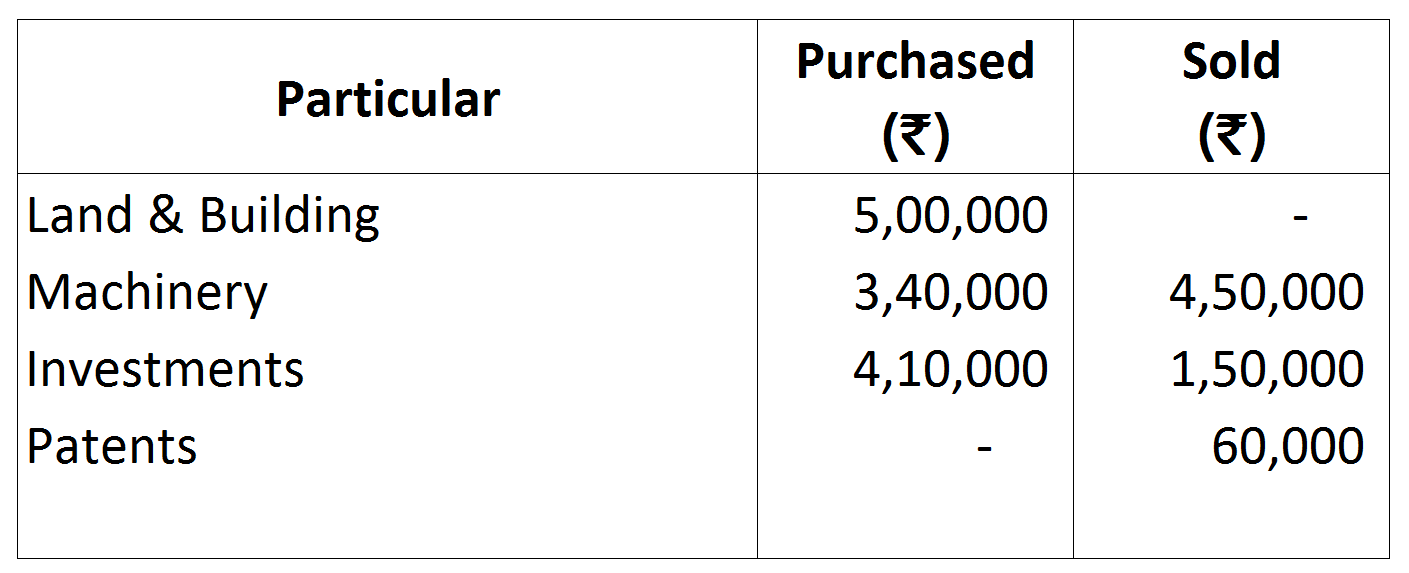
X Ltd. has Plant and Machinery whose written down value on 1st April, 2014 was ₹ 15,40,000 and on 31st March, 2015 was ₹ 19,10,000. Depreciation for the year was ₹ 1,50,000. In the beginning of the year, a part of plant was sold for ₹ 2,20,000 which had a written down value of ₹ 3,00,000.
Calculate Cash Flow from Investing Activities.
View full question & answer
3 Marks Question - Accountancy STD 12 Commerce Questions - Vidyadip