Question
Describe major landforms.

Answer

The major landforms are mountains, plateaus and plains. Details are given as under :

(i) Mountains : Mountain is natural elevation of the Earth surface. The mountains may have a small peak and a broad base. Less people live in the mountain areas because of harsh climate. Less land is available for farming because of steep slopes. Mountains may vary in their heights and shape. There are three types of mountains :

1. Fold Mountains
2. Block Mountains
3. the Volcanic Mountains.

Fold mountains are formed due to the processes of erosion. Block mountains are created when large areas are broken and displaced vertically. Volcanic mountains are formed due to volcanic activity. Mountains are very useful.

(ii) Plateau : A plateau is an elevated flat land. It is a flat-topped table land standing above the surrounding area. A plateau may have one or more sides with steep slopes. These may be young or old, hundred metres to several thousand metres. The Tibet plateau is the highest plateau in the world. Plateaus are very useful because they are rich in mineral deposits.

(iii) Plains : Plains are large stretches of flat land. Most of the plains are formed by rivers and their tributaries. Some of the largest plains made by the rivers are found in Asia and North America. Generally, the plains are very fertile, easy to transport. Thus, these are thickly populated regions of the world. In Asia, plains are formed by the Ganga and the Brahmaputra in India and the Yangtze in China. Plain areas are useful for habitation.

Need a full question paper?

Generate a complete, print-ready paper with questions like this in minutes — across 16+ boards, with answer keys.

Start Generating Free

Similar questions

The diet of Harappans was quite diverse. Validate the statemtent.
What kinds of evidence do historians use to find out about trade and trade routes?
Look at the picture and answer the following questions
Image

(a) Which famous site is it ?
(b) Where is it located- place and the state ?
(c) Why were so many caves cut from the rock ?
(d) How are these caves related to Hinduism, Buddhism and Jainism ?
For each characteristic in the list above, can you make a list of professions or occupations that might exist in such a society?
Given that every object or structure tells a story and is like a piece in a jigsaw puzzle, how do historians ensure they accurately reconstruct historical events from these diverse sources?
Describe some conflicts in our society and the role of the government in resolving them?
Look at the picture of a carved stone and answer the following questions.
Image
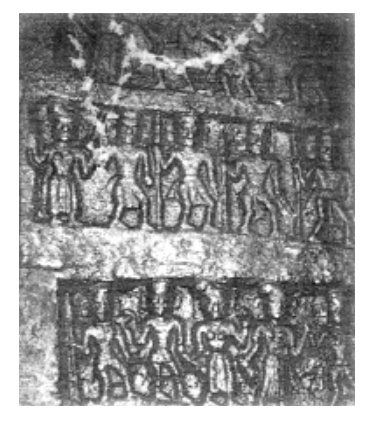
(a) Whom do these five figures shown in the picture represent ?
(b) In which part of India was this carved stone found ?
(c) How is this carved stone related to the tribal culture of that area ?
(d) What conclusion did the anthropologist K.S. Singh draw from such carved stones and the folklores ?
What are the Vedas? What is their message?
Answer the following questions based on the text :
1. Was there a problem with the BPL list that the Gram Sabha was finalising ? What was this problem ?
2. Why do you think Soorajmal kept quiet even though Saroj asked him to speak ?
3. Have you seen any similar incidents when people are unable to speak for themselves ? Why do you think that happened and what prevented the person from speaking ?
4. How can the Gram Sabha prevent the Panchayat from doing what it likes ?
Read the following paragraph and answer the questions that follows.
Early humans faced many challenges from nature and lived in bands or groups to help each other. They were constantly seeking shelter and food, and were mainly hunters and gatherers; this means that they relied on hunting and collecting edible plants and fruits for their survival.

Our early ancestors also had certain beliefs about the natural elements and possibly also some notion of afterlife. These groups lived in temporary camps, rock shelters or caves, and communicated with each other using languages that are now lost. They used fire and started making objects that made their lives easier, like improved stone axes and blades, arrowheads and other tools.

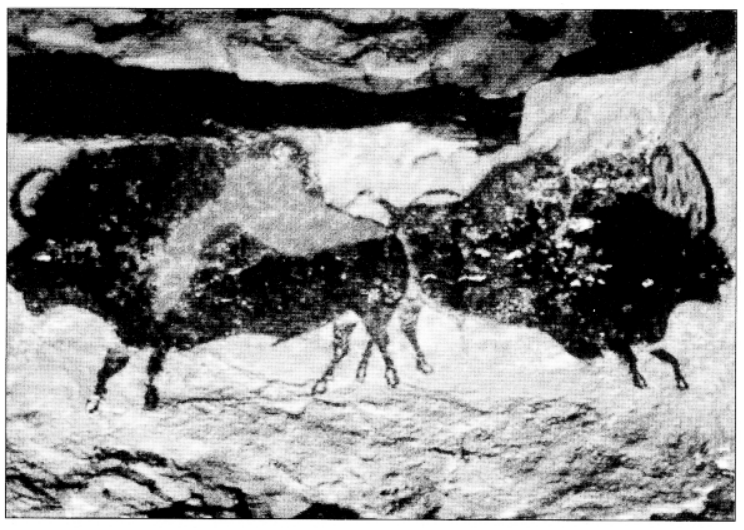
Aspects of their life are visible in rock paintings found in hundreds of caves all over the world. Some of those paintings depict simple figures or a few symbols; others are more detailed and represent scenes with animals or humans. In time, these early humans learned to make simple ornaments such as stone or shell beads, pendants made of animal teeth, and sometimes exchanged them with other groups.

(i) What might be the reason early humans lived in groups or bands rather than alone ?
(a) To establish permanent settlements
(b) To ensure better protection and cooperation in finding food and shelter
(c) To develop complex languages
(d) To practice agriculture

(ii) What might have been the purpose of the rock paintings created by early humans ?
(a) To decorate their living spaces
(b) To record their daily activities, beliefs or significant events
(c) To serve as blueprints for construction
(d) To document agricultural techniques

(iii) Why is it likely that early humans began to improve tools such as stone axes and blades ?
(a) They had access to better materials over time
(b) Improved tools made hunting and gathering more efficient
(c) They were influenced by other cultures
(d) They needed to build permanent homes

(iv) The early humans used to do painting on their rock caves. What could be the possible reasons for this activity ?
(a) They wanted to beautify their walls
(b) They draw to mark the sign of authority
(c) They draw to make sure animals stay away from their shelters
(d) They used to draw to mark the ceremonies, gathering or their achievements