Question
Describe natural resources with reference to the following
Ocean resources

Answer

  1. Oceans occupy about 70% of a earth’s surface.
  2. Energy can be obtained on a large scale from oceans.
  3. Sea waves at high and low tide and ocean currents are being used for generation of power.
  4. There are billions of tons of minerals dissolved in ocean water.
  5. There are large reserves of tin, chromium, potassium, phosphates, copper, zinc, iron, lead, thorium, manganese, sulphur, uranium in the ocean and sea beds.
  6. Also we get many types of gems, conches, shells and pearls from the sea.
  7. There are large reserves of mineral oil and natural gas at the bottom of sea.
  8. We get fishes, dried shrimp, shells, fungi, shark, cod fish and sea cucumber from the ocean.

Need a full question paper?

Generate a complete, print-ready paper with questions like this in minutes — across 16+ boards, with answer keys.
Start Generating Free

Similar questions

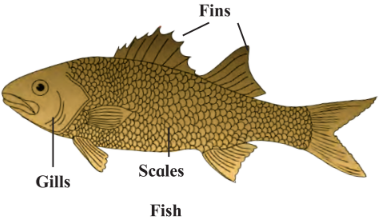
Draw a neat labelled diagram of fish and answer the following questions.

Image
1.Why do fish have a body tapering towards both its ends?
2.Why do Fish have transparent eyelids.
3.How are they able to float?
Describe natural resources with reference to the following
Forest resources
Explain the uses and the harmful effects of, micro-organisms.
From the internet or reference books obtain information about elements and prepare a table according to the format given below:
Sketch and describe ¡n your on words, the plant cell and animal cell.
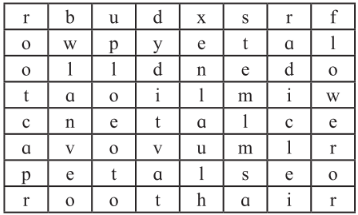
Find the plant parts.
Image
Observe any one flower and its various parts and describe it in your own words.
1.Take sugar in a test tube and heat the test tube. Observe what happens. What remains behind?
2.Using tongs hold a magnesium ribbon in a flame and observe what changes took place?
3.What does the name carbon dioxide imply – how many and which elements is this substance made of?
4.Which of these are compound, which are elements?
5.What is the smallest particle of a compound called?
Read the paragraph and answer the following questions:

I am a penguin. I live in polar region covered by snow. My abdomen is white. My skin is thick with a layer of fat underneath. My body is spindle-shaped. My wings are small. My toes are webbed. We live in flocks.

1.Why is my skin white and thick and why is there a thick layer of fat underneath?
2.Why do we live in flocks sticking close to each other?
3.Which geographical region do I inhabit? Why?
4.Which adaptations should you have to enable you to live permanently in the polar region? Why?
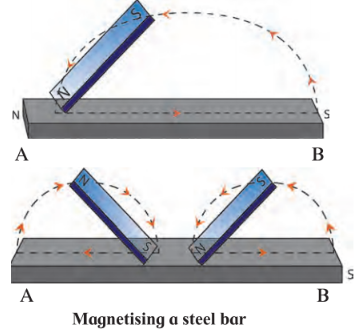
Observe the diagrams and answer the questions given below:

Image
1.Name the methods shown.
2.Give 2 points of difference between the methods.