Phylum-Coelenterata (Cnidaria):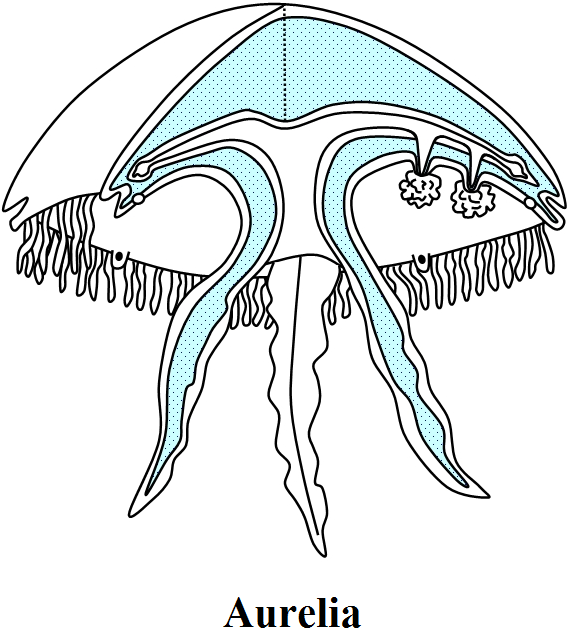 Habit and Habitat:
 They are aquatic, mostly marine, sessile or free-swimming, radially symmetrical animals. The name cnidaria is derived from the cnidoblasts or cnidocytes (which contain the stinging capsules or nematocytes) present on the tentacles and the body. Cnidoblasts are used for anchorage, defense and for the capture of prey.
Key Structural Features: Cnidarians exhibit tissue level of organisation and are diploblastic. They have a central gastro-vascular cavity with a single opening,
hypostome: Digestion is extracellular and intracellular. Some of the cnidarians, e.g., corals have a skeleton composed of calcium carbonate.
Basic Body Forms: Cnidarians exhibit two basic body forms called polyp and medusa. Polyp is a sessile and cylindrical form like Hydra, Adamsia, etc. whereas, medussa is umbrella-shaped and free-swimming like Aurelia or jelly fish. Those cnidarians which exist in both forms exhibit alternation of generation (Metagenesis), i.e., polyps produce medusae asexually and medusae form the polyps sexually (e.g., Obelia).
Examples: Physalia (Portuguese man-of-war), Adamsia (Sea anemone), Pennatula (Sea-pen), Gorgonia (Sea-fan) and Meandrina (Brain coral).