Question

Describe the composition and functions of blood

Answer

Blood is a fluid connective tissue. There are three types of blood corpuscles:

  1. RBC's or Erythrocytes: These are bi-concave, denucleated, disc like. They contain red coloured respiratory pigment called haemoglobin that helps in the transportation of oxygen.

  2. WBC's or leucocytes: These are irregular, amoeboid, phagocytic cells with one to many lobed nucleus. These cells protect the body against the diseases by producing antibodies.

  3. Blood platelets or thrombocytes: These are spindle shaped cells which help in the clotting of blood.

Functions of blood:

  1. It transports nutrients, hormones and vitamins to the tissues and transports excretory products from the tissues to the liver and kidney.
  2. The RBCs carry oxygen to the tissues for the oxidation of food stuff.
  3. WBCs fight disease by engulfing and destroying foreign bodies.

Need a full question paper?

Generate a complete, print-ready paper with questions like this in minutes — across 16+ boards, with answer keys.
Start Generating Free

Similar questions

Draw a plant cell and label the parts which:
  1. Determines the function and development of the cell.
  2. Packages materials coming from the endoplasmic reticulum.
  3. Provides resistance to microbes to withstand hypotonic external media without bursting.
  4. Is site for many biochemical reactions necessary to sustain life
  5. Is a fluid contained inside the nucleus.
There is a water reservoir (river) near a village. Due to insufficient rain, farmers are worried about their crops. Suggest and explain the irrigation practice that can be adopted to supply water to the entire agricultural land in the village.
Why are xylem and phloem called complex tissues? How are they different from one other?
Draw and label a plant cell. Write the main function of:
  1. Chloroplast.
  2. Plasma membrane.
  3. Cell wall.
  4. Lysosomes.
  5. Chromosomes.
    ​​​​​​​
Explain the various preventive measures against insect pests.

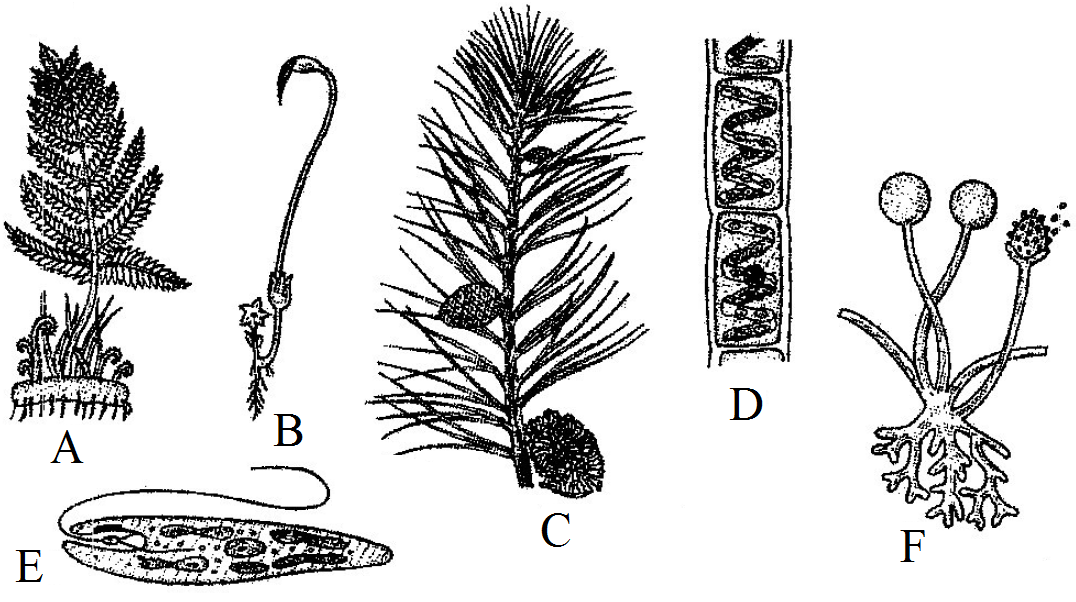
  1. Dentify figures A to F?
  2. What is the phylum of D, E and F?
  3. What is the division of A, B, and C?
  4. Which of them is unicellular and eularyotic organism?
  5. Which one of them exhibits (i) Heterotrophic nutrition; (ii) Micotrophic nutririon.
  6. Which one of them is multicellular decomposer?
  7. Which one amphibian of plant kingdom?
  8. In which one of them play xylem lacks vessels and phloem is without companion cells?
  9. What is the scientific name of esch of them: (i) Male shield fern; (ii) Bread mould?
  10. In which of them endosperm is haploid?

Explain the general characters of phylum Mollusca. Give one exarnple of following classes of Mollusca; (i) Gastropoda; (ii) Pelecpoda; (iii) Cephalopoda.

How are simple tissues different from complex tissues in plants?
Define animal husbandry. Write about its scope.
What is organic farming? What are its advantages?