Question
Describe the composition of the Gram Panchayat.

Answer

Composition of the Gram Panchayat:
  1. Every village Panchayat is divided into wards, i.e., smaller areas.
  2. Each ward elects a representative who is known as the Ward Member (Panch).
  3. All the members of the Gram Sabha also elect a Sarpanch who is the Panchayat President. ,
  4. The Ward Panchs and the Sarpanch form the Gram Panchayat.
The Gram Panchayat has a Secretary who is also the Secretary of the Gram Sabha.
  1. This person is not an elected person but is appointed by the government.
  2. He is responsible for calling the meeting of the Gram Sabha and Gram Panchayat.
  3. He also keeps record of the proceedings.

Need a full question paper?

Generate a complete, print-ready paper with questions like this in minutes — across 16+ boards, with answer keys.

Start Generating Free

Similar questions

In the Rigveda, people were described in terms of the work they did and the languages they spoke. In the table below, fill in the names of six people you know, choosing three men and three women. For each of them, mention the work they do and the language they speak. Would you like to add anything else to the description?
There are several major pilgrimages performed by people in India today. Find out about any one of them, and write a short description. (Hint: who can go on the pilgrimage-men, women or children? How long does it take? How do people travel? What do they take with them? What do they do when they reach the holy place? Do they bring anything back with them?)
Describe in your own words what Megasthenese had written about the Mauryan Emperor and about the Capital City of the Mauryan Empire?
What percentage of workers in Ahmedabad work on the street and what do they do?
Discuss the significance of urban planning in the Harappan civilisation. How did it reflect the administrative capabilities of the society?
Read the following account (terrace farming in Nagaland) and answer the questions that follow it:
Terrace Farming in Nagaland:
This is a village called Chizami which is in Phek district in Nagaland. The people of this village belong to the Chakhesang community. They do ‘terrace’ cultivation.
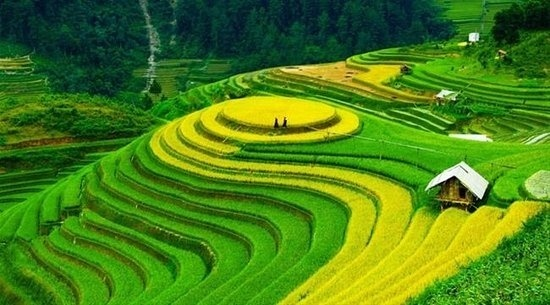
This means that the land on a hill slope is made into flat plots and carved out in steps. The sides of each plot are raised in order to retain water. This allows water to stand in the field, which is best for rice cultivation.
The people of Chizami have their own individual fields. But, they also work collectively in each other’s fields. They form groups of six or eight and take an entire mountainside to clean the weeds on it.
Each group eats together once their work for the day is over. This goes on for several days until the work is completed.
  1. Which village is referred to in the picture above? Where is it located?
  2. Which community do the villagers of this village belong to?
  3. What type of farming do they practise?
  4. For what is this practice the best?
  5. Why do the people of Chizami work collectively?
What is Standard Time?
What problems are created by the stereotypes?
Write a note on cold weather season.
Why is it necessary to preserve landforms?