MCQ
Dielectrics are ____ substances.
- AConducting.
- BNon conducting.
- CBoth a and b.
- DNone.
Generate a complete, print-ready paper with questions like this in minutes — across 16+ boards, with answer keys.
A current of two amperes is flowing through a cell of e.m.f. 5 volts and internal resistance 0.5 ohm from negative to positive electrode. If the potential of negative electrode is 10V, the potential of positive electrode will be
|
(a) 5 V |
(b) 14 V |
(c) 15 V |
(d) 16 V |
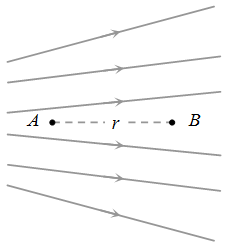
Figure shows the electric lines of force emerging from a charged body. If the electric field at A and B are  and
and  respectively and if the displacement between A and B is r then
|
(a) |
(b) |
(c) |
(d) |
Match the List I with the List II from the combinations shown
|
(I) |
Presbiopia |
(A) |
Sphero-cylindrical lens |
|
(II) |
Hypermetropia |
(B) |
Convex lens of proper power may be used close to the eye |
|
(III) |
Astigmatism |
(C) |
Concave lens of suitable focal length |
|
(IV) |
Myopia |
(D) |
Bifocal lens of suitable focal length |
|
(a) I-A; II-C; III-B; IV-D |
(b) I-B; II-D; III-C; IV-A |
(c) I-D; II-B; III-A; IV-C |
(d) I-D; II-A; III-C; IV-B |
The dominant mechanisms for motion of charge carriers in forward and reverse biased silicon P-N junctions are
|
(a) Drift in forward bias, diffusion in reverse bias |
|
(b) Diffusion in forward bias, drift in reverse bias |
|
(c) Diffusion in both forward and reverse bias |
|
(d) Drift in both forward and reverse bias |
Assertion : X-rays can penetrate through the flesh but not through the bones.
Reason : The penetrating power of X-rays depends on voltage.
|
(a) If both assertion and reason are true and the reason is the correct explanation of the assertion. |
|
(b) If both assertion and reason are true but reason is not the correct explanation of the assertion. |
|
(c) If assertion is true but reason is false. |
|
(d) If the assertion and reason both are false. |
In an experiment of meter bridge, a null point is obtained at the centre of the bridge wire. When a resistance of 10 ohm is connected in one gap, the value of resistance in other gap is
|
(a) 10 Ω |
(b) 5 Ω |
(c) |
(d) 500 Ω |

A horizontal rod of mass 10 gm and length 10 cm is placed on a smooth plane inclined at an angle of 60° with the horizontal, with the length of the rod parallel to the edge of the inclined plane. A uniform magnetic field of induction B is applied vertically downwards. If the current through the rod is 1.73 ampere, then the value of B for which the rod remains stationary on the inclined plane is
|
(a) 1.73 Tesla |
(b) |
(c) 1 Tesla |
(d) None of the above |


