Question
Differentiate between average and instantaneous velocity.

Answer

Average velocity: Average velocity is the displacement divided by the time interval in which the displacement occurs. $\vec{\text{v}}_{\text{av}}=\frac{\Delta\vec{\text{x}}}{\Delta\text{t}}$ Instantaneous velocity: Instantaneous velocity is defined as the limit of the average velocity as the time interval $\Delta\text{t}$ becomes infinitesimally small. $\vec{\text{v}}=\lim\limits_{\Delta\text{t} \rightarrow 0}\frac{\Delta\vec{\text{x}}}{\Delta\text{t}}=\frac{\text{dx}}{\text{dt}}$

Need a full question paper?

Generate a complete, print-ready paper with questions like this in minutes — across 16+ boards, with answer keys.
Start Generating Free

Similar questions

Two stars each of one solar mass ($= 2 \times 10^{30}kg$) are approaching each other for a head on collision. When they are a distance $10^9km$, their speeds are negligible. What is the speed with which they collide? The radius of each star is $10^4km.$ Assume the stars to remain undistorted until they collide. (Use the known value of G).
A 3cm tall object is placed at a distance of 7.5cm from a convex mirror of focal length 6cm. Find the location, size and nature of the image.
Find the work done in pulling and pushing a roller through $100m$ horizontally when a force of $1500N$ is acting along a chain making an angle of 60° with ground. Assume the floor to be smooth.
A rocket with a lift-off mass $20,000kg$ is blasted upwards with an initial acceleration of $5.0ms^{-2}$. Calculate the initial thrust (force) of the blast.
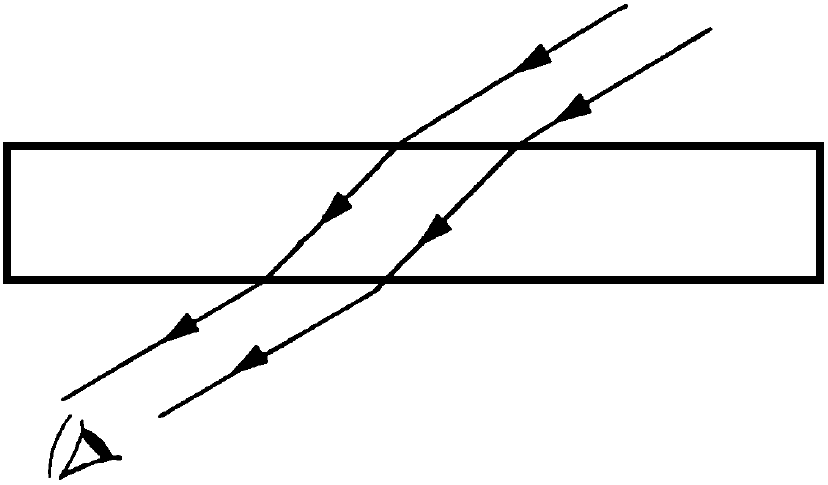
A narrow beam of light passes through a slab obliquely and is then received by an eye. The index of refraction of the material in the slab fluctuates slowly with time. How will it appear to the eye? The twinkling of stars has a similar explanation.
A soap bubble of radius 4 cm and surface tension 30 dyne $cm ^{-1}$ is blown at the end of a tube of length 10 cm and internal radius 0.20 cm . If the viscosity of air is $1.89 \times 10^{-4}$ poise, find the time taken by the bubble to be reduced to a radius of 2 cm .
A man of mass $70kg$ stands on a weighing scale in a lift which is moving. Upwards with a uniform acceleration of $5ms^{-2}$. What would be the readings on the scale in each case?
An aeroplane is flying in a horizontal direction with a velocity of $600km/ h$ and at a height of $1960m$. When it is vertically above the point A on the ground, a body is dropped from it. The body strikes the ground at point B. Calculate the distance AB.
State first law of thermodynamics. What are its limitations? Why $C_p > C_v$?
Sketch velocity-time graph in following situations:
i. $\mathrm{v}_0>0 ; \mathrm{a}<0 \mid \mathrm{al} \rightarrow$ constant
ii. $v_0<0 ; a>0|a| \rightarrow$ is increasing uniformly.
a : acceleration, $\mathrm{v}_0$ : initial velocity
OR
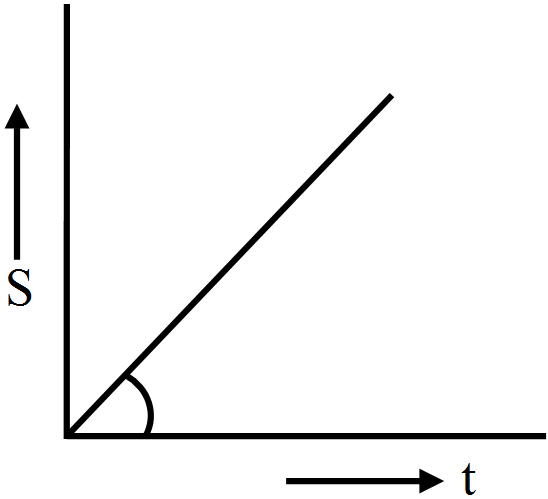
  1. Displacement$-$time graph of any object is shown in the figure:

Draw the velocity$-$time graph for this motion.
  1. What does the area under acceleration$-$time graph represent?