Question
Differentiate between benign tumor and malignant tumor.

Answer

 
Beingn tumor
 
Malignant tumor`
i.
Usually, they remain confined to their original location and do not spread to other parts of the body.
i.
They spread to other parts of the body as well.
ii.
They cause little damage.
ii.
They cause severe damage.
iii.
They cannot start a new tumor at a new place.
iii.
They may start a new tumor when they reach a new place.

Need a full question paper?

Generate a complete, print-ready paper with questions like this in minutes — across 16+ boards, with answer keys.
Start Generating Free

Similar questions

What is geitonogamy? Give its one similarity to autogamy and xenogamy.
Find out from newspapers and popular science articles any new fossil discoveries or controversies about evolution.
Two independent monohybrid crosses were carried out involving a tall pea plant with a dwarf pea plant. In the first cross, the offspring population had equal number of tall and dwarf plants, whereas in the second cross it was different. Work out the crosses, and explain giving reasons for the difference in the offspring populations.

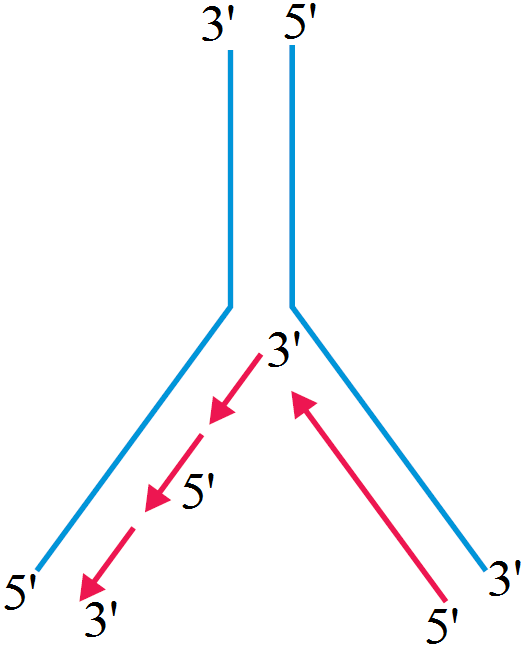
Why do you see two different types of replicating strands in the given DNA replication fork? Explain. Name these strands.
What is parturition? Which hormones are involved in induction of parturition?
Name any two hormones found in the blood of a pregnant female only.
Describe the structure of RNA polynucleotide chain having four different types of nucleotides.
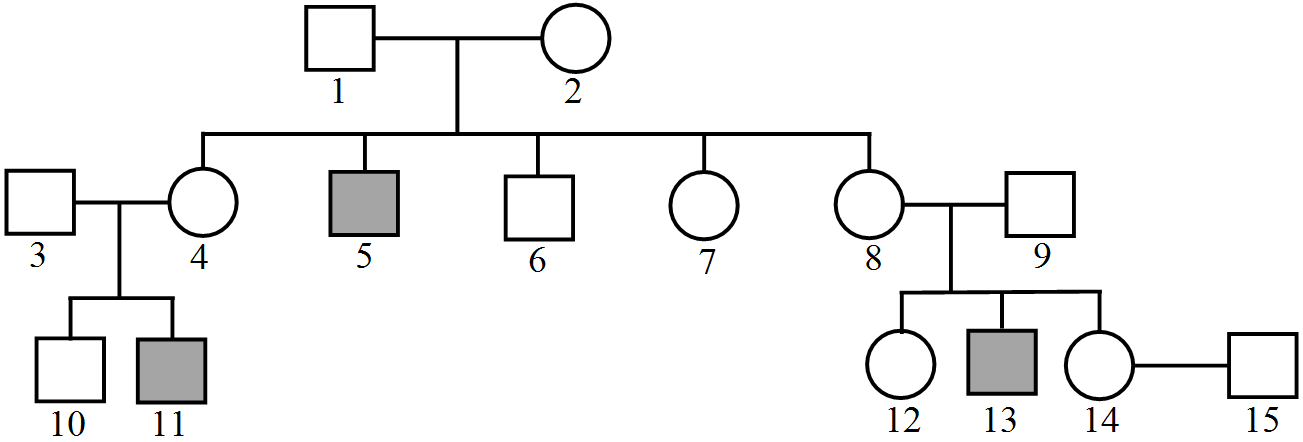
Study the given pedigree chart and answer the questions that follow:

Is the trait recessive or dominant?

What will happen to an ecosystem if:
  1. All producers are removed;
  2. All organisms of herbivore level are eliminated;
  3. All top carnivore population is removed.
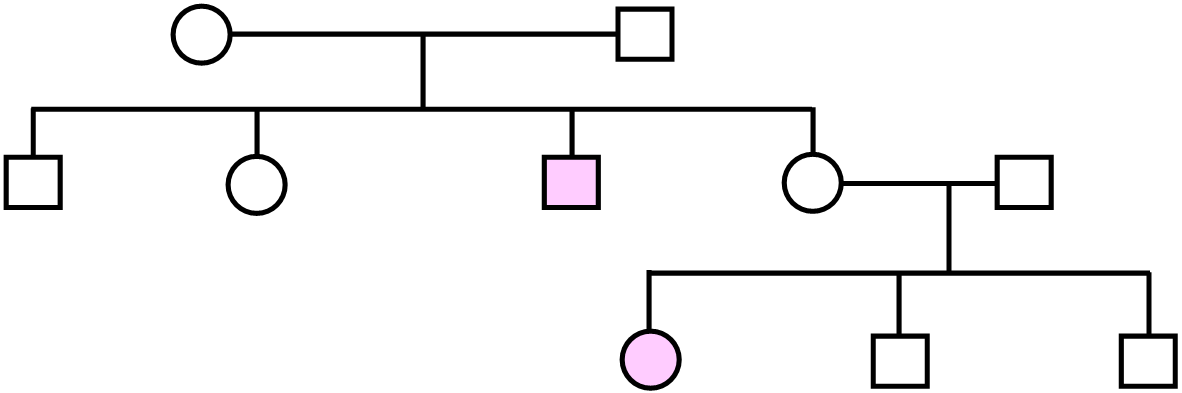
Haemophilia is a sex linked recessive disorder of humans. The pedigree chart given below shows the inheritance of haemophilia in one family. Study the pattern of inheritance and answer the questions given.

  1. Give all the possible genotype of the members 4, 5 and 6 in the pedigree chart.
  2. A blood test shows that the individual 14 is a carrier of haemophilia. The member numbered 15 has recently married the member numbered 14. What is the probability that their first child will be a haemophilic male?