Question
Differentiate between neural control and hormonal control.

Answer

Differences between neural control and hormonal control :
S. No.SymptomsNeural ControlHormonal Control
1.Speed of actionAlways act immediately.They can be immediately active or become active over a long period of time.
2.Transmission of signalsAs electrochemical neural impulses.As chemical messengers.
3.Path of transmissionVia nerve fibers.Through the blood.
4.Direction of informationTowards a specific direction (effective body part of CNS).They are released into the general bloodstream where they are received by specific receptors.
5.AdaptabilityFor immediate actions, such as reflexes.For long-term changes, such as maintaining pregnancy.
6.Persistence of timeQuick impact for a short period.Long-term effects

Need a full question paper?

Generate a complete, print-ready paper with questions like this in minutes — across 16+ boards, with answer keys.
Start Generating Free

Similar questions

Could the number of eggs or young ones produced by an oviparous and viviparous mother be equal? Why?
Differentiate between
Glycolysis and Krebs' cycle
Discuss how classification systems have undergone several changes over a period of time?
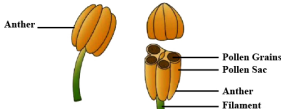
The androecium is composed of stamens. Each stamen that represents the male reproductive organ consists of a stalk or a filament and an anther. Each anther is usually bilobed and each lobe has two chambers, the pollen-sacs. Stamens of flowers may be united with other members such as petals or among themselves. The stamens may be epipetalous or epiphyllous. A flower is a modified shoot wherein the shoot apical meristem changes to floral meristem. Internodes do not elongate and the axis gets condensed. The apex produces different kinds of floral appendages laterally at successive nodes instead of leaves. The arrangement of flowers on the floral axis is termed an inflorescence.
Image

i. Observe the figure and mention what is androecium composed of. (1)
ii. The pollen grains are produced in pollen-sacs. What is a sterile stamen is called? (1)
iii. Is salvia and mustard show variation in the length of filaments within a flower? (2)

OR

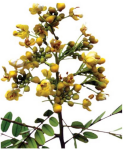
Mention statement justifies that the given figure is racemose inflorescence. (2)
Image
Cell membrane, also called plasma membrane, thin membrane that surrounds every living cell, delimiting the cell from the environment around it. Enclosed by this cell membrane are the cell’s constituents, large, water-soluble, highly charged molecules such as proteins, nucleic acids, carbohydrates, and substances involved in cellular metabolism. Cell membranes are composed primarily of fatty-acid based lipids and proteins. Membrane lipids are principally of two types, phospholipids and sterols (generally cholesterol). Both types share the defining characteristic of lipids—they dissolve readily in organic solvents—but in addition they both have a region that is attracted to and soluble in water.

(1).Plasma membrane is made up of
(a) A protein, a lipid and a cellulose layer
(b) Bimolecular lipid layer surrounded by protein layers
(c) A protein layer between two lipid layers
(d) A lipid layer between two protein layers

(2) Fluid mosaic model of cell was put forward by –
(a) Danielli and Dawson
(b) Singer and Nicolson
(c) Garner and Allard
(d) Watson and Crick

(3) Which of the following statements best describes the chemical composition of
plasma-membrane?
(a) Plasma membrane is composed of two layers—one layer of phospholipids and one layer
of proteins.
(b) Plasma membrane is composed of equal numbers of phospholipids, proteins, and
carbohydrates.
(c) Plasma membrane is bilayers of proteins with associated lipids and carbohydrates.
(d) Plasma membrane is bilayers of phospholipids with associated proteins and
carbohydrates.

(4) Most abundant lipid in the cell membrane is
(a) phospholipids (b) cerebrosides (c) glycolipids (d) None of these
Lipids form a heterogeneous group but all are made up of carbon hydrogen and oxygen. These are insoluble in water and soluble in organic solvents like acetone, ether, alcohol etc. The number of oxygen atoms is very small compared to carbon atoms. They need a large amount of oxygen for their oxidation to release energy. They could be simple lipids, compound lipids, and derived lipids. Simple lipids are esters of fatty acid and alcohol. Compound lipids are formed when simple lipids combine with another compounds for example glycolipids, phospholipids and lipoproteins. Derived lipids are of various types and important example being steroids.

(1) Lipids mainly consist of
(a) Carbon only
(b) carbon hydrogen and nitrogen
(c) carbon hydrogen and oxygen
(d) Hydrogen only

(2) Among the given options non-polymeric molecule is
(a) Nucleic acids (b) proteins (c) Lipids (d) polysaccharides

(3) An example of unsaturated fatty acid is
(a) oleic acid (b) stearic acid (c) Linoleic acid (d) both a and c

(4) The number of carbon atoms as compared to oxygen atoms in lipids is
(a) same (b) much less (c) much more (d) none of these.

(5) Steroids are an example of
(a) derived lipids (b) conjugated lipids (c) simple lipids (d) lipo proteins
John was reading a chapter on different parts of a green plant. His mother asked him about the functions of roots. He replied that roots are meant for anchorage and absorbing water and minerals from soil. Then mother showed him carrot, radish and turnip and asked him about the additional functions that the roots perform. John was surprised to find that roots in some plants change their shape and structure and become modified to perform additional functions like support, storage of food and respiration.

(1). Carrot is a
(a) Tap root (b) Fibrous root (c) Adventitious root (d) Stilt root.

(2). Hanging structures that support a banyan are
(a) Prop (b) Tuber (c) Rhizome (d) Stilt

(3). Supporting structures coming out of the lower nodes of the stems of maize and sugarcane are
(a) Stilt (b) Tendrils (c) Runner (d) Prop

(4). Which function is performed by the modified roots of Asparagus?
(a) Storage (b) Support (c) Respiration (d) Transpiration.

(5). Pneumatophores are found in
(a) Rhizophora (b) Asparagus (c) Sugarcane (d) Maize.
Write comments on the following :
(i) Myasthenia gravis (ii) Muscular dystrophy (iii) Tetany (iv) Osteoporosis.
(i) There are specific names in osteology for the following parts of our body. Write each name.
(A) Kneecap
(B) Collar bone
(C) Skull
(D) Spine
(E) Coxal bone
(ii) Write down two functions of the sternum.