Question
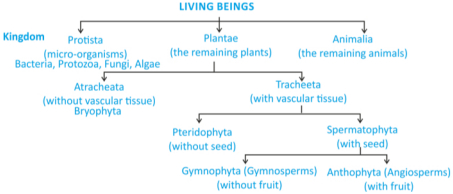
Discuss how classification systems have undergone several changes over a period of time?

Answer

Get the step-by-step solution for this question inside the Vidyadip app.

Get the answer in the app

Need a full question paper?

Generate a complete, print-ready paper with questions like this in minutes — across 16+ boards, with answer keys.

Start Generating Free

Similar questions

Structures of the bacterial ribosome have provided a framework for understanding universal mechanisms of protein synthesis. However, the eukaryotic ribosome is much larger than it is in bacteria, and its activity is fundamentally different in many key ways. All ribosomes are composed of two subunits, both of which are built from RNA and protein. Bacterial ribosomes, for example of Escherichia coli, contain a small subunit (SSU) composed of one 16S ribosomal RNA (rRNA) and 21 ribosomal proteins (r-proteins) and a large subunit (LSU) containing 5S and 23S rRNAs and 33 rproteins. In contrast to their bacterial counterparts, eukaryotic ribosomes are much larger and more complex, containing additional rRNA in the form of so-called expansion segments (ES) as well as many additional r-proteins and r-protein extensions.

(1).Ribosomes are present in
(a) Eukaryotes only
(b) Eukaryotes and prokaryotes
(c) Prokaryotes only
(d) Eukaryotes, prokaryotes and viruses

(2) In 70S ribosomes, ‘S’ stands for
(a) SI unit (b) Solubility factor (c) Svedberg unit (d) all of these

(3) 80 S ribosomes occur in
(a) Eukaryotic cells of animals
(b) Eukaryotic cells of animals and plants
(c) Both Eukaryotic cells and prokaryotic cells
(d) all of these

(4) Ribosomes are made up of
(a) RNA only (b) RNA and proteins (c) RNA, DNA and proteins (d) Nucleic acids, proteins and lipids

(5) Polysomes are
(a) multiple units of ribosomes
(b) attachment of many ribosomes to a common mRNA
(c) attachment of many mRNA to a common ribosome
(d) lysosomal aggregations
Give comparison between the following:
Anatomy of leaf in $C _3$ and $C _4$ plants
Organise a discussion in your class on the topic-Are viruses living or non-living?
Define oxygen dissociation curve. Can you suggest any reason for its sigmoidal pattern?
Write the differences between:
Blood and Lymph
Polysaccharides or the macro molecules consisting of long chains of sugar. Only carbohydrates they are not sweet and are insoluble in water. The two ends of the polysaccharide chain are called reducing and non-reducing ends. Based upon their monomeric units these are homo polysaccharides or heteropolysaccharides. Depending upon their location polysaccharides play multiple functions in living world few examples of polysaccharides include Cellulose, chitin, inulin etc.

(1) All the listed polysaccharides are homopolymers except
(a) Starch (b) glycogen (c) Chitin (d) Cellulose

(2) Inulin is a polymer of
(a) glucose (b) fructose (c) glucose and sucrose (d) fructose and galactans

(3) Murein is a heteropolysaccharide like
(a) araban (b) xylan (c) hyaluronic acid (d) agar

(4) A polysaccharide found in the exoskeleton of crabs is
(a) Cellulose (b) pectin (c) murine (d) chitin

(5) The right end of the polysaccharide chain is called
(a) reducing end (b) non-reducing end (c) right end (d) none of these
(i) Which factor is secreted due to increased blood flow in the atriums of the heart? Write one function of it.
(ii) Write any four differences in the urinary tract of men and women.