Question
Differentiate between nuclear fission and nuclear fusion.

Answer

 
Nuclear Fission
Nuclear Fusion
Natural occurrence of the Process:
Fission reaction does not normally occur in nature.
Fusion occurs in stars, such as the sun.
By products of the reaction:
Fission produces many highly radioactive particles.
Few radioactive particles are produced by fussion reaction, but if a fission "trigger" is used, radioactive particle will result from that.
Energy ratios:
The energy released by fission is a million times greater than that realeased in chemical reaction; but lower than the energy released by nuclear fusion.
The energy released by fusion is three to four times greater than the energy released by fission.
Nuclear weapon:
One class of nuclear weapon is a fission bomb, also known as an atomic bomb or atom bomb.
One class of nuclear weapon is the hydrogen bomb, which uses a fission reaction to "trigger" a fusion reaction.
Energy requirement:
Takes little energy to split two atoms in a fission reaction.
Extremely high energy is required to bring two or more protons close enough that nuclear forces overcome their electrostatics repulsio.

Need a full question paper?

Generate a complete, print-ready paper with questions like this in minutes — across 16+ boards, with answer keys.
Start Generating Free

Similar questions

An element X belongs to group 2 and another element Y belongs to group 15 of the periodic table:
  1. What is the number of valence electrons in X?
  2. What is the valency of X?
  3. What is the number of valence electrons in Y?
  4. What is the valency of Y? Explain how you have arrived at your answers.
Two very small organisms X and Y both reproduce by the method of budding. Organism X is industrially very important because it is used in making alcohol from sugar. It is also used in making bread. Organism Y Lives in freshwater. If organism Y gets cut into a number of parts accidently, each cut part can grow to form complete organism.
  1. What are organisms X and Y?
  2. What is the name of the process in which X converts sugar into alcohol?
  3. To which class of organisms does X belong?
  4. Name an important body feature of organism Y.
  5. Which organism is multicellular and which one is unicellular?
State and explain the laws of reflection of light at a plane surface (like a plane mirror), with the help of a labelled ray-diagram. Mark the angles of ‘incidence’ and ‘reflection’ clearly on the diagram. If the angle of reflection is 47.5°, what will be the angle of incidence?
i. Draw two structural isomers of butane.
ii. Draw the structures of propanol and propanone.
iii. Name the third homologue of: a. alcohols
b. aldehydes
iv. Name the following:

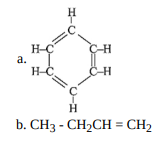
Image
v. Show the covalent bond formation in nitrogen molecule.
  1. State Fleming’s left hand rule.
  2. Write the principle of working of an electric motor.
  3. Explain the function of the following parts of an electric motor.
  1. Armature.
  2. Brushes.
  3. Split ring.
Differentiate between left lung and right lung of humans.
Describe the construction and working of a biogas plant with the help of a labelled diagram.
When a person puts food in his mouth, then teeth cut it into small pieces, chew and grind it. The glands A in the mouth secrete a substance B which is mixed with the food by tongue. The substance B contains an enzyme C which starts the digestion of food in the mouth. The slightly digested food from the mouth goes down a tube D. The special type of movements E in the walls of tube D push the food into stomach for further digestion. The stomach wall secretes gastric juice containing three substance F, G and H. One of the functions of F is to kill bacteria which may enter the stomach with food. The substance G protects the inside layer of stomach from the damaging effect of substance F whereas substance H is and enzyme for digestion. The partially digested food then enters into small intestine for further digestion.
  1. What is Gland A, Substance B and Enzyme C?
  2. Name the tube D.
  3. What is the movement E known as?
  4. What are F, G and H?
We do not clean ponds or lakes, but an aquarium needs to be cleaned. Why?
How would you distinguish between baking powder and washing soda by heating?