Question
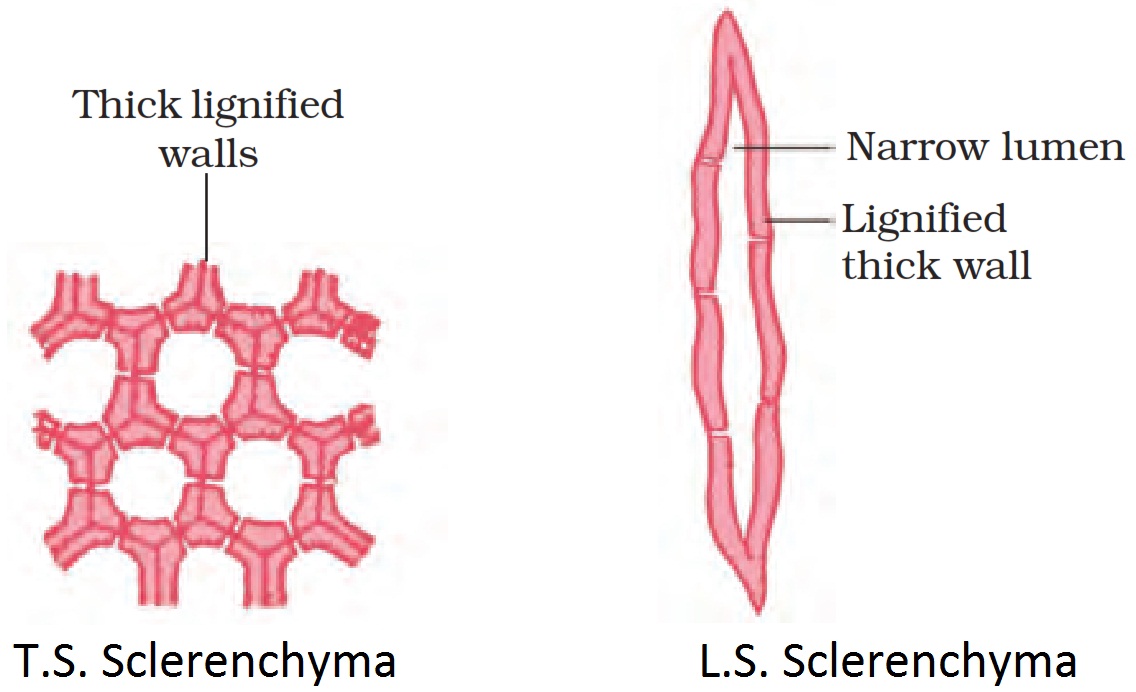
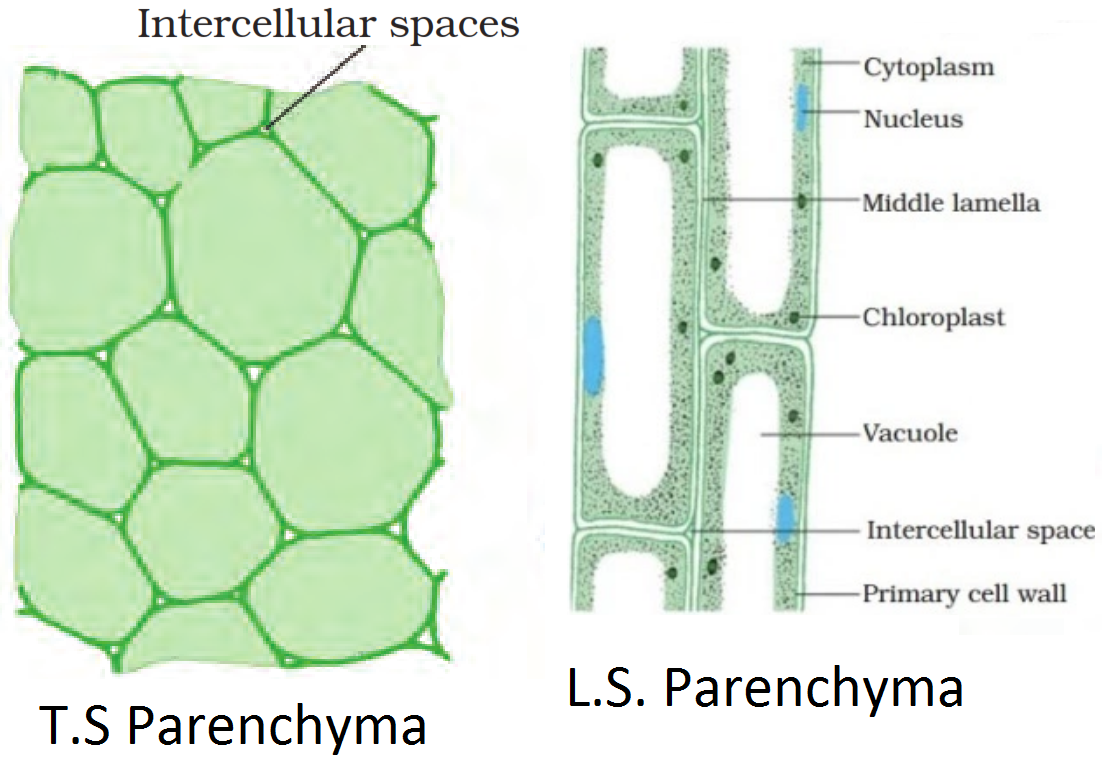
Differentiate between sclerenchyma and parenchyma tissue. Draw well labelled diagram.

Answer

 
Parenchyma
 
Sclerenchyma
1.
Cells are thin walled and unspecialized.
1.
Cells are thick walled and lignifieg.
2.
These are living cells.
2.
Tissues are made up of dead cells.
3.
Cells are usually loosely packed with large intercellular space.
3.
No intercellular apaces between the calls are found.
4.
Stores nutrient and water in stem and roots.
4.
Provides strength to the plant parts.
5.
Some cells contain chlorophyll called chlorenchyma and photosynthesis. other cells have large air which provid buoyancy to the hydrophytic plants.
5.
The cells are long and narrow. make the plant hard and stiff. The tissue is present in the stem around of leaves and seeds and nuts.

Need a full question paper?

Generate a complete, print-ready paper with questions like this in minutes — across 16+ boards, with answer keys.
Start Generating Free

Similar questions

With the help of a labelled diagram, describe the method of separating ammonium chloride from a mixture of ammonium chloride and common salt. Mention the difference in the properties of ammonium chloride and sodium chloride which has made this separations possible.
An element $X$ forms the following compounds with hydrogen, carbon and oxygen:
$H_2X, CX_2, XO_2, XO_3$
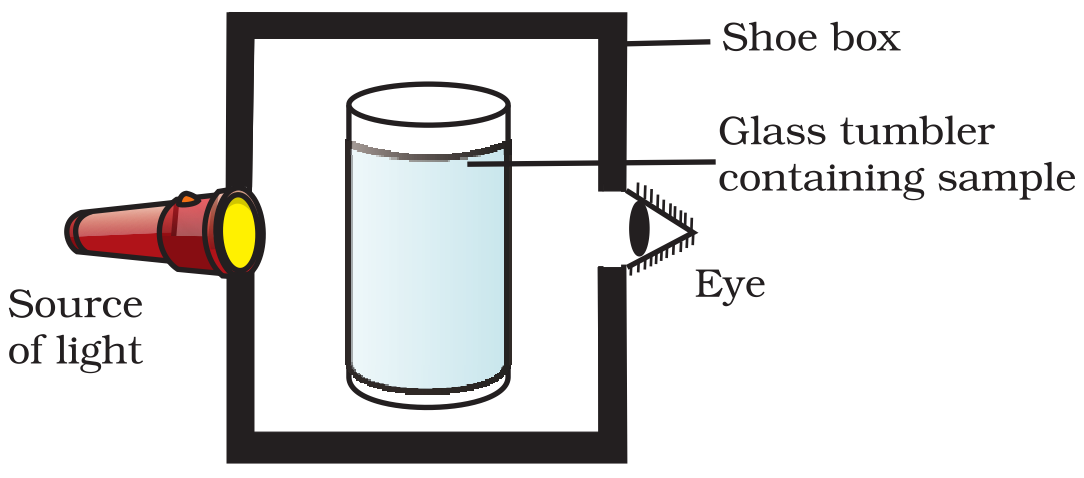
A group of students took an old shoe box and covered it with a black paper from all sides. They fixed a source of light $($a torch$)$ at one end of the box by making a hole in it and made another hole on the other side to view the light. They placed a milk sample contained in a beaker/ tumbler in the box as shown in the they were amazed to see that milk taken in the tumbler was illuminated. They tried the same activity by taking a salt solution but found that light simply passed through it?
  1. Explain why the milk sample was illuminated. Name the phenomenon involved.
  2. Same results were not observed with a salt solution. Explain.
  3. Can you suggest two more solutions which would show the same effect as shown by the milk solution?
Which separation techniques will you apply for the separation of the following?
  1. Sodium chloride from its solution in water.
  2. Ammonium chloride from a mixture containing sodium chloride and ammonium chloride.
  3. Small pieces of metal in the engine oil of a car.
  4. Different pigments from an extract of flower petals.
  5. Butter from curd.
  6. Oil from water.
  7. Tea leaves from tea.
  8. Iron pins from sand.
  9. Wheat grains from husk.
  10. Fine mud particles suspended in water.
Draw a labelled diagram of the fractional distillation apparatus used for separating a mixture of alcohol and water.
State and explain the law of conservation of energy with an example.
An object is dropped from rest at a height of $150m$ and simultaneously another object is dropped from rest at a height $100m.$ What is the difference in their heights after $2s$ if both the objects drop with same accelerations? How does the difference in heights vary with time?

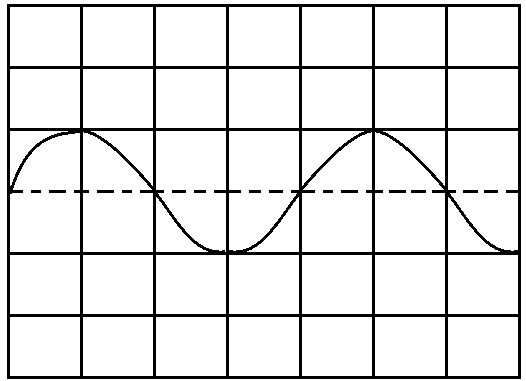
Figure X showa a trace of a sound wave produced by a particular tuning fork:


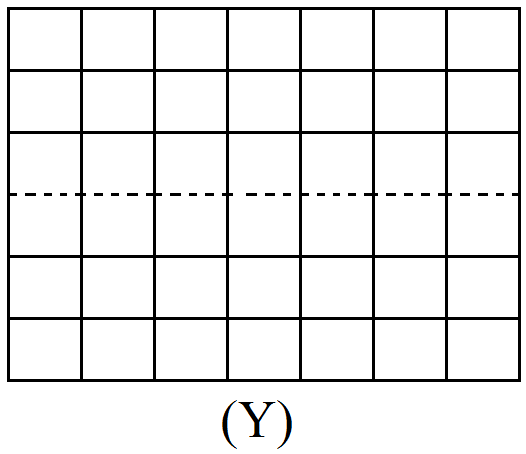
  1. On the graph paper given in Figure Y, draw a trace of the sound wave which has higher frequency than that shown in Figure X.
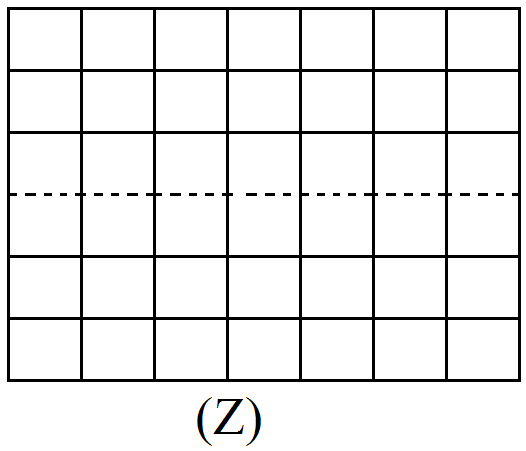
  2. On the graph paper shoen in Figure Z, draw a trace of the sound wave which has a larger amplitude than that shown in Figure X.
You are given a mixture of water, groundnut oil and common salt. How will you separate groundnut oil and common salt from it?
How does the force of attraction between the two bodies depend upon their masses and distance between them?