Question
Differentiate between somaclones and somatic hybrids. Give one example of each.

Answer

Somaclones are produced through micropropagation/tissue culture, genetically identical

e.g. apple/tomato/banana.

Somatic hybrids are produced by fusion of protoplast of two different plants, genetically dissimilar

e.g. pomato/hybrids of potato and tomato.

Need a full question paper?

Generate a complete, print-ready paper with questions like this in minutes — across 16+ boards, with answer keys.
Start Generating Free

Similar questions

State the function of trophoblast in human embryo.
Differentiate between oviparous and viviparous animals with an example of each.
Explain in brief the role of animal husbandry in human welfare.
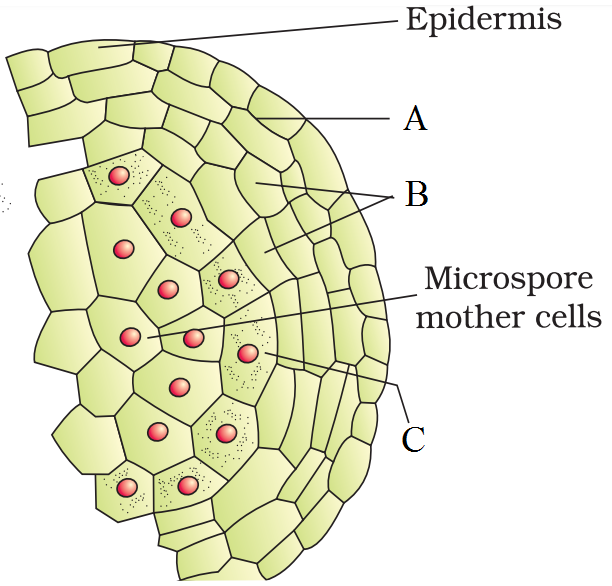
Given below is an enlarged view of onemicro sporangium of a mature anther.
  1. Name 'a', 'b' and 'c' wall layers.
  2. Mention the characteristics and function of the cells forming the wall layer 'c'.
Correct the following statements:
  1. Surgical methods of contraception prevent gamete formation.
  2. All sexually transmitted diseases are completely curable.
  3. Oral pills are very popular contraceptives among the rural women.
  4. In E. T. techniques, embryos are always transferred into the uterus.
Write three example of mendelian disorders and explain any one of them.
During a biology lecture in class the teacher called apple seeds as seeds but maize seeds as grains. On hearing this Amit got confused and asks her teacher the reason behind this. The teacher appreciated Amit and cleared all his doubts.
  1. What is the difference between seed and grain?
  2. How are maize grains formed?
  3. Explain along with a labelled diagram of the vertical section of a maize grain.
  4. What values are shown by Amit?
Human blood group is a good example of multiple allelism and co-dominance. Justify.
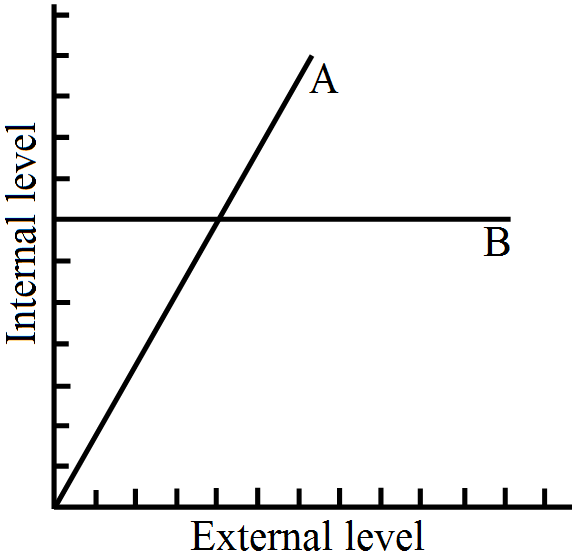
Given below is a graph depicting organismic response to changing external conditions. According to their response the organisms are grouped into two types. Name the type which will show (i) Pattern A (ii) Pattern B.
Plasmodium falciparum is the causative agent of the most severe form of malaria. It is distributed throughout the tropics. Explain why malaria is restricted to the tropics?