Question
Differentiate between
Aerobic respiration and Fermentation

Answer

Difference between Aerobic Respiration and Fermentation
Aerobic RespirationFermentation
(i) It occurs in the presence of O2.(i) It does not require $O _2$.
(ii) This process occurs only in living cells.(ii) It does not occur in living beings, but it requires respiratory substances. It is necessary to have microorganisms, fungi, or enzymes.
(iii) On complete oxidation, CO, and water are formed.(iii) Incomplete oxidation occurs and alcohol and other organic compounds are formed. Acids are formed in accordance with respiratory substances.
(iv) More energy is released.(iv) Very little energy is released.

Need a full question paper?

Generate a complete, print-ready paper with questions like this in minutes — across 16+ boards, with answer keys.
Start Generating Free

Similar questions

What is excretion? Write the names of the excretory organs of the following animals.
(i) Prawn    (ii) Cockroach
(iii) Earthworm    (iv) Planaria
(v) Amoeba    (vi) Starfish
(vii) Unio    (viii) Sponge
Draw a labelled diagram of the schematic view of human respiratory system. Write any four differences between right lung and left lung.
Write the names of four groups of bacteria on the basis of shape. Name any four diseases caused by bacteria and draw any two picture of bacteria.
What is the difference between lymph and blood?
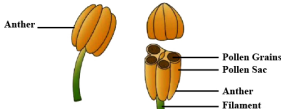
The androecium is composed of stamens. Each stamen that represents the male reproductive organ consists of a stalk or a filament and an anther. Each anther is usually bilobed and each lobe has two chambers, the pollen-sacs. Stamens of flowers may be united with other members such as petals or among themselves. The stamens may be epipetalous or epiphyllous. A flower is a modified shoot wherein the shoot apical meristem changes to floral meristem. Internodes do not elongate and the axis gets condensed. The apex produces different kinds of floral appendages laterally at successive nodes instead of leaves. The arrangement of flowers on the floral axis is termed an inflorescence.
Image

i. Observe the figure and mention what is androecium composed of. (1)
ii. The pollen grains are produced in pollen-sacs. What is a sterile stamen is called? (1)
iii. Is salvia and mustard show variation in the length of filaments within a flower? (2)

OR

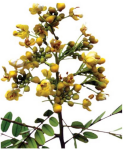
Mention statement justifies that the given figure is racemose inflorescence. (2)
Image
Polysaccharides or the macro molecules consisting of long chains of sugar. Only carbohydrates they are not sweet and are insoluble in water. The two ends of the polysaccharide chain are called reducing and non-reducing ends. Based upon their monomeric units these are homo polysaccharides or heteropolysaccharides. Depending upon their location polysaccharides play multiple functions in living world few examples of polysaccharides include Cellulose, chitin, inulin etc.

(1) All the listed polysaccharides are homopolymers except
(a) Starch (b) glycogen (c) Chitin (d) Cellulose

(2) Inulin is a polymer of
(a) glucose (b) fructose (c) glucose and sucrose (d) fructose and galactans

(3) Murein is a heteropolysaccharide like
(a) araban (b) xylan (c) hyaluronic acid (d) agar

(4) A polysaccharide found in the exoskeleton of crabs is
(a) Cellulose (b) pectin (c) murine (d) chitin

(5) The right end of the polysaccharide chain is called
(a) reducing end (b) non-reducing end (c) right end (d) none of these
Write any four differences in the cortex of monocotyledon and dicotyledon stem.
Describe the structure of chloroplast graphically.