MCQ
Dimension of electric current is
  • $[{M^0}{L^0}{T^{ - 1}}Q]$
  • B
    $[M{L^2}{T^{ - 1}}Q]$
  • C
    $[{M^2}L{T^{ - 1}}Q]$
  • D
    $[{M^2}{L^2}{T^{ - 1}}Q]$

Answer

Correct option: A.
$[{M^0}{L^0}{T^{ - 1}}Q]$
a
(a) $I = \frac{Q}{t} = \frac{{[Q]}}{{[T]}} = [{M^0}{L^0}{T^{ - 1}}Q]$

Need a full question paper?

Generate a complete, print-ready paper with questions like this in minutes — across 16+ boards, with answer keys.
Start Generating Free

Similar questions

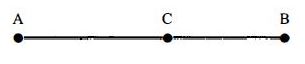
$A$ and $B$ are two sources generating sound waves. A listener is situated at $C$ . The frequency of the source at $A$ is $500\,Hz$ . $A,$ now, moves towards $C$ with a speed $4\,m/s.$ The number of beats heard at $C$ is $6.$ When $A$ moves away from $C$ with speed $4\,m/s,$ the number of beats heard at $C$ is $18.$ The speed of sound is $340\,m/s.$ The frequency of the source at $B$ is ..... $Hz$
Prof. Albert Einstein got noble prize in Physics for his work on:
Two particles undergo $SHM$ along parallel lines with the same time period $(T)$ and equal amplitudes. At a particular instant, one particle is at its extreme position while the other is at its mean position. They move in the same direction. They will cross each other after a further time
A particle of mass $m$ is attached to a light string of length $l$, the other end of which is fixed. Initially the string is kept horizontal and the particle is given an upward velocity $v.$ The particle is just able to complete a circle.
  1. The string becomes slack when the particle reaches its highest point.
  2. The velocity of the particle become zero at the highest point.
  3. The kinetic energy of the ball in initial position was $\frac{1}{2}\text{m}\nu^2=\text{mgl}.$
  4. The particle again passes through the initial position.
Equation of progressive wave is $\text{y}=\text{a}\sin\Big(10\pi\text{x}+11\pi\text{t}+\frac{\pi}{3}\Big)$ The wavelength of the wave is:
Which of the following processes is not heat-resistant:
The position of a particle as a function of time $t$, is given by $x\left( t \right) = at+ b{t^2} - c{t^3}$ where $a, b$ and $c$ are constants. When the particle attains zero acceleration, then its velocity will be
Assuming earth to be a sphere of a uniform density, what is the value of gravitational acceleration in a mine $100\, km$ below the earth’s surface ........ $m/{s^2}$. (Given $R = 6400 \,km$)
Temperature of water at the surface of lake is $ - {20^o}C$ Then temperature of water just below the lower surface of ice layer is ...... $^oC$
From the $v$ - $t$ graph shown. the ratio of distance to displacement in $25\,s$ of motion