Question
Discuss the different types of update operations in relation to the integrity constraints which must be satisfied in a relational database model.

Answer

There are two categories of operations on relational model. Updates and retrieval The three basic types of updates are as given below:
  1. Insert: This operation is performed to add a new tuple in a relation. For example, an attempt to add another record of an account with data values corresponding to Code, Name and its Type to Accounts relation shall be made by performing Insert operation. The insert operation is capable of violating any of the four constraints discussed above.
  2. Delete: This operation is carried out to remove a tuple from a relation. A particular data record from a table can be removed by performing such a operation. The delete operation can violate only referential integrity, if tuple being removed is referenced by foreign key from other tuples in the database.
  3. Modify: The operation aims at causing a change in the values of some attributes in existing tuples. This is useful in modifying existing values of an accounting record in a data table. Usually, this operation does not cause problems provided the modification is directed on neither primary key nor foreign key.

Need a full question paper?

Generate a complete, print-ready paper with questions like this in minutes — across 16+ boards, with answer keys.
Start Generating Free

Similar questions

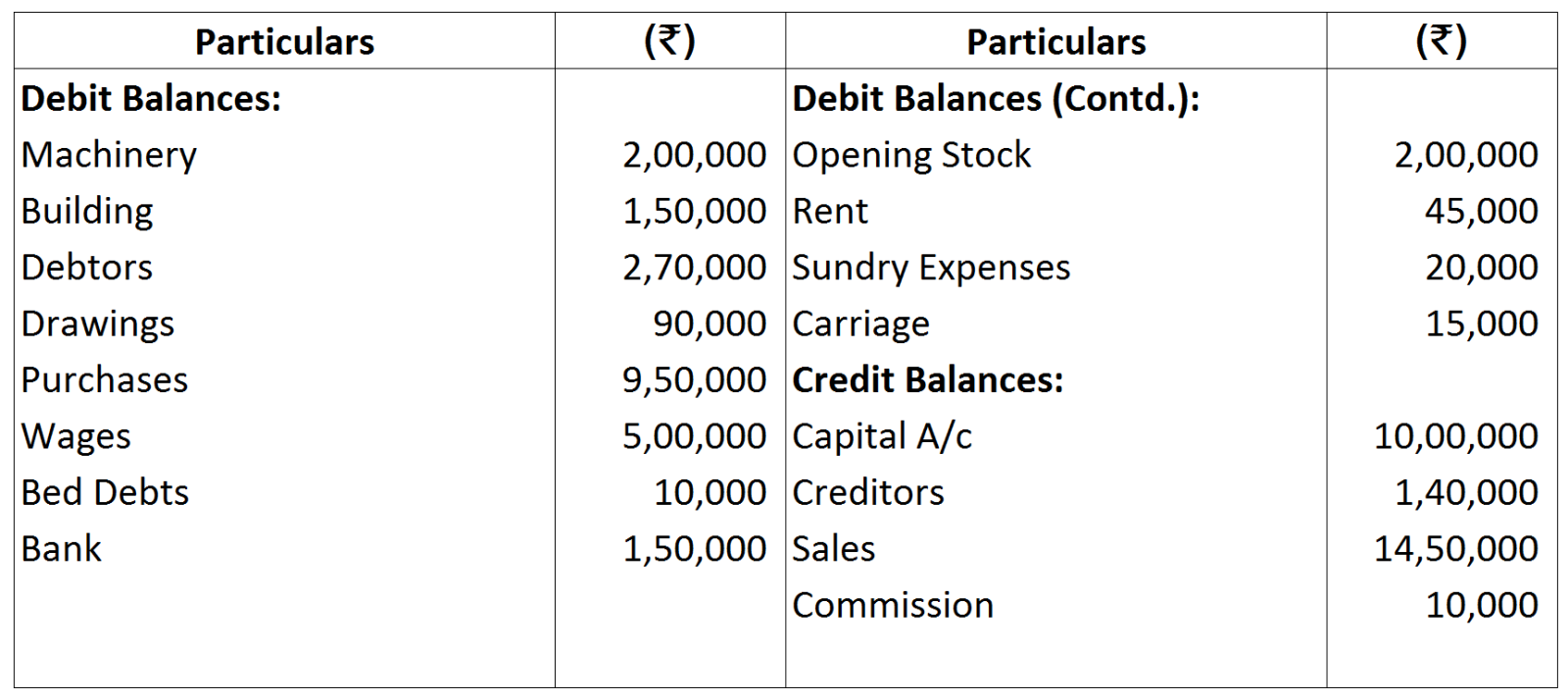
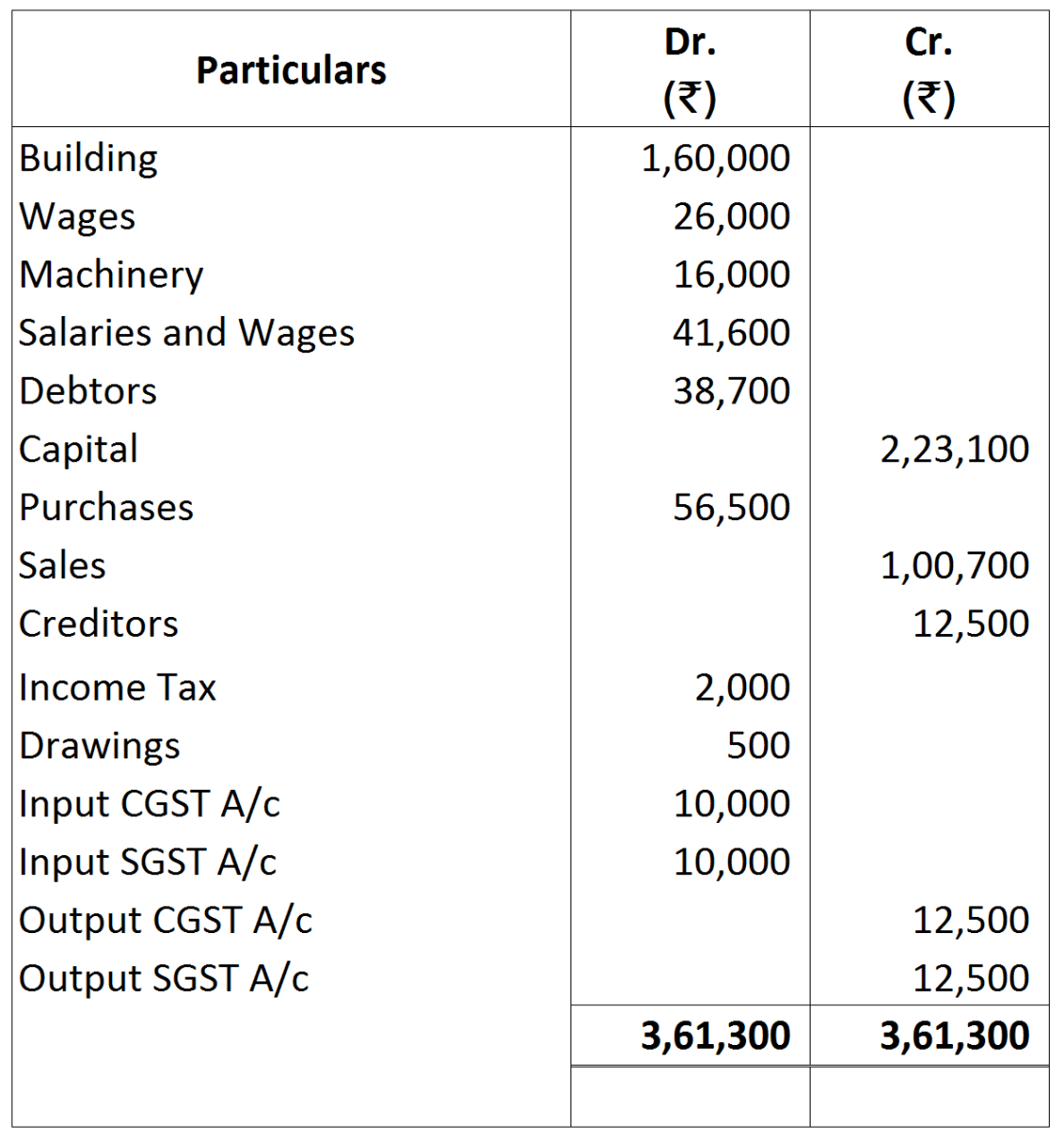
From the following Trial Balance and additional information of Mr. Gaurav, a proprietor, prepare Trading and Profit and Loss Account for the year ended $31^{st}$​​​​​​​ March, $2019$ and Balance Sheet as at that date:

Closing Stock at cost $₹ 1,00,000$ but its market value is $₹ 88,500$.
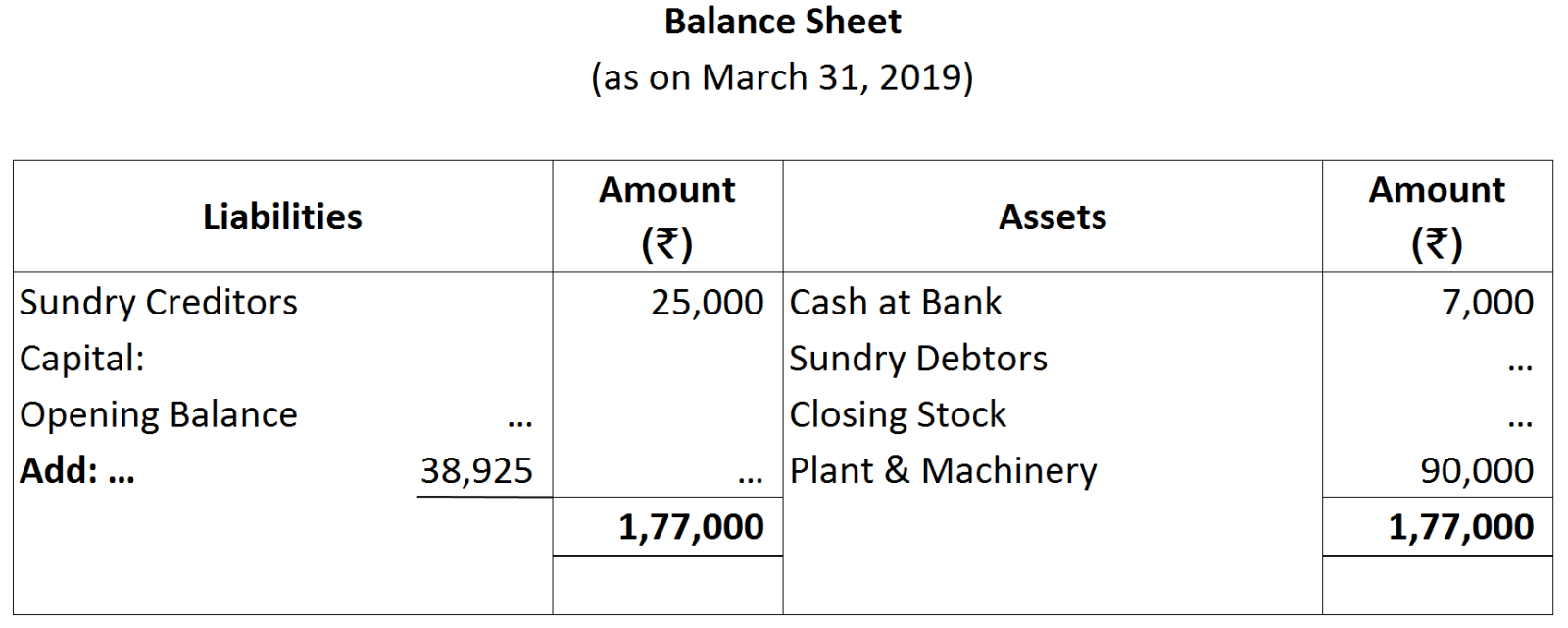
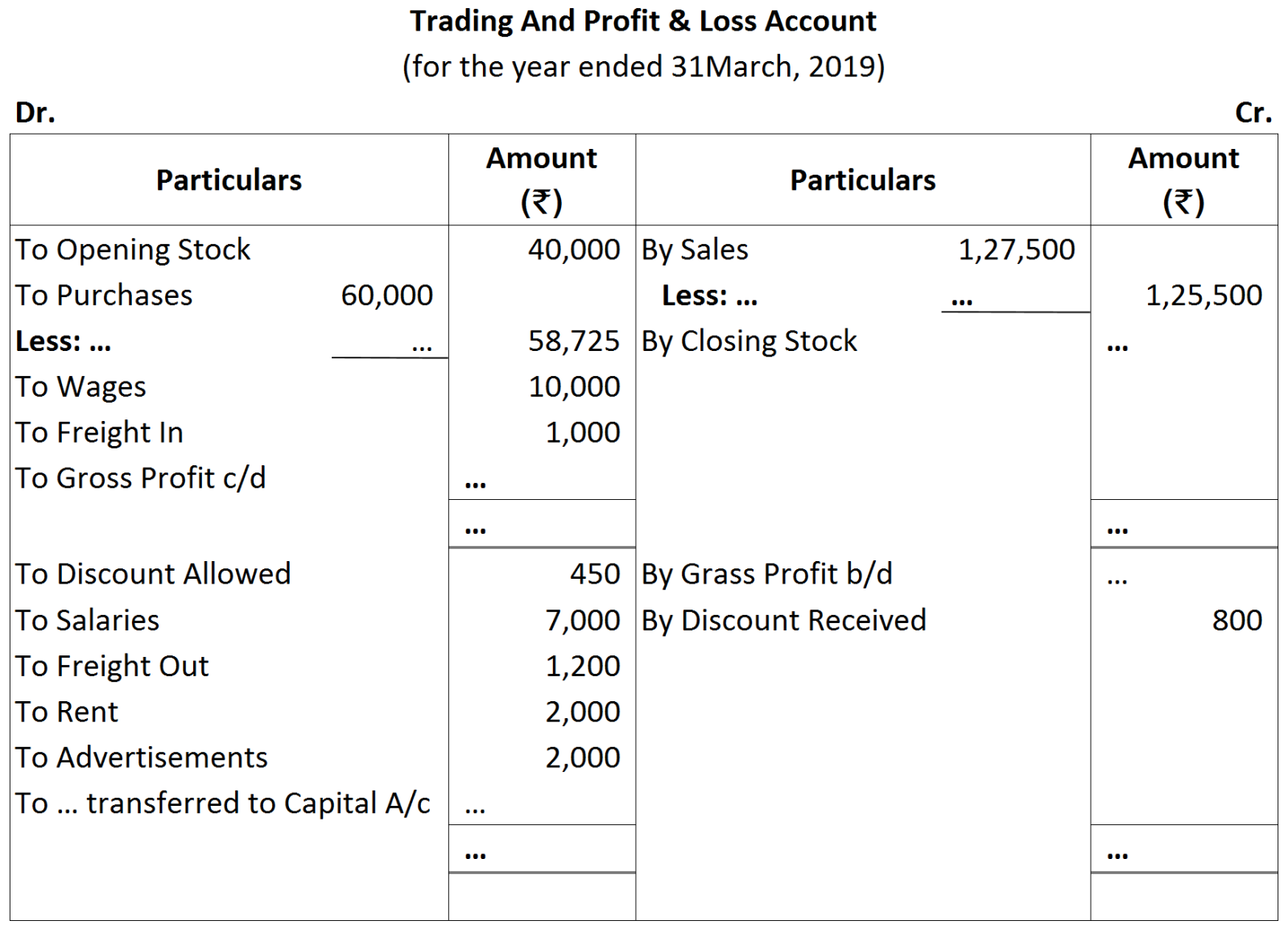
In the following Trading and profit and Loss Account for the year ended $31^{st}$​​​​​​​ March,$ 2019:$ and Balance Sheet as on that date, determine the missing information:
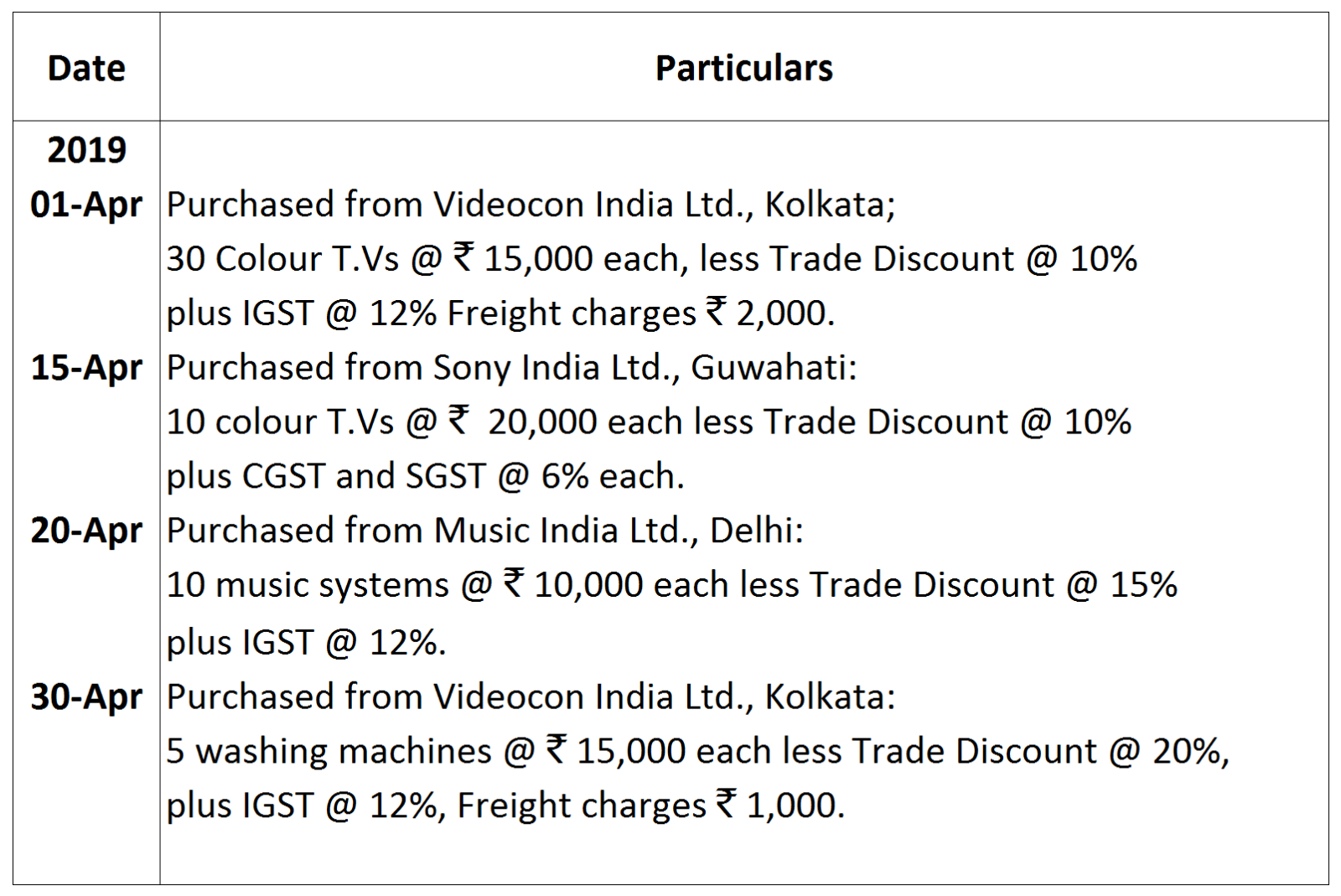
From the following transactions of Kamal, Guwahati, prepare Purchases Book and post into Ledger:
On 1st June, 2019, A sold goods to B for ₹ 250. B gave to A his acceptance payable 1 month after date. Before maturity B requests A to renew it, which A does adding ₹ 10 to the new bill for interest.
Make the necessary Journal entries to record these transactions in the books of both Aand B.
Explain briefly any five advantages of computerised accounting system over the manual system.
Prepare Two-column Cash Book of Vinod, Delhi from the following transactions:
2018  
Oct. 1 Cash in Hand 25,000
Oct. 1 Cash at Bank 75,000
Oct. 7 Bought goods for ₹ 15,000 plus IGST @ 12% against cheque  
Oct. 8 Bought goods for ₹ 5,000 plus CGST and SGST @ 6% each  
Oct. 10 Honoured our own acceptance by cheque 5,000
Oct. 14 Paid petty expenses 150
Oct. 18 Ramesh who owed ₹ 5,000 became bankrupt and paid us 50 paise in a rupee  
Oct. 20 Received cash from Manohar 7,500
  Allowed discount 250
Oct. 23 Withdrew from bank 4,000
Oct. 24 Paid to Ghanshyamdas & Co. 3,000
  Received discount 100
Oct. 25 Withdrew from bank for personal expenses 3,000
Oct. 27 Sold goods for ₹ 11,000 plus CGST and SGST @ 6% against cash  
Oct. 28 Received cheque for goods sold for ₹ 9,000 plus CGST and SGST @ 6% each  
Oct. 29 Received repayment of a loan of ₹ 5,000 and deposited ₹ 3,000 out of it into bank  
A company purchased on 1st July, 2015 machinery costing ₹ 30,000. It further purchased machinery on 1st January, 2016 costing ₹ 20,000 and on 1st October, 2016 costing ₹ 10,000. On 1st April, 2017, one-third of the machinery installed on 1st July, 2015 became obsolete and was sold for ₹ 3,000. The company follows financial year as accounting year.
Show how the Machinery Account would appear in the books of company if depreciation is charged @ 10% p.a. on Written Down Value Method.
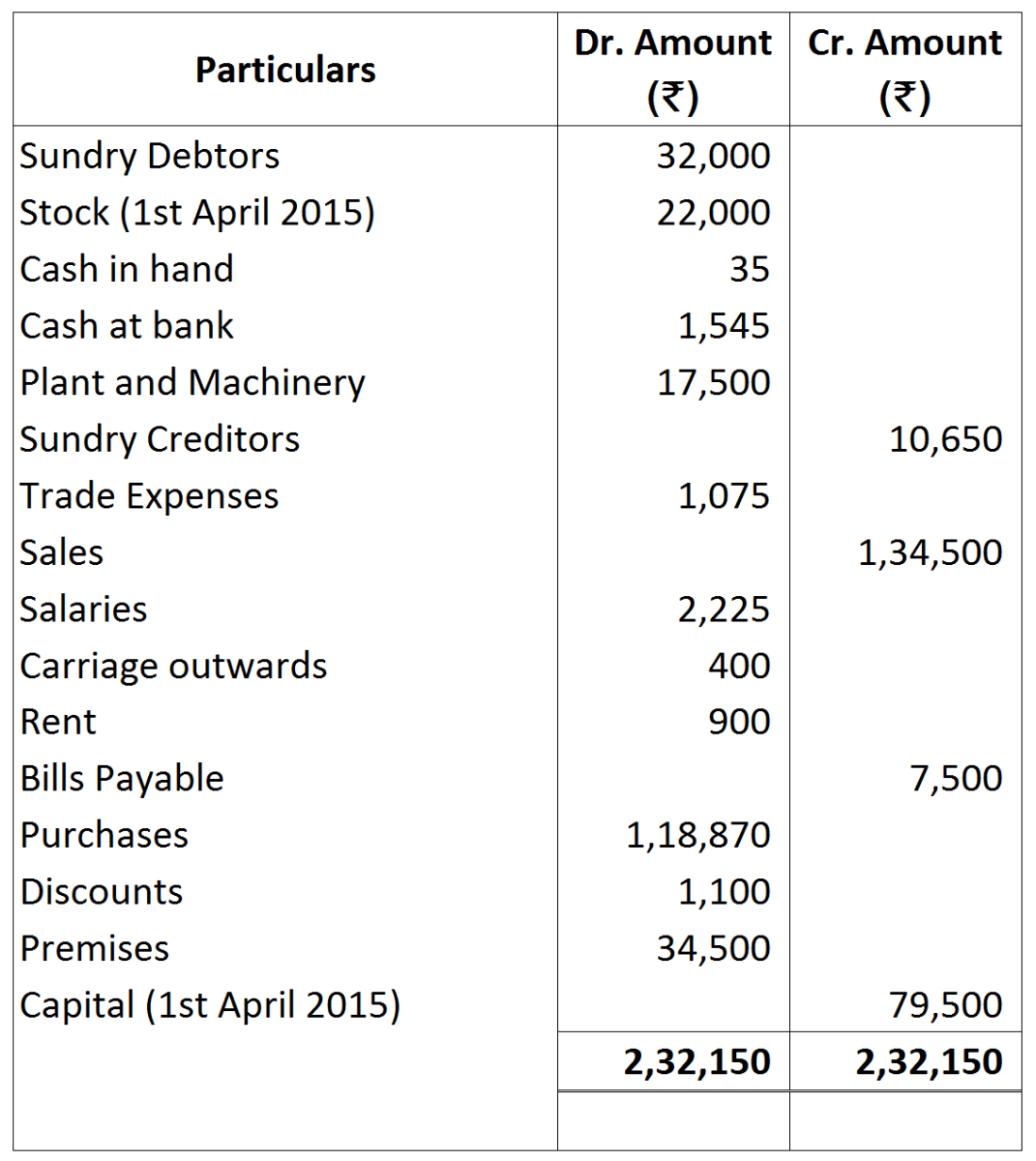
From the following Trial Balance and other information prepare Trading and Profit and Loss Account for the year ended 31st March 2016 and Balance Sheet as at that date.

Additional Information:
Stock on 31st March 2016 was ₹ 12,450. Rent was unpaid to the extent of ₹ 85 and ₹ 150 were outstanding for Trade Expenses. ₹ 400 are to be written off as bad debts out of the above debtors, and 5% is to be provided for doubtful debts. Depreciate plant and machinery 10% and premises by 2%. Manager is entitled a commission of 5% on net profit after charging his commission.
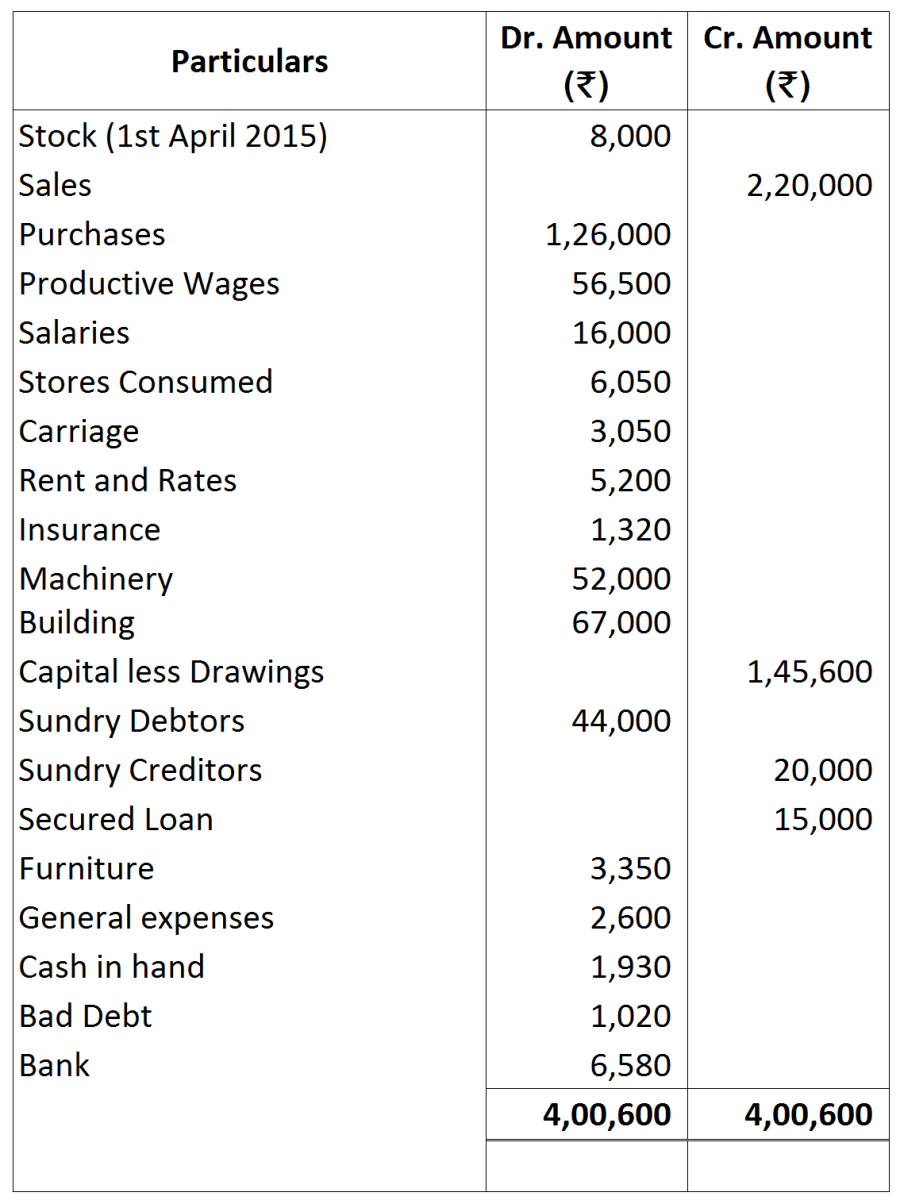
Following is the Trial Balance as on 31st March 2016. Prepare Trading and Profit and Loss Account and Balance Sheet:

Additional Information:
  1. Stock on 31st March 2016 is ₹ 20,600.
  2. Depreciate machinery @ 10% p.a.
  3. Make a Provision @ 5% for Doubtful Debts.
  4. Provide $2\frac{1}{2}\%$ for discount on sundry debtors.
  5. Rent and Rates include security deposit of ₹ 400.
  6. Insurance prepaid ₹ 120.
From the following balances, prepare Trading and Profit and Loss Account and the Balance Sheet:

Closing Stock was of ₹ 70,000 but its net realisable value was estimated at ₹ 60,000.