Question
Explain briefly any five advantages of computerised accounting system over the manual system.

Answer

The computerised accounting system has various advantages over the manual system which are given below:
  1. High Speed: The accounting speed of a computer is much faster than that of a human being.
  2. High Reliability: The extent of reliability of the information generated by a computer is immense. The reliability remains the same despite the volume of the work whereas the reliability of a human work can be doubtful in case of voluminous work.
  3. Accuracy: The accuracy of a computer cannot be doubted once a particular program is fed. All the results based on such program would be 100% accurate whereas the results produced by a human being can vary due to fatigue, carelessness, etc.
  4. Updation of Information: All the related records in a computer get automatically updated once any information is punched in, whereas in case of manual accounts all the records will have to be altered one by one.
  5. Effieciency: The computer based accounting systems ensure better and efficient use of resources and time.
  6. Legibility: The data displayed on a computer screen is clear and legible thus avoiding errors caused by untidy writing in a manual accounting system.
  7. Lower Cost: The cost of maintaining accounts under the computerised system is much lower as compared to the manual system.

Need a full question paper?

Generate a complete, print-ready paper with questions like this in minutes — across 16+ boards, with answer keys.
Start Generating Free

Similar questions

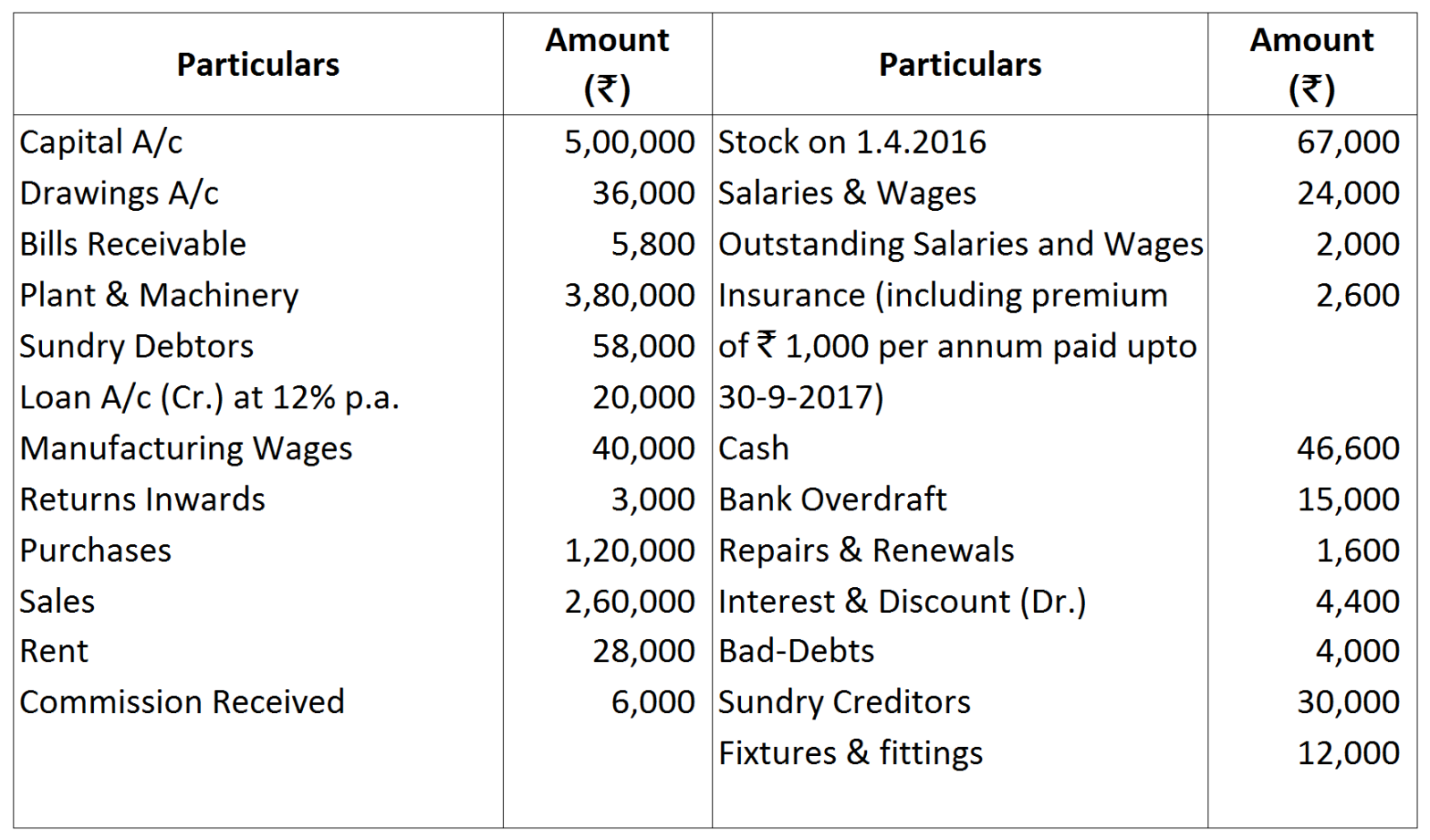
Prepare Trading and Profit & Loss Account and Balance Sheet as at 31st March, 2017, from the following balances:

Adjustments:
  1. Stock on hand on 31st March, 2017 was ₹ 80,000.
  2. Further Bad-debts written off ₹ 2,000 and Create a provision of 5% of Sundry Debtors.
  3. Rent has been paid up to 31st May, 2017.
  4. Manufacturing wages include ₹ 10,000 of a new Machinery purchased on 1st October, 2016.
  5. Depreciate Plant and Machinery by 10% p.a. and Fixtures and Fittings by 20% p.a.
  6. Commission earned but not received ₹ 1,000.
  7. Interest on Loan for the last two months is not paid.
  8. Goods worth ₹ 4,000 were distributed as free samples.
Mr. A does not keep proper records of his business. Following information is available from records kept by him:
Mr. A withdrew from the business ₹ 3,000 per month upto 30th September 2016 and thereafter ₹ 4,000 per month as drawings. ₹ 50,000 realised by the proprietor as maturity value of National Saving Certificates was invested in the business. Prepare a statement showing net profit (or net loss) for the year.
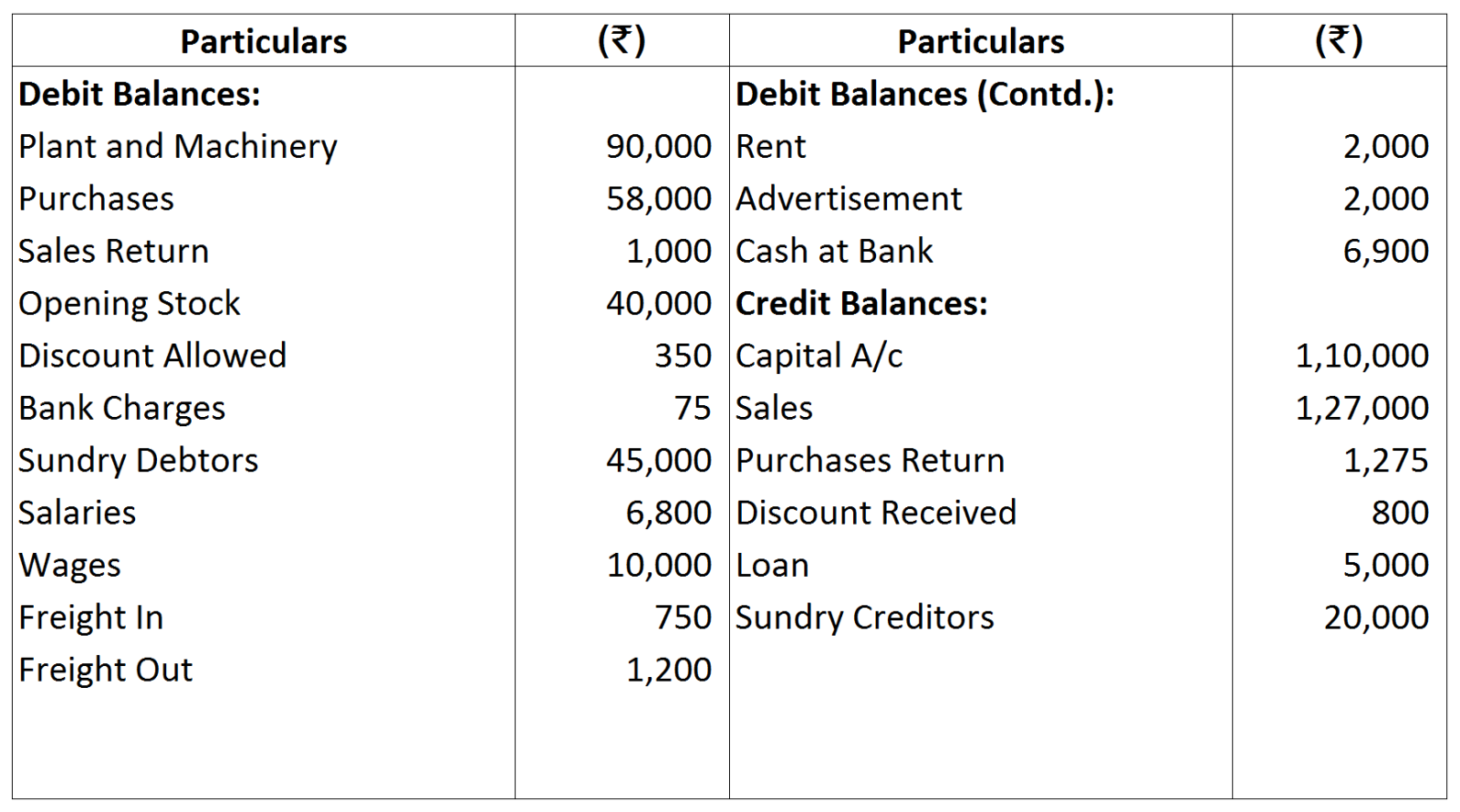
Trial Balance of Chatter Sen on $31^{st}$​​​​​​​ March, $2019$ revealed the following balances:

Stock on $31^{st}​​​​​​​$​​​​​​​ March, $2019$ was valued at $₹ 35,000$.
Prepare Trading and Profit and Loss Account for the year ended $31^{st}$ March, $2019$ and Balance Sheet as at the date.
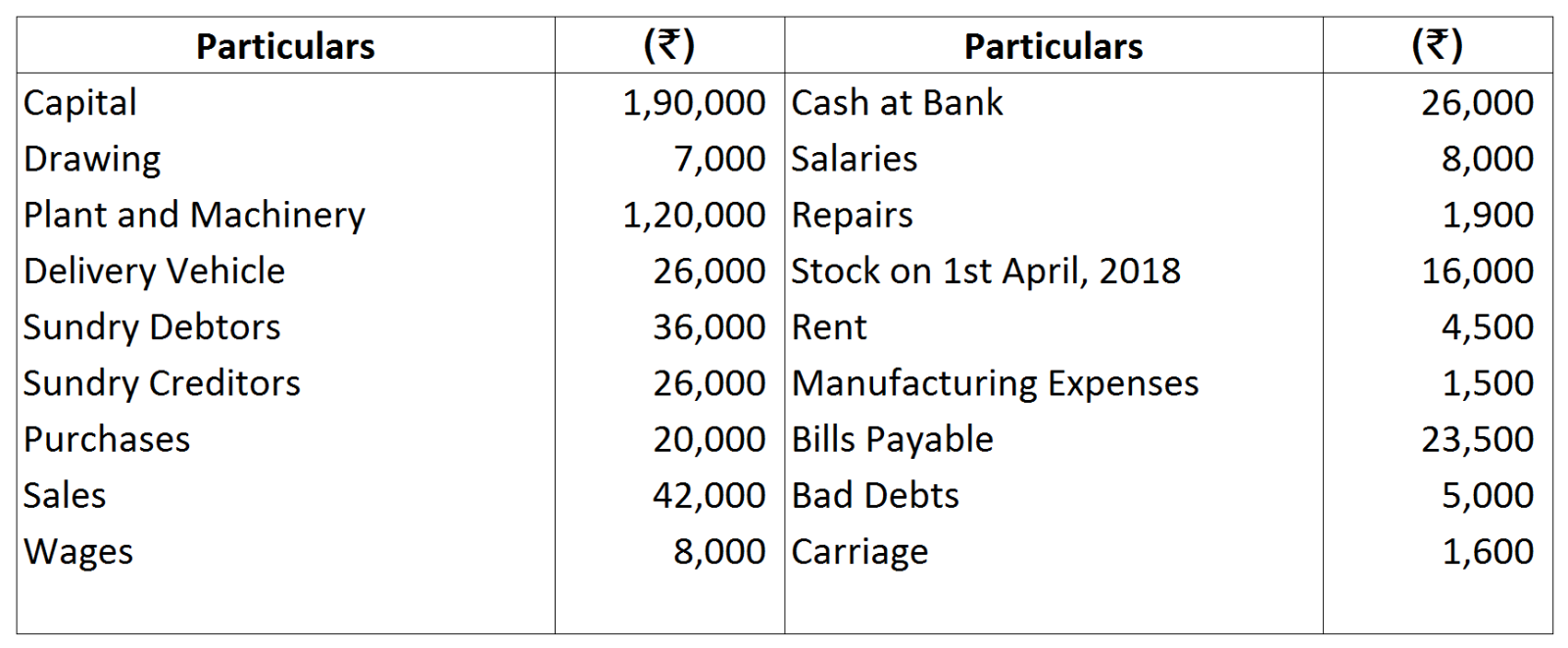
Following are the balance extracted from the books of Manish on 31st March, 2019:

Prepare Trading and Profit and Loss Account and Balance Sheet as 31st March, 2019 after following adjustments are made:
  1. Closing Stock was ₹ 16,000.
  2. Depreciation Plant and Machinery @ 10% and Delivery Vehicle @ 15%.
  3. Unpaid Rent amounted to ₹ 500.
Give any five points of difference between a Balance Sheet and a Trial Balance.
Prepare a Bank Reconciliation Statement as on 31st March, 2019 from the following:
  1. On 31st March, 2019, Cash Book of a firm showed bank balance of ₹ 36,000 (Dr.).
  2. Cheques had been issued for ₹ 30,000, out of which cheques of ₹ 24,000 were presented for payment.
  3. Cheques of ₹ 8,400 were deposited in the bank on 28th March, 2019 but had not been credited by the bank. Also, a cheque of ₹ 3,000 entered in the Cash Book on 30th March, 2019 was banked on 3rd April.
  4. A cheque from Suresh for ₹ 2,400 was deposited in the bank on 26th March, 2019 was dishonoured, advice was received on 2nd April.
  5. Pass Book showed bank charges of ₹ 120 debited by the bank.
  6. One of the Debtors deposited ₹ 3,000 in the bank account of the firm on 26th March, 2019, but the intimation in this respect was received from the bank on 2nd April.
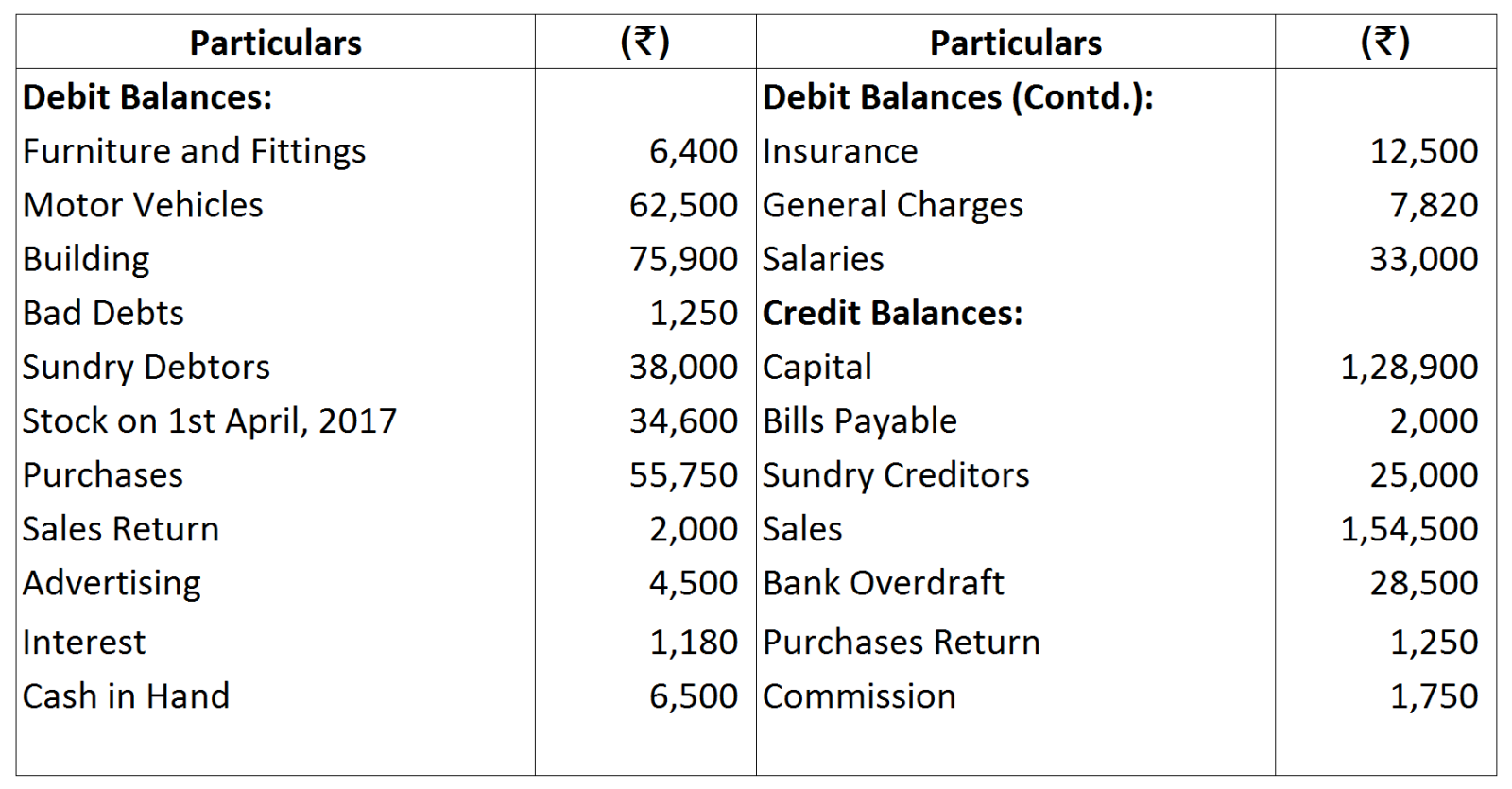
Following Trial Balance is extracted from the books of a merchant on $31^{st}$ March, $2019$:

Stock in Hand on $31^{\text {st }}$ March, 2019 was valued at $₹ 32,500$.
From the above, prepare Trading and Profit and Loss Account for the year ended 31 ${ }^{\text {st }}$ March, $2019$ and Balance Sheet as at that date.
A owed B ₹ 8,000. He gave a bill for the same on 1st August, 2018 payable after 4 months at the Bank of India, Chandni Chowk, Delhi. Immediately after receiving the bill, B endorsed it to C in payment of his debt. On 1st September, C discounted the bill at 12% p.a. The bill is met on due date.
Pass the necessary Journal entries in the books of A, B and C.
From the following information supplied by Sanjay, prepare his Bank Reconciliation Statement as on 31st March, 2019:
   
(i) Bank overdraft as per Pass Book. 16,500
(ii) Cheques issued but not presented for payment. 8,750
(iii) Cheques deposited with the Bank but not collected. 10,500
(iv) Cheques recorded in the Cash Book but not sent to the bank for collection. 2,000
(v) Payments received from customers directly by the bank. 3,500
(vi) Bank charges debited in the Pass Book. 200
(vii) Premium on life policy of Sanjay paid by the bank on standing advice. 1,980
(viii) A bill for ₹ 3,000 (discounted with the bank in February) dishonoured on 31st March, 2019 and noting charges paid by the bank. 100
Define a computerised accounting system. Distinguish between a manual and computerised accounting system.