Question
Dispersion can take place for

Answer

Transverse and Longitudinal waves both can undergo dispersion provided the components constituting them have different velocities.

Need a full question paper?

Generate a complete, print-ready paper with questions like this in minutes — across 16+ boards, with answer keys.
Start Generating Free

Similar questions

A particle is projected from the ground with velocity $u$ at angle $\theta$ with horizontal. The horizontal range, maximum height and time of flight are $R, H$ and $T$ respectively. They are given by $R = \frac{{{u^2}\sin 2\theta }}{g}$, $H = \frac{{{u^2}{{\sin }^2}\theta }}{{2g}}$ and $T = \frac{{2u\sin \theta }}{g}$  Now keeping $u $ as fixed, $\theta$ is varied from $30^o$ to $60^o$. Then,
A linear harmonic oscillator of force constant $2 \times 10^6\,Nm^{-1}$ and amplitude $0.01\, m$ has a total mechanical energy of $160\, J.$ Its
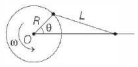
One end of a rod of length $L$ is fixed to a point on the circumference of a wheel of radius $R$. The other end is sliding freely along a straight channel passing through the centre of the wheel as shown in the figure below. The wheel is rotating with a constant angular velocity $\omega$ about $O$. Taking $T=\frac{2 \pi}{\omega}$, the motion of the rod is
A $2\,mW$ laser operates at a wavelength of $500\,nm.$ The number of photons that will be emitted per second is [Given Planck’s constant $h = 6.6 \times 10^{-34}\,Js,$ speed of light $c = 3.0\times 10^8\,m/s$ ]
The dimensional formula $[ML^0T^{-3}]$ is more closely associated with
Coherent sources are characterized by the same
In figure, two blocks $M$ and $m$ are tied together with an inextensible and light string. The mass $M$ is placed on a rough horizontal surface with coefficient of friction $\mu$ and the mass $m$ is hanging vertically against a smooth vertical wall. The pulley is frictionless. Choose the correct statement $(s)$ related to the tension $T$ in the string
The velocities of three particles of masses $20\ g$, $30\ g$ and $50\ g$ are $10 \vec i,\,10\vec j,\,{\rm{and}}\,10\vec k$ respectively. The velocity of the centre of mass of the three particles is
$Assertion$: The total translational kinetic energy of all the molecules of a given mass of an ideal gas is $1.5\, times$ the product of its pressure and its volume.
$Reason$ : The molecules of a gas collide with each other and the velocities of the molecules change due to the collision.
A cell of internal resistance $1.5\,\Omega $ and of $e.m.f.$ $1.5\, volt$ balances $500\, cm$ on a potentiometer wire. If a wire of $15\,\Omega $ is connected between the balance point and the cell, then the balance point will shift