MCQ
Displacement current is.
- Acontinuous when electric field is changing in the circuit
- Bcontinuous when magnetic field is changing in the circuit
- Ccontinuous in both types of fields
- Dcontinuous through wires and resistance only
Generate a complete, print-ready paper with questions like this in minutes — across 16+ boards, with answer keys.
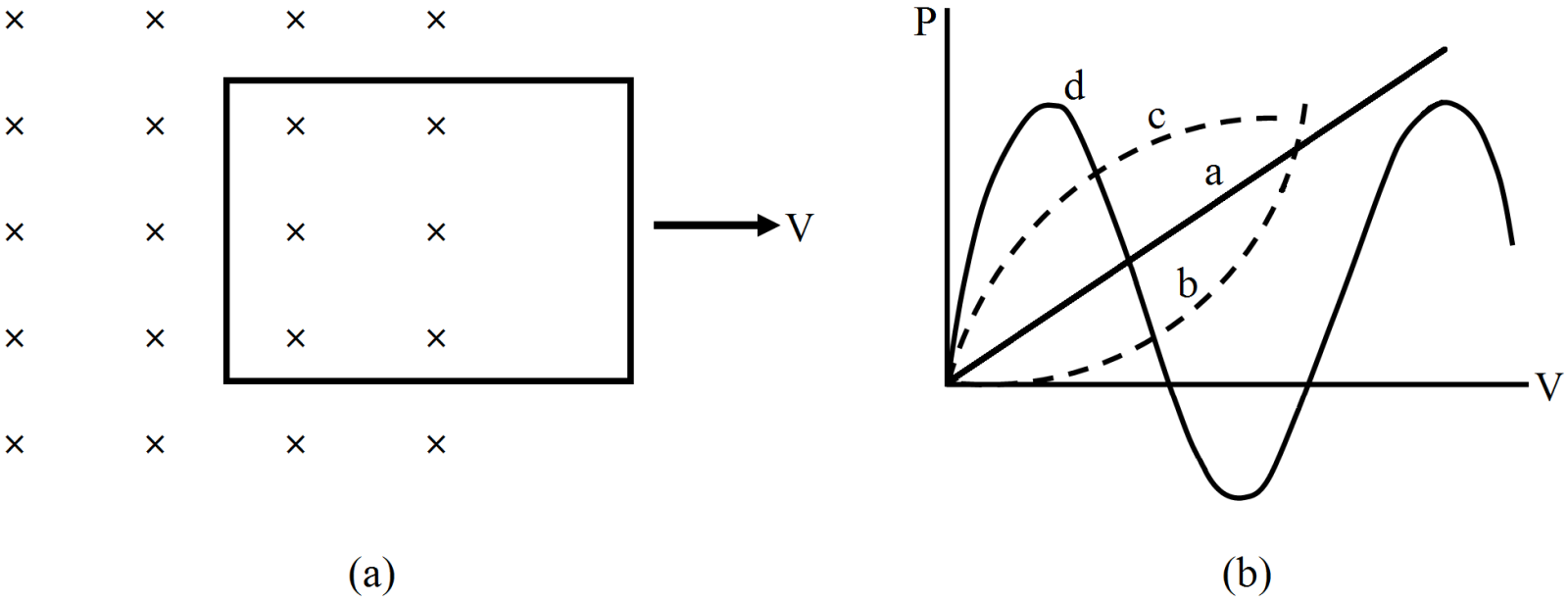
Which of the following statement is true about magnetic moments of atoms of different elements
|
(a) All have a magnetic moment |
|
(b) None has a magnetic moment |
|
(c) All acquire a magnetic moment under external magnetic field and in same direction as the field |
|
(d) None of the above statements are accurate |
A bi-convex lens made of glass (refractive index 1.5) is put in a liquid of refractive index 1.7. Its focal length will
|
(a) Decrease and change sign |
|
(b) Increase and change sign |
|
(c) Decrease and remain of the same sign |
|
(d) Increase and remain of the same sign |
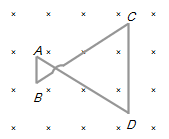
A conducting wire frame is placed in a magnetic field which is directed into the paper. The magnetic field is increasing at a constant rate. The directions of induced current in wires AB and CD are
|
(a) B to A and D to C |
(b) A to B and C to D |
|
(c) A to B and D to C |
(d) B to A and C to D |
Four charges are arranged at the corners of a square ABCD, as shown in the adjoining figure. The force on the charge kept at the centre O is

|
(a) Zero |
(b) Along the diagonal AC |
|
(c) Along the diagonal BD |
(d) Perpendicular to side AB |
The true statement is
|
(a) The order of colours in the primary and the secondary rainbows is the same |
|
(b) The intensity of colours in the primary and the secondary rainbows is the same |
|
(c) The intensity of light in the primary rainbow is greater and the order of colours is the same than the secondary rainbow |
|
(d) The intensity of light for different colours in primary rainbow is greater and the order of colours is reverse than the secondary rainbow |