Question
Distinguish between change in demand and change in quantity demanded.
| S. No. | Basis | Change in demand | Change in quantity demanded |
| 1. | Factors | This is caused by change in determinants, other than own price of the commodity. | This is caused by change in own price of the commodity, other factors remaining constant. |
| 2. | Effect | This happens when at the same price, more or less is being demanded. | This happens when at a lower price, more is being demanded or at a higher price, less is being demanded. |
| 3. | Change in curve | Diagrammatically, this is shown as a forward or backward shift in demand curve. | Diagrammatically, this is shown as a downward or an upward movement on the same demand curve. |
| 4. | Graph | 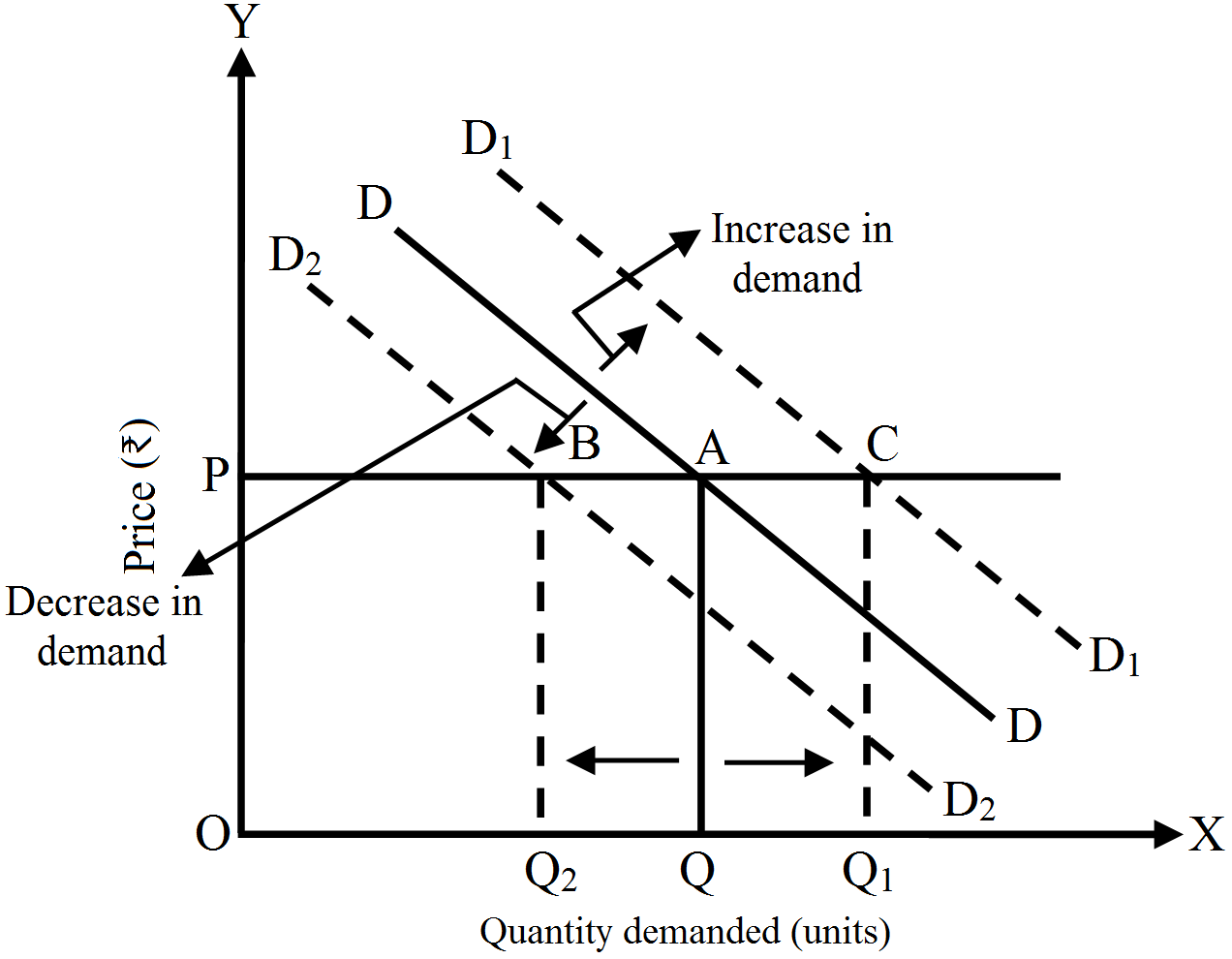 | 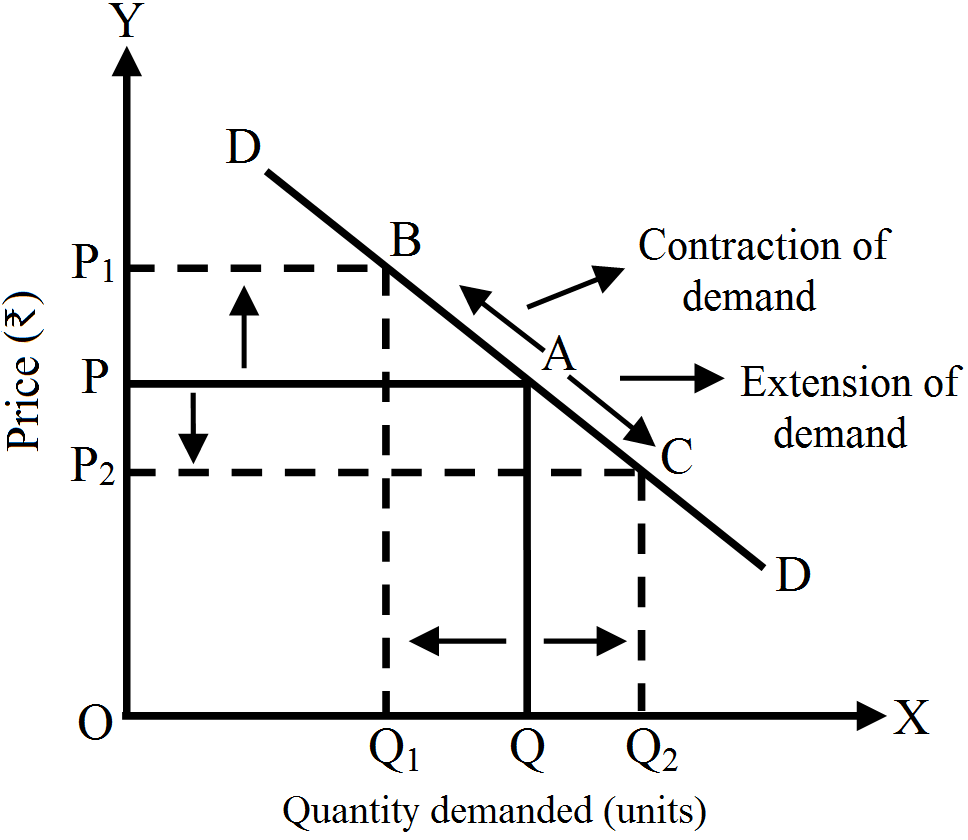 |
Generate a complete, print-ready paper with questions like this in minutes — across 16+ boards, with answer keys.
OR
There is simultaneously decrease in demand and supply of a commodity, when it will result in:OR
Market for a good is in equilibrium. There is simultaneous "decrease" in both demand and supply of the goods. Explain its effect on market price.| (₹ crore) | ||
| (i) | Gross National Disposable Income | 600 |
| (ii) | Net current transfers to abroad | (–) 20 |
| (iii) | Consumption of fixed capital | 60 |
| (iv) | Current transfers from government | 30 |
| (v) | Indirect tax | 100 |
| (vi) | Income accruing to government | 80 |
| (vii) | Subsidies | 10 |
| (viii) | Net factor income to abroad | (–) 10 |
| (ix) | National debt interest | 40 |
| (x) | Personal tax | 150 |
| (Rs. Crores) | ||
| | Personal Tax | 80 |
| | Private final consumption expenditure | 600 |
| | Undistributed profits | 30 |
| | Private income | 650 |
| | Government final consumption expenditure | 100 |
| | Corporate Tax | 50 |
| | Net domestic fixed capital formation | 70 |
| | Net indirect tax | 60 |
| | Depreciation | 14 |
| | Change in stocks | (-) 10 |
| | Net imports | 20 |
| | Net factor income to abroad | 10 |
| (Rs. in crores) | |
| 500 |
| 40 |
| 1,500 |
| 2,800 |
| 90 |
| 300 |
| 400 |
| 120 |
| 250 |
| 650 |
| 700 |
| 50 |
| Output (units) | 1 | 2 | 3 | 4 | 5 | 6 |
| Marginal cost (Rs.) | 9 | 7 | 2 | 4 | 8 | 12 |
| Output (units) | Average Fixed Cost (AFC) (₹) | Marginal Cost (MC) (₹) | Total Cost (TC) (₹) |
| 1 | __ | __ | 72 |
| 2 | __ | 10 | 82 |
| 3 | 20 | 8 | __ |
| 4 | __ | __ | 99 |
| 5 | 12 | 10 | __ |