Question
Distinguish between resistance and resistivity.

Answer

a. Resistance is the property of the conductor, while resistivity is the property of the material of the conductor.
b. Resistance of a conductor is the opposition to the flow of electric current through it. resistivity of a substance is the opposition to the flow of electric current by a rod of that substance which is 1 m long and $1 m^2$ in cross section.
c. Resistivity of a substances depends on the nature of the substance and temperature.
d. Resistivity of a substance on the nature of the substance and its temper. it does not depend the length or thickness of the conductor.

Need a full question paper?

Generate a complete, print-ready paper with questions like this in minutes — across 16+ boards, with answer keys.

Start Generating Free

Similar questions

With the help of a labelled diagram, explain why a tank full of water appears less deep than it actually is.
On adding a drop of barium chloride solution to an aqueous solution of sodium sulphite, white precipitate is obtained.
  1. Write a balanced chemical equation of the reaction involved.
  2. What other name can be given to this precipitation reaction?
  3. On adding dilute hydrochloric acid to the reaction mixture, white precipitate disappears. Why?
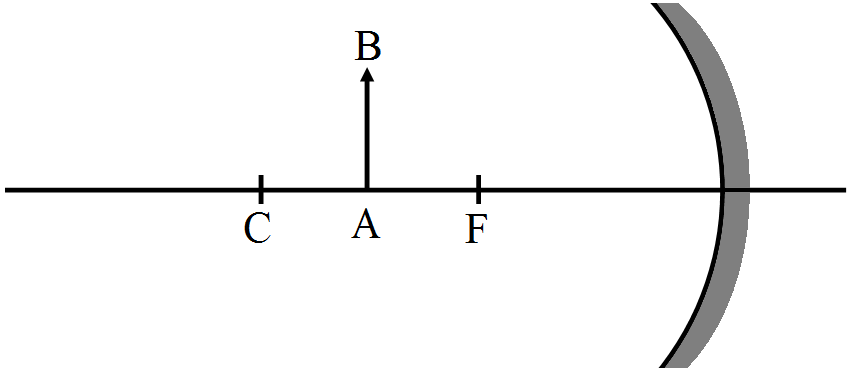
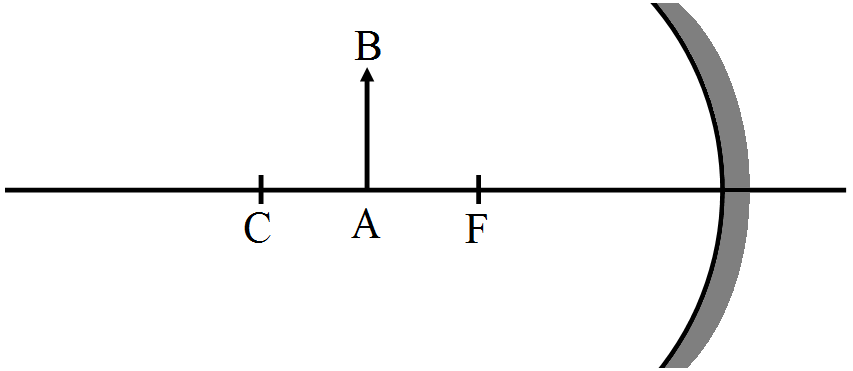
Draw the ray diagram in your answer book and show the formation of image of object AB with suitable rays. Mention the position and nature of image.
What were the limitations of Dobereiner’s classification of elements?
Define the terms:
  1. mineral.
  2. ore.
  3. gangue.
Write the formulae of sodium chloride and sodium carbonate. Explain why an aqueous solution of sodium chloride is neutral but an aqueous solution of sodium carbonate is basic (or alkaline). Write chemical equations of the reactions involved.
What is meant by acquired and inherited traits? Explain with one example each.
What is a soap? Name one soap.
$i.$ Which types of metals can be obtained in their pure form by just heating their oxides in air? Give one example.
$ii.$ Consider the reaction given below used to obtain Manganese metal in pure form:
$3 MnO _2(s)+4 Al ( s ) \longrightarrow 3 Mn ( l )+2 Al _2 O _3(s)+$ Heat
$a.$ What type of reaction is it?
$b.$ What is the role of aluminium in this reaction?
In a household electric circuit, different appliances are connected in parallel to one another. Give two reasons. An electrician puts a fuse of rating 5A in that part of domestic electrical
circuit in which an electrical heater of rating 1.5kW, 220V is operating. What is likely to happen in this case and why? What change, if any, needs to be made?