Question
Does a nucleus lose mass when it suffers gamma decay?

Answer

Gamma rays consist of photons that are produced when a nucleus from its excited state comes to its ground state releasing energy. Since gamma rays are chargeless and massless particles, the nucleus does not suffer any loss in mass during the gamma decay.

Need a full question paper?

Generate a complete, print-ready paper with questions like this in minutes — across 16+ boards, with answer keys.
Start Generating Free

Similar questions

Draw the circuit diagram of a full wave rectifier using two p-n junction
diodes. Explain its working and show input and output voltage variations.
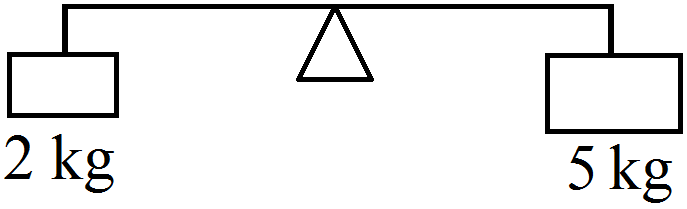
A light rod of length 1m is pivoted at its centre and two masses of 5kg and 2kg are hung from the ends as shown in figure. Find the initial angular acceleration of the rod assuming that it was horizontal in the beginning.

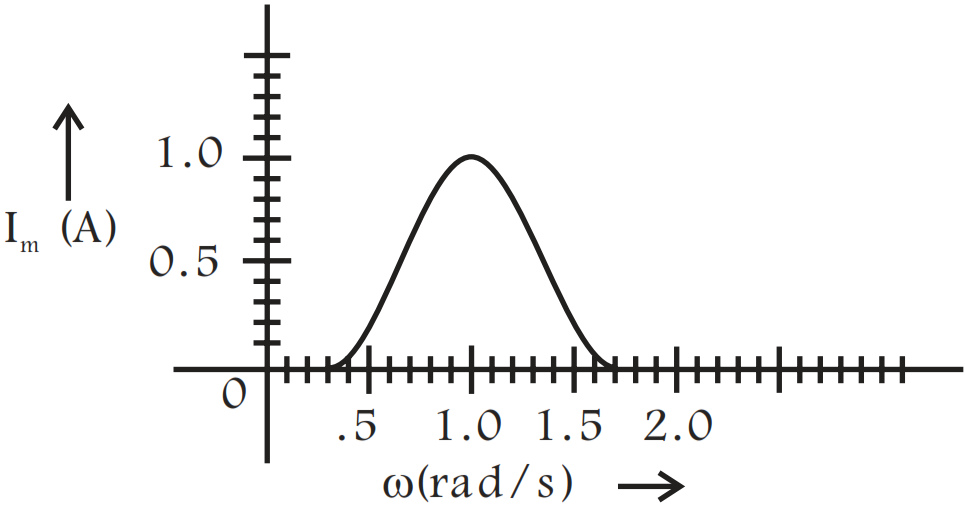
In series LCR circuit, the plot of Imax vs $\omega$ is shown in Fig. Find the bandwidth and mark in the figure.

A violin player riding on a slow train plays a 440Hz note. Another violin player standing near the track plays the same note. When the two are close by and the train approaches the person on the ground, he hears 4.0 beats per second. The speed of sound in air = 340m/s.
  1. Calculate the speed of the train.
  2. What beat frequency is heard by the player in the train?
  1. When an AC source is connected to an ideal inductor show that the average power supplied by the source over a complete cycle is zero.
  2. A lamp is connected in series with an inductor and an AC source. What happens to the brightness if the lamp when the key is plugged in and an iron rod is inserted inside the inductor? Explain.

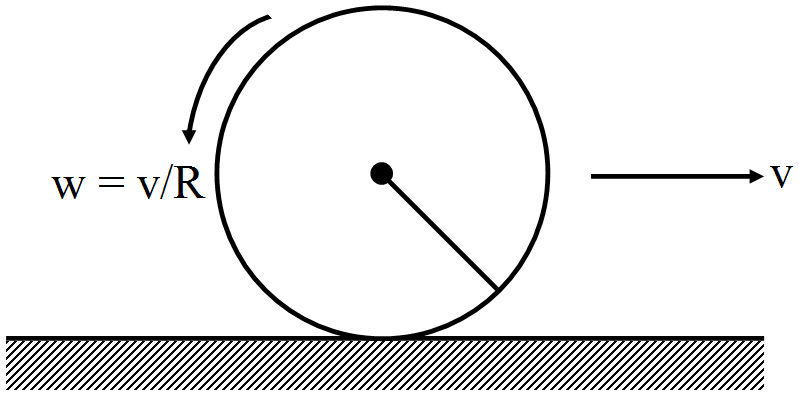
A solid sphere is set into motion on a rough horizontal surface with a linear speed v in the forward direction and an angular speed $\frac{\text{v}}{\text{R}}$ in the anticlockwise direction as shown in figure. Find the linear speed of the sphere:
  1. When it stops rotating.
  2. When slipping finally ceases and pure rolling starts.

When the base current in a transistor is changed from $30\mu\text{A}$ to $80\mu\text{A},$ the collector current is changed from 1.0mA to 3.5mA. Find the current gain $\beta.$
The first excited energy of a He+ ion is the same as the ground state energy of hydrogen. Is it always true that one of the energies of any hydrogen-like ion will be the same as the ground state energy of a hydrogen atom?
Answer the following:
  1. Name the em waves which are used for the treatment of certain forms of cancer. Write their frequency range.
  2. Thin ozone layer on top of stratosphere is crucial for human survival. Why?
  3. Why is the amount of the momentum transferred by the em waves incident on the surface so small?
An electromagnetic wave of wavelength λ is incident on a photosensitive surface of negligible work function. If the photo-electrons emitted from this surface have the de-Broglie wavelength $\lambda_{1}$, prove that $\lambda = \begin{pmatrix} 2 \text{mc} \\ h \end{pmatrix}\lambda^{2}_{1}$.