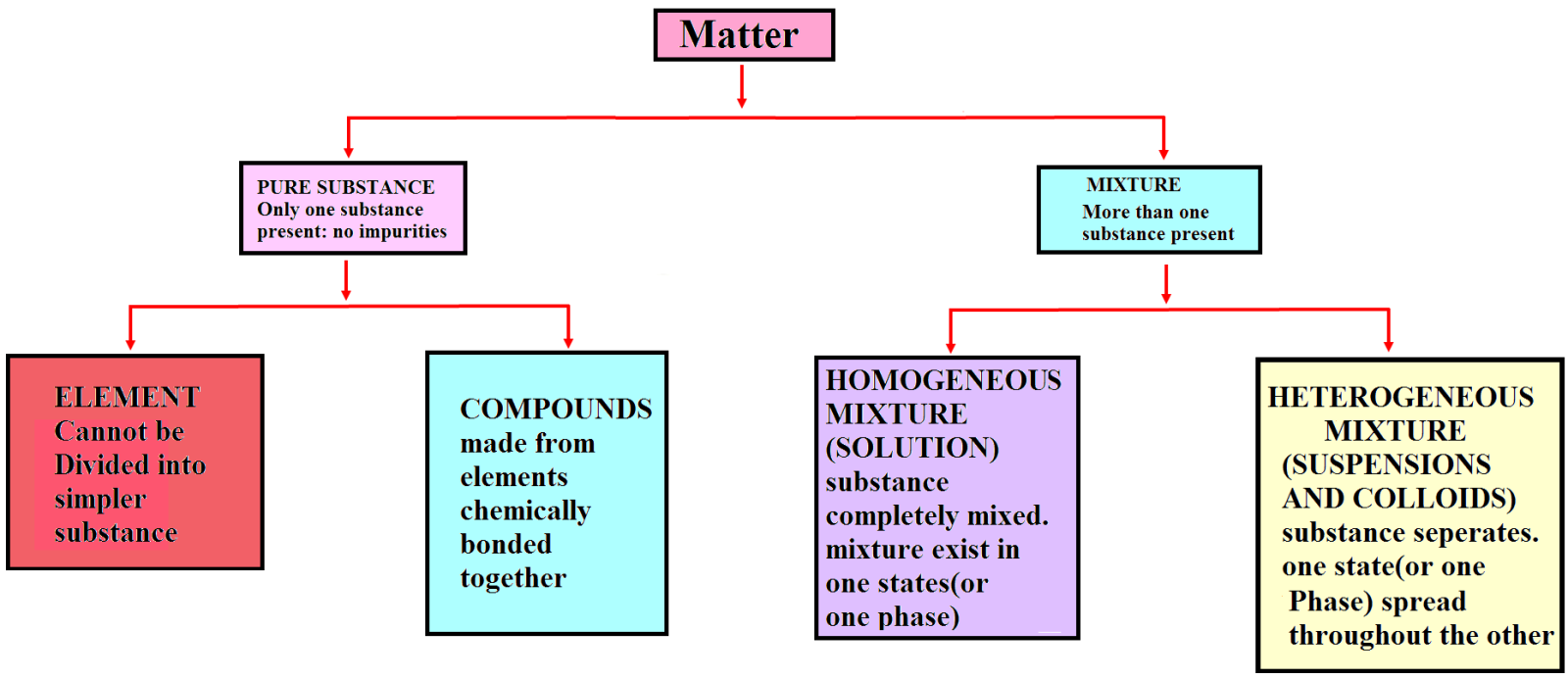
Draw a flow-chart for the schematic representation of different types of matter.
Download our app for free and get started

Download our appand get started for free
Experience the future of education. Simply download our apps or reach out to us for more information. Let's shape the future of learning together!No signup needed.*
Similar Questions
- 1View SolutionCompare the properties of metals and non-metals with respect to:
- Malleability.
- Ductility.
- Electrical conductivity.
- 2View SolutionWhat are 'suspended particles'?
- 3View SolutionWhat is the need to heat solution?
- 4The teacher instructed three students $‘A’, ‘B’$ and $‘C’$ respectively to prepare a $50 \%$ (mass by volume) solution of sodium hydroxide $(NaOH)$. $‘A’$ dissolved $50g$ of $NaOH$ in $100\ mL$ of water, $‘B’$ dissolved $50\ g$ of $NaOH$ in $100\ g$ of water while $‘C’$ dissolved $50\ g$ of $NaOH$ in water to make $100\ mL$ of solution. Which one of them has made the desired solution and why?View Solution
- 5View SolutionClassify the following materials as homogeneous mixtures and heterogeneous mixtures: Soda-water, Wood, Air, Soil, Vinegar, Alcohol and water mixture, Petrol and water mixture, Chalk and water mixture, Sugar and water mixture, Copper sulphate solution.
- 6What is the concentration of a solution which contains $16\ g$ of urea in $120\ g$ of solution?View Solution
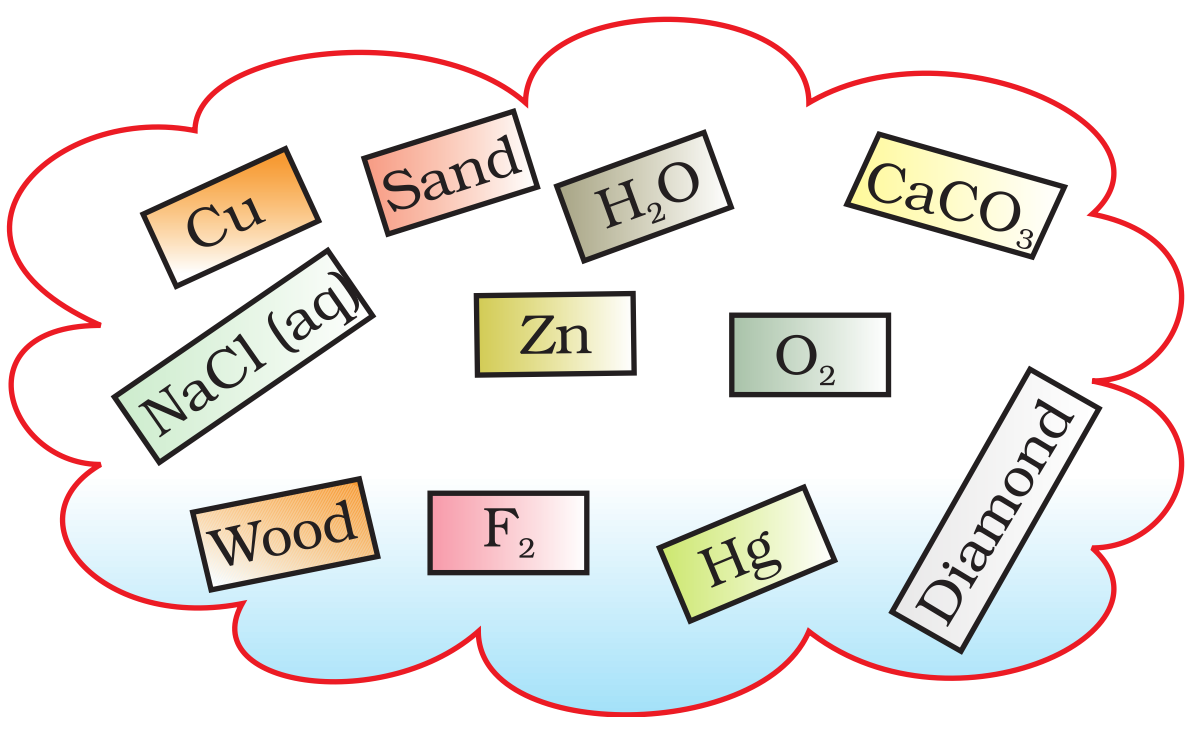
- 7View SolutionClassify the substances given in into elements and compounds:
- 8View SolutionA solution is always a liquid. Comment.
- 9View SolutionHow will you distinguish a colloid from a solution?
- 10View SolutionYou are provided with a solution of salt in water in one jar and mixture of salt and sand in other. Can you state one property in which they resemble and differ from one another.