Question
Draw a graph between photoelectric current and anode potential for two light beams of different intensity and same wavelength.

Answer

Get the step-by-step solution for this question inside the Vidyadip app.

Get the answer in the app

Need a full question paper?

Generate a complete, print-ready paper with questions like this in minutes — across 16+ boards, with answer keys.

Start Generating Free

Similar questions

Draw a graph from the following data. Draw tangents at $x = 2, 4, 6$ and $8.$ Find the slopes of these tangents. Verify that the curve drawn is $y = 2x^2$ and the slope of dy tangent is $\tan\theta=\frac{\text{dy}}{\text{dx}}=4\text{x}.$
$x$ $1$ $2$ $3$ $4$ $5$ $6$ $7$ $8$ $9$ $10$
$y$ $2$ $8$ $18$ $32$ $50$ $72$ $98$ $128$ $162$ $200$
X-ray and visible light travel at the same speed in vacuum. Do they travel at the same speed in glass?
A high jumper successfully clears the bar. Is it possible that his centre of mass crossed the bar from below it? Try it with appropriate figures.
Give expression for induced emf in AC generator. Discuss, with fogure, how this emf changes with time during one rotation of coil.
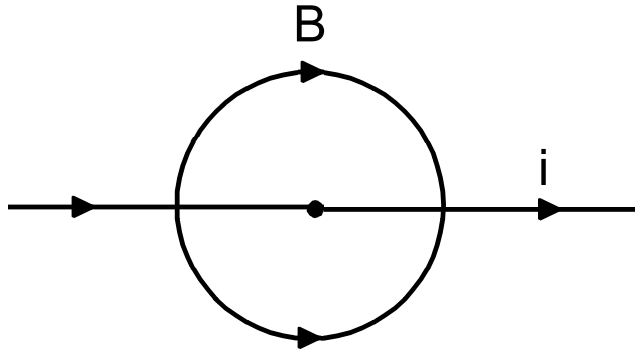
A conducting circular loop of radius a is connected to two Iong, straight wires. The straight wires carry current I as shown in figure. Find the magnetic field B at the centre of the loop.
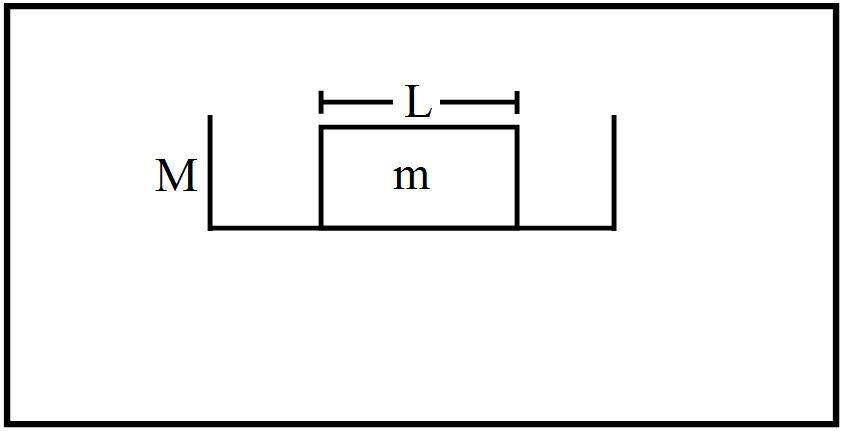
Consider a gravity-free hall in which a tray of mass M, carrying a cubical block of ice of mass m and edge L, is at rest in the middle. If the ice melts, by what distance does the centre of mass of "the tray plus the ice" system descend?
Long distance radio broadcasts use short wave bands, why?
A circular loop of one turn carries a current of 5.00A. If the magnetic field B at the centre is 0.200mT find the radius of the loop.
A copper wire of cross $-$ sectional area $0.01\ cm^2$ is under a tension of $20N$. Find the decrease in the cross $-$ sectional area. Young's modulus of copper $= 1.1 \times 10 ^{11}N/m^2$ and Poisson's ratio $=\  0.32.\Big  [$Hint: $\frac{\triangle\text{A}}{\text{A}}=2\frac{\triangle\text{r}}{\text{r}}\Big]$
(a) Calculate the potential at a point $P$ located at a distance of 9 cm due to the charge $4 \times 10^{-7} C$.(b) Now, find the work done in bringing the charge $2 \times 10^{-9} C$ from infinity to point P . Does the answer depend on the path along which the charge is brought?