Question
Draw a labeled diagram of sperm.

Answer

Get the step-by-step solution for this question inside the Vidyadip app.

Get the answer in the app

Need a full question paper?

Generate a complete, print-ready paper with questions like this in minutes — across 16+ boards, with answer keys.
Start Generating Free

Similar questions

Briefly explain how the rate of transpiration is affected by
Intensity of light
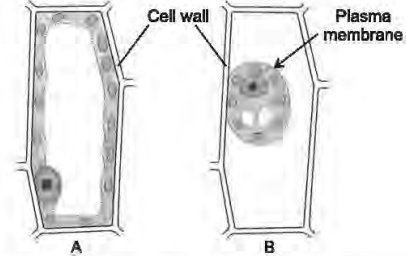
Given below are diagrams of plant cells as seen under the microscope after having been placed in two different solutions :

Image

(i) What is the technical term for the condition of the following?
(a) Cell A
(b) Cell B
(ii) From the solutions given in brackets (water, strong sugar solution, $1 \%$ salt solution) name the solution into which :
(a) Cell A
(b) Cell B, was placed before being viewed under the microscope,
(iii) Under what conditions in the soil will the root hair cell resemble:
(a) Cell A
(b) Cell $B$
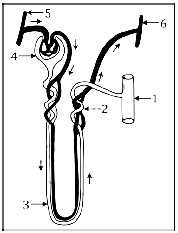
The given diagram represents a nephron and its blood supply. Study the diagram and answer the following questions:
(i) Label parts 1, 2, 3 and 4.
(ii) State the reason for the high hydrostatic pressure in the glomerulus.
(iii) Name the blood vessel which contains the least amount of urea in this diagram.
(iv) Name the two main stages of urine formation.
(v) Name the part of the nephron which lies in the renal medulla.
A 50-year-old man, Mr. Johnson, is experiencing frequent urination, especially at night, along with fatigue and swelling in his ankles. Upon examination, his doctor suspects a possible issue with his excretory system. Mr. Johnson is concerned about his condition and seeks clarification on how the excretory system fiunctions and its role in maintaining overall health.
(i) What are the organs involved in excretion in human body and the substances excreted by the excretory system?
(ii) How does the excretory system regulate the balance of water and electrolytes in the body?
(iii) Discuss the role of the kidneys in excretion.
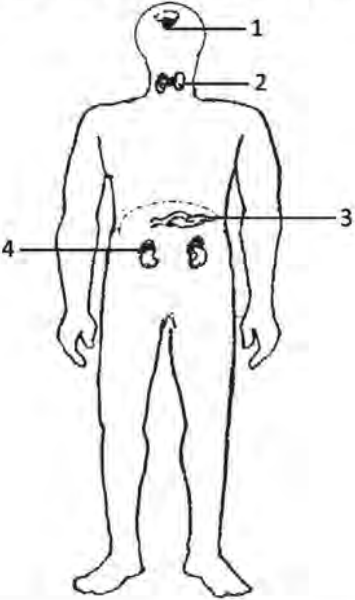
Which glands are responsible for the following disease?
(i) Goitre (ii) Diabetes mellitus (iii) Gigantism
(iv) Diabetes insipidus (v) Cretinism (vi) Exophthalmic goiter