Question
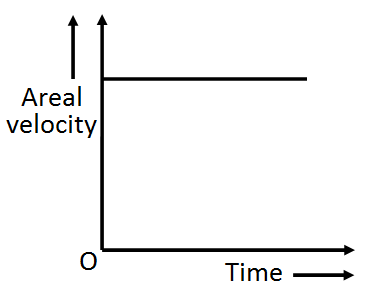
Draw areal velocity versus time graph for mars.

Answer

Areal velocity of Mars revolving around the Sun does not change with time according to Kepler’s law, i.e. it is constant with time. Then graph of a real velocity versus time is a straight line parallel to time axis.

Need a full question paper?

Generate a complete, print-ready paper with questions like this in minutes — across 16+ boards, with answer keys.
Start Generating Free

Similar questions

Two parallel wires carry equal currents of 10A along the same direction and are separated by a distance of 2.0cm. Find the magnetic field at a point which is 2.0cm away from each of these wires
Two equal charges are placed at a separation of 1.0m. What should be the magnitude of the charges so that the force between them equals the weight of a 50kg person?
Suppose the platform with the kid in the previous problem is rotating in anticlockwise direction at an angular speed $\omega.$ The kid starts walking along the rim with a speed v relative to the platform also in the anticlockwise direction. Find the new angular speed of the platform.
A new unit of length is chosen such that the speed of light in vacuum is unity. What is the distance between the Sun and the Earth in terms of the new unit if light takes 8min and 20s to cover this distance?
Does focal length of a lens depend on the colour of the light used? Does focal length of a mirror depend on the colour?
Einstein’s mass - energy relation emerging out of his famous theory of relativity relates mass (m) to energy (E) as E = mc2, where c is speed of light in vacuum. At the nuclear level, the magnitudes of energy are very small. The energy at nuclear level is usually measured in MeV, where 1MeV = 1.6 × 10⁻¹³J; the masses are measured in unified atomic mass unit (u) where 1u = 1.67 × 10⁻²⁷kg.
  1. Show that the energy equivalent of 1u is 931.5MeV.
  2. A student writes the relation as 1u = 931.5MeV. The teacher points out that the relation is dimensionally incorrect. Write the correct relation.
A rope of negligible mass is wound round a hollow cylinder of mass 3kg and radius 40cm. What is the angular acceleration of the cylinder if the rope is pulled with a force of 30N? What is the linear acceleration of the rope? Assume that there is no slipping.
What are the dimensions of:
  1. Volume of a cube of edge a.
  2. Volume of a sphere of radius a.
  3. The ratio of the volume of a cube of edge a to the volume of a sphere of radius a?
A cube of wood floating in water supports a 200g mass resting at the centre of its top face. When the mass is removed, the cube rises 2cm. Find the volume of the cube.
In Fizeau method of measuring the speed of light, the toothed wheel is placed in the focal plane of a converging lens. How would the experiment be affected if the wheel is slightly away from the focal plane?