Question
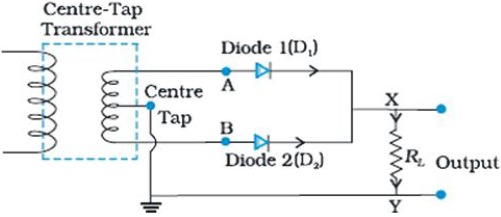
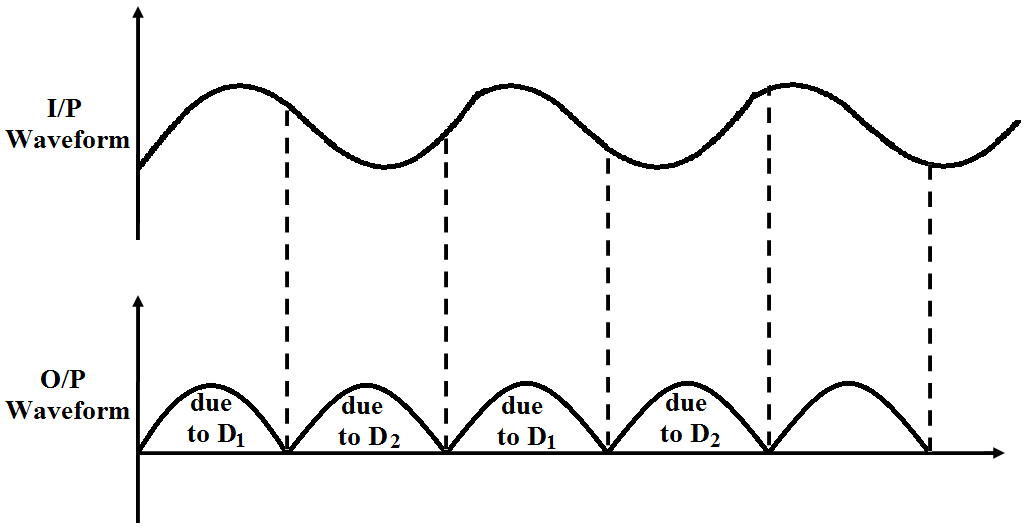
  1. Draw the circuit diagram of a fullwave rectifier using p-n junction diode. Explain its working and show the output, input waveforms.
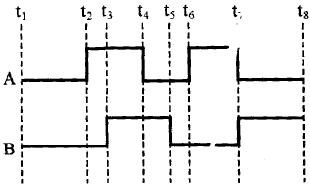
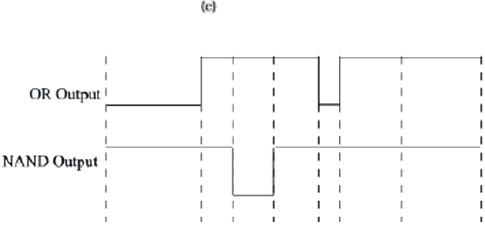
  2. Show the output waveforms (Y) for the following inputs A and B of
    1. OR gate.
    2. NAND gate.

Answer


  1. Duringfirsthalf cycle:
    A is positive w.r.t centre tap but B is negative, hence only diode $D_1$ conducts and current flows through the load in the sense X to Y.
    During the second half cycle:
    B is positive w.r.t centre tap but A is negative hence only diode $D_2 $ conducts and again send currents through load from X and Y.
    $\therefore$ Current through the load, in both the halves of input, is unidirectional.
  2.  

Need a full question paper?

Generate a complete, print-ready paper with questions like this in minutes — across 16+ boards, with answer keys.
Start Generating Free

Similar questions

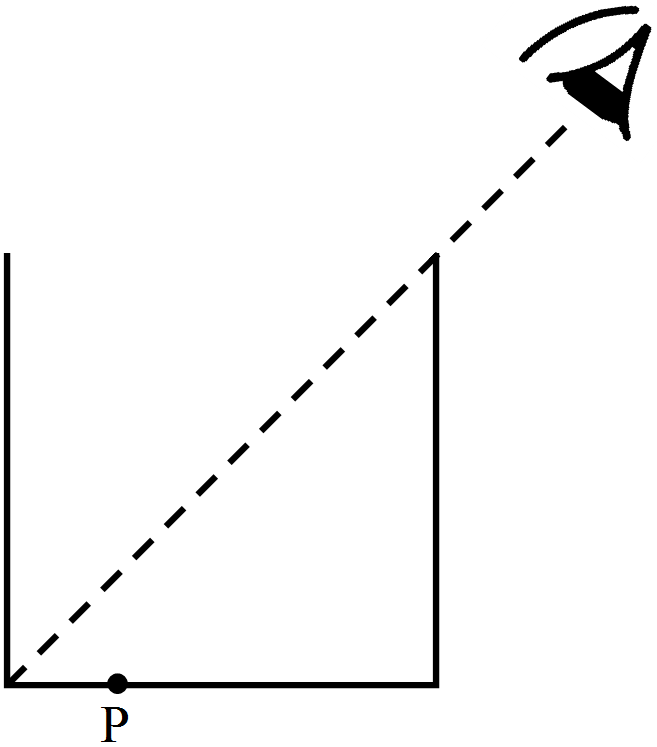
A cylindrical vessel, whose diameter and height both are equal to 30cm, is placed on a horizontal surface and a small particle P is placed in it at a distance of 5.0cm from the centre. An eye is placed at a position such that the edge of the bottom is just visible. The particle P is in the plane of drawing. Up to what minimum height should water be poured in the vessel to make the particle P visible?
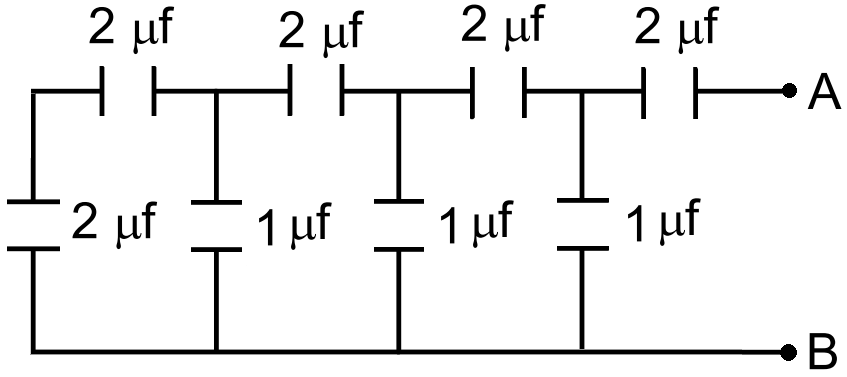
Find the capacitance of the combination shown in figure between A and B.
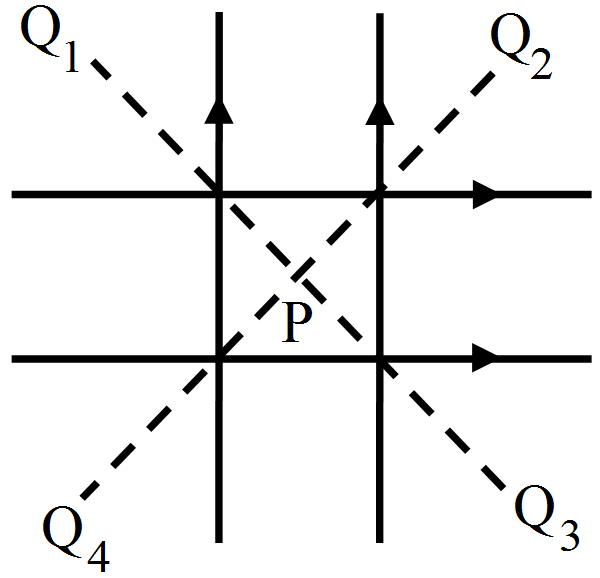
Four long, straight wires, each carrying a current of 5.0A, are placed in a plane as shown in figure. The points of intersection form a square of side 5.0cm.
  1. Find the magnetic field at the centre P of the square.
  2. $Q_1, Q_2, Q_3,$ and $Q_4$ are points situated on the diagonals of the liquare and at a distance from P that is equal to the length of the diagonal of the square. Find the magnetic fields at these points.
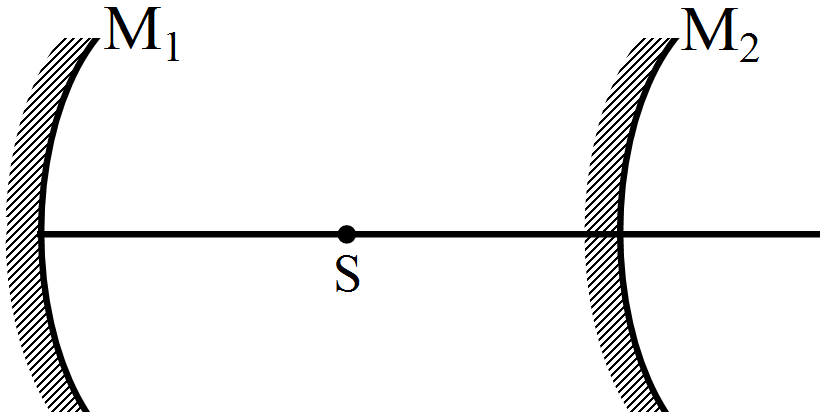
A converging mirror $\mathrm{M}_1$, a point source S and a diverging mirror $\mathrm{M}_2$ are arranged as shown in figure. The source is placed at a distance of 30 cm from $\mathrm{M}_1$. The focal length of each of the mirrors is 20 cm . Consider only the images formed by a maximum of two reflections. It is found that one image is formed on the source itself.
  1. Find the distance between the two mirrors.
  2. Find the location of the image formed by the single reflection from $\mathrm{M}_2$.
A solid wire of radius 10cm carries a current 5.0A distributed uniformly over its cross-section. Find the magnetic field B at a point at a distance (a) 2cm (b) 10cm and (c) 20cm away from the axis. Sketch a graph of B versus x for 0 < x < 20cm.
First a set of n equal resistors of R each are connected in series to a battery of emf E and internal resistance R. A current I is observed to flow. Then the n resistors are connected in parallel to the same battery. It is observed that the current is increased 10 times. What is 'n'?
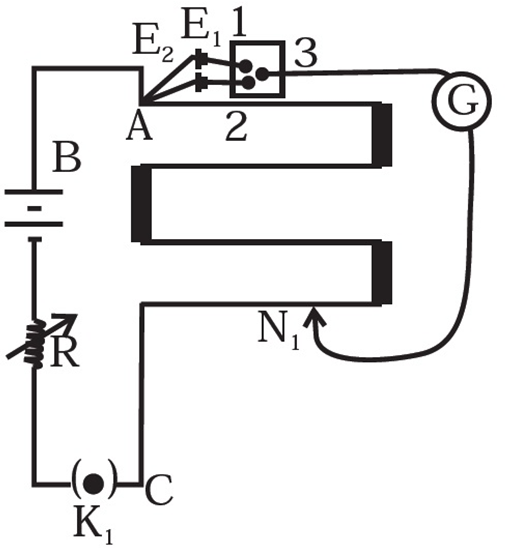
In an experiment with a potentiometer, VB = 10V. R is adjusted to be 50Ω (Fig.). A student wanting to measure voltage $E_1$ of a battery (approx. 8V) finds no null point possible. He then diminishes R to 10Ω and is able to locate the null point on the last $(4^{th})$ segment of the potentiometer. Find the resistance of the potentiometer wire and potential drop per unit length across the wire in the second case.


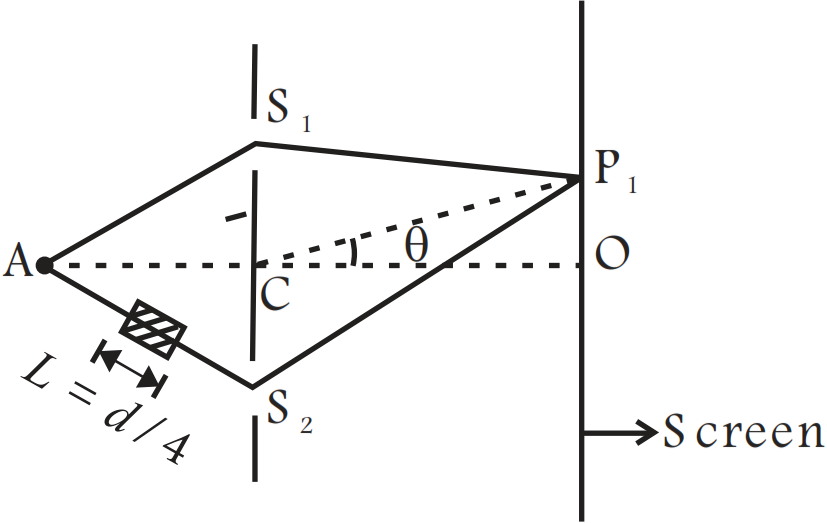
$AC = CO = D, S_1C = S_2C = d < < D$
A small transparent slab containing material of $\mu = 1.5$ is placed along $AS_2 $(Fig). What will be the distance from O of the principal maxima and of the first minima on either side of the principal maxima obtained in the absence of the glass slab.
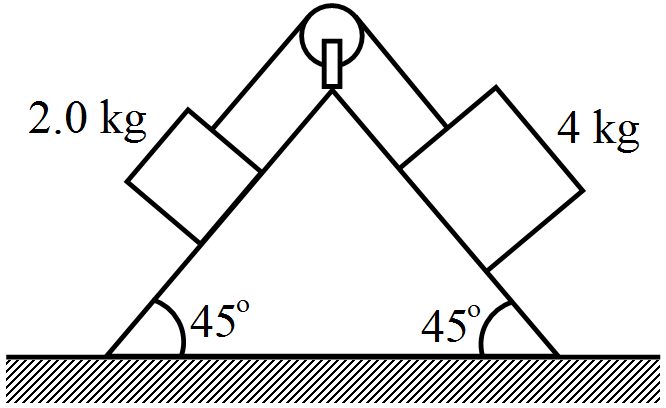
The pulley shown in figure has a radius 10cm and moment of inertia $0.5kg-m^2$ about its axis. Assuming the inclined planes to be frictionless, calculate the acceleration of the 4.0kg block.
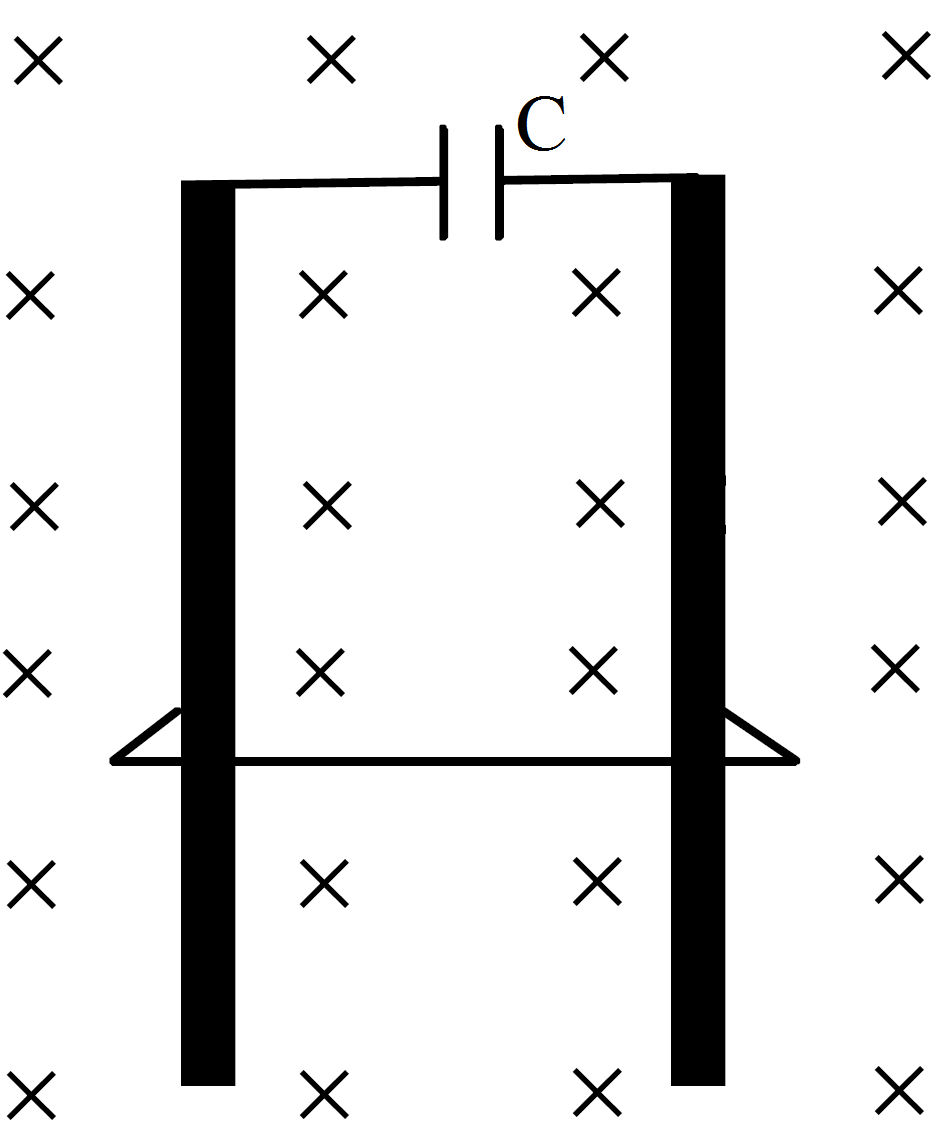
A wire of mass m and length l can slide freely on a pair of smooth, vertical rails (figure). A magnetic field B exists in the region in the direction perpendicular to the plane of the rails. The rails are connected at the top end by a capacitor of capacitance C. Find the acceleration of the wire neglecting any electric resistance.