Question
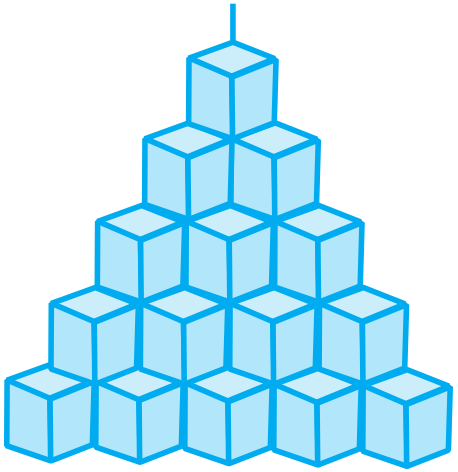
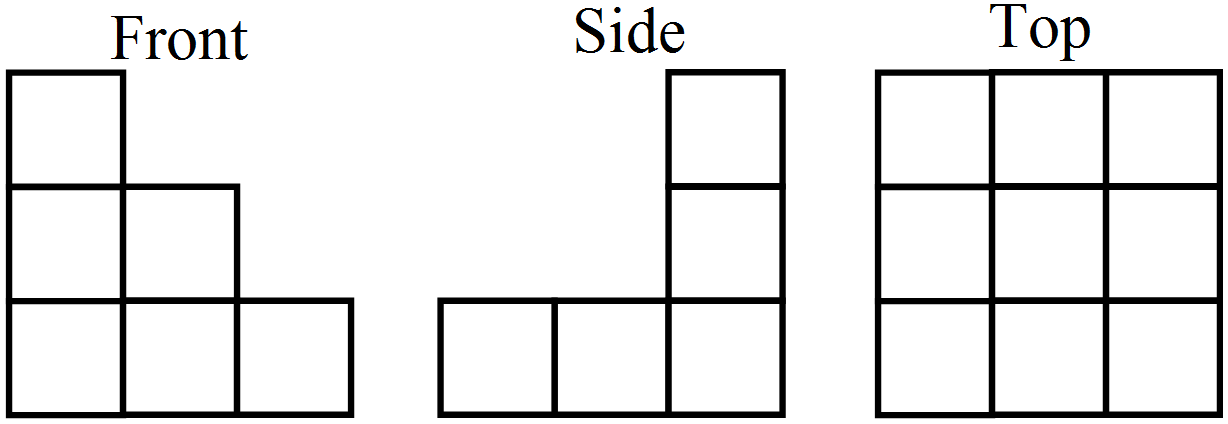
Draw the front, side and top view of the given shapes.

Answer

On the basis of properties and features of front view, top view and side view, we can draw all the three views of the given figures as:

Need a full question paper?

Generate a complete, print-ready paper with questions like this in minutes — across 16+ boards, with answer keys.
Start Generating Free

Similar questions

Examine the following case study carefully and answer the given questions.
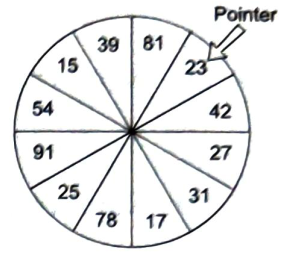
For a game, a fair circular spinner is divided into 12 equal parts are shown in the figure. These sectors are then numbered as shown. The spinner wheel is now ready to be spun during the game.
Image
1. If the wheel is spun once, the probability of getting an odd number is
(a) $\frac{1}{2}$$\quad$ (b) $\frac{1}{3}$$\quad$ (c) $\frac{2}{3}$$\quad$ (d) $\frac{3}{4}$$\quad$
2. The probability of getting a prime number is
(a) $\frac{1}{4}$$\quad$ (b) $\frac{1}{3}$$\quad$ (c) $\frac{5}{12}$$\quad$ (d) $\frac{1}{2}$$\quad$
3.The probability of getting a multiple of 7 is
(a) $\frac{1}{6}$$\quad$ (b) $\frac{1}{4}$$\quad$ (c) $\frac{1}{3}$$\quad$ (d) $\frac{1}{2}$$\quad$
4. The probability of getting a multiple of both 2 and 3 is
(a) $\frac{1}{4}$$\quad$ (b) $\frac{1}{3}$$\quad$ (c) $\frac{5}{12}$$\quad$ (d) $\frac{1}{2}$$\quad$
5. How many of the following events are possible (likely to happen)?
I. Getting an even prime number.
II. Getting an odd composite number.
III. Getting a multiple of both 3 and 5.
IV. Getting a multiple of both 3 and 7.
(a) 1$\quad$ (b) 2$\quad$ (c) 3$\quad$ (d) All of these$\quad$
Due to the effect of special campaign about 'saving water by state JAL BOARD. Find an average urban Indian uses about 150 L of water every day which is reduces to $10\%.$
The consumption of daily use of water given below
ActivitiesLitres per peson per day
Driking3
Cooking4
Bathing20
Sanitation40
Washing clothes40
Washing utensils20
Gardening23
Total150
(i) What per cent of water is used for bathing and sanitation together per day?
(ii) How much less per cent of water is used for cooking in comparison to that used for bathing?
(iii) What per cent of water is used for drinking, cooking and gardening together?
(iv) What value is depicted from the 'saving water'?
Find the least number which must be added to each of the following numbers so as to get a perfect square. Also find the square root of the perfect square so obtained.$252$
Kunal owns an electrical goods shop wherein he trades in home appliances and also undertakes repair of appliances. On a certain day, he bought an electric iron for ₹ 415 but it turned out fauity and he had to spend ₹ 35 on its repairs. Thereafter he sold the iron for $₹ 486$. He then bought an electric kettle for ₹ 702 including VAT at $8 \%$. He paid $₹ 48$ for its transportation and sold it, gaining $12 \%$. Next, he bought a heater for ₹ 3600 . He marked it at a price $15 \%$ above its cost and then sold it at a discount of $15 \%$ on it.
(1) What percentage of profit did Kunal earn on the electric iron?
(a) $5 \%$$\quad$(b) $8 \%$$\quad$(c) $9 \%$$\quad$(d) $14.6 \%$
(2) The original or basic cost price (excluding VAT) of the electric kettle is
(a) ₹ 646$\quad$(b) ₹ 650$\quad$(c) ₹ 654$\quad$(d) ₹ 670
(3) The price at which Kunal sold the kettle was
(a) ₹ 786$\quad$(b) ₹ 825$\quad$(c) ₹ 840$\quad$(d) ₹ 850
(4) How much profit or loss did Kunal earn by selling the heater?
(a) No profit no loss$\quad$(b) Profit of ₹ 71$\quad$(c) Loss of ₹ 71$\quad$(d) Loss of ₹ 81
Find the square root of the following decimal numbers.$31.36$
For each of the following numbers, find the smallest whole number by which it should be divided so as to get a perfect square. Also find the square root of the square number so obtained.$1620$
Find the square root of each of the following numbers by Division method.$7921$
A train starts from station $A$ with a certain number of passengers. At station $B$, the train drops one third of the passengers and takes in 96 more. At the next station $C$ one half of the passengers on board get down while 12 new passengers get on board. At station $D$, a quarter of the passengers get down and 20 new passengers board the train. It then reaches its final destination-station $E$-with 200 passengers.
(1) How many passengers were on board when the train left station $A$ ?
(a) 460$\quad$(b) 520$\quad$(c) 540$\quad$(d) 560
(2) How many passengers were on board when the train left station $B$ ?
(a) 428$\quad$(b) 436$\quad$(c) 444$\quad$(d) 456
(3) How many passengers were on board when the train left station $C$ ?
(a) 228$\quad$(b) 240$\quad$(c) 256$\quad$(d) 264
(4) Had the train started with 720 passengers from station $A$, how many passengers would have got down at station $E$ ?
(a) 228$\quad$(b) 236$\quad$(c) 245$\quad$(d) 256
Find the square root of each of the following numbers by Division method.$1024$
Draw the front, side and top view of the given shapes.