Question
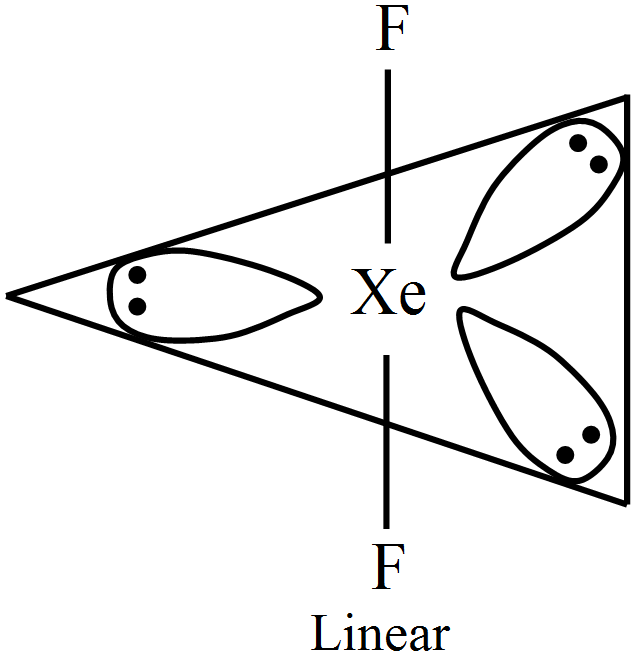
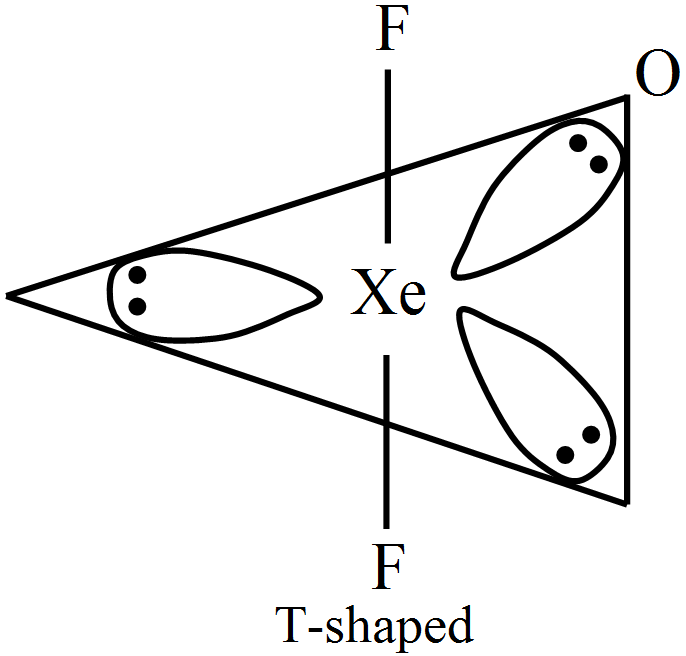
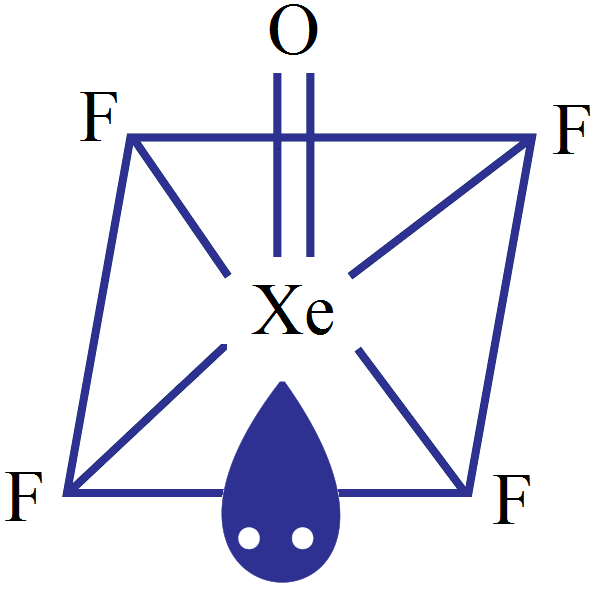
Draw the molecular structures of:
  1. $\text{XeF}_2,$
  2. $\text{XeOF}_2$
  3. $\text{XeOF}_4$

Answer

Need a full question paper?

Generate a complete, print-ready paper with questions like this in minutes — across 16+ boards, with answer keys.

Start Generating Free

Similar questions

1. Give the mathematical expression of enthalpy.
2. Neither q nor W is a state function but $q + W$ is a state function. Explain why?
3. The standard heat of formation of $Fe _2 O _3$ (s) is $824.2 kJ mol ^{-1}$ Calculate heat change for the reaction.
$
4 Fe(s)+3 O_2(g) \rightarrow 2 Fe_2 O_3(s)
$
Describe the change in hybridisation (if any) of the Al atom in the following reaction.
$
AlCl_3+Cl^{-} \rightarrow AlCl_4^{-}
$
221.4J is needed to heat 30 g of ethanol from $15^{\circ} C$ to $18^{\circ} C$. Calculate (a) specific heat capacity, and (b) molar heat capacity of ethanol.
2 Arrange the following set of compounds in order of their decreasing relative reactivity with an electrophile, E+.
Chlorobenzene, 2,4-dinitrochlorobenzene, p-nitrochlorobenzene.
Out of electron and proton which one will have, a higher velocity to produce matter waves of the same wavelength? Explain it.
Give example each of molecules which have the following geometrics:
  1. Linar.
  2. Trigular planar.
  3. Tetrahedral.
  4. Trigonal biphramidal.
  5. Octahedral.
Calculate the wavelength of tennis ball of mass 60 gram moving with a velocity of 10ms-1. (h = 6.626 × 10⁻³⁴Js)
  1. What is the common between dxy and dx2 - y2 orbitals?
  2. What is the difference between them?
  3. What is the angle between the lobes of the above two orbitals?
Ethyl acetate is formed by the reaction between ethanol and acetic acid and the equilibrium is represented as :
$CH _3 COOH ( l )+ C _2 H _5 OH ( l ) \rightleftharpoons CH _3 COOC _2 H _5( l )$$+ H _2 O ( l )$
(i) Write the concentration ratio (reaction quotient) $Q_c$, for this reaction (note : water is not in excess and is not a solvent in this reaction).
(ii) At 293 K , if one starts with 1.00 mol of acetic acid and 0.18 mol of ethanol, there is 0.171 mol of ethyl acetate in the final equilibrium mixture. Calculate the equilibrium constant.
(iii) Starting with 0.5 mol of ethanol and 1.0 mol of acetic acid and maintaining it at $293 K, 0.214 mol$ of ethyl acetate is found after sometime. Has equilibrium been reached?
The electron energy in hydrogen atom is given by $\text{E}_{\text{n}}=\frac{ (–2.18 \times 10–18 )}{\text{n}^2}\text{J}.$ Calculate the energy required to remove an electron completely from the n = 2 orbit. What is the longest wavelength of light in cm that can be used to cause this transition?