MCQ
Due to plasmoysis, the plant cell:
- ABursts
- BSwells up
- CBecome turgid
- ✓Become flaccid
Generate a complete, print-ready paper with questions like this in minutes — across 16+ boards, with answer keys.
$(i)$ Glycocalyx is the outermost envelope in bacteria.
$(ii)$ The glycocalyx could be a loose sheath called capsule.
$(iii)$ The glycocalyx may be thick and tough called slime layer.
$(iv)$ A special structure formed by the plasma membrane is called mesosome.
$(v)$ Small bristle like fibres sprouting out of the cell are called fimbriae.
$\begin{array}{|p{0.4\linewidth}|p{0.4\linewidth}|} \hline Column\,\,-I & Column\,\,-II \\ \hline (1)\,\,Neutrophil & (a)\,\,Inflammation \\ \hline (2)\,\,Eosinophil & (b)\,\,6-8\,\,\% \\ \hline (3)\,\,Basophil & (c)\,\,Phagocytes \\ \hline (4)\,\,Monocytes & (d)\,\,Resists\,\,infections \\ \hline \end{array}$
Select the part correctly matched with its function.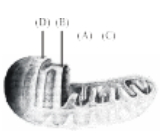
$R-$ In stroma, enzymatic reactions incorporate $CO_2$ into the plant leading to the synthesis of sugar.