MCQ
Earth's magnetic field always has a horizontal component except at or Horizontal component of earth's magnetic field remains zero at
  • A
    Equator
  • Magnetic poles
  • C
    A latitude of $60^{\circ}$
  • D
    An altitude of $60^{\circ}$

Answer

Correct option: B.
Magnetic poles
Magnetic poles

Need a full question paper?

Generate a complete, print-ready paper with questions like this in minutes — across 16+ boards, with answer keys.
Start Generating Free

Similar questions

A series combination of $n_1$ capacitors, each of value $C_1$ is charged by a source of potential difference $4\, V.$ When another parallel combination of $n_2$ capacitors, each of value $C_2,$ is charged by a source of potential difference $V$, it has the same (total) energy stored in it, as the first combination has. The value of $C_2,$ in terms of $C_1$ is then
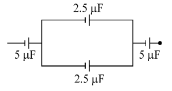
Equivalence in the following circuit is:
Image
In hydrogen spectrum, the shortest wavelength in the Balmer series is $\lambda$. The shortest wavelength in the Bracket series is $........\,\lambda$
The number of photons per second on an average emitted by the source of monochromatic light of wavelength $600\, \mathrm{~nm}$, when it delivers the power of $3.3 \times 10^{-3}$ $watt$ will be : $\left(\mathrm{h}=6.6 \times 10^{-34}\, \mathrm{Js}\right)$
In a hydrogen atom, an electron moves in a circular orbit of radius $5.2\times 10^{-11}$m  and produces a magnetic induction of 12.56 T at its nucleus. The current produced by the motion of the electron will be (Given $\mu_0=4\pi\times 10^{-7}$Wb/A-m) 
To demonstrate the phenomenon of interference, we require two sources which emit radiation
Two positive charges of $20$ $coulomb$ and $Q\;coulomb$ are situated at a distance of $60\,cm$. The neutral point between them is at a distance of $20\,cm$ from the $20\,coulomb$ charge. Charge $Q$ is.....$C$
According to Coulomb’s law, the coulomb force measured between two point charges is directly proportional to:
A ray of light travelling in a medium of refractive index $\mu$ is incident at an angle $\theta$ on a composite transparent plate consisting of $50$ plates of $R.I.\,\, 1.01\, \mu , $ $1.02\, \mu ,\, 1.03\, \mu ,$ $ ........ , \,1.50\,\mu $. The ray emerges from the composite plate into a medium of refractive index $1.6\, \mu$ at angle $'x'$. Then :
Ultraviolet light of wavelength 300 nm and intensity $1.0 \mathrm{watt} / \mathrm{m}^2$ falls on the surface of a photosensitive material. If 1% of the incident photons produce photoelectrons, then the number of photoelectrons emitted from an area of $1.0 \mathrm{~cm}^2$ of the surface is nearly