MCQ
Earth’s potential is _______?
- AZero.
- BHighly positive.
- CHighly negative.
- DVaries from place to place.
Explanation:
We consider earth as the storage of infinite positive as well as a negative charge. Therefore, the potential of the earth is always considered to be zero and the potential of every body is measured with respect to earth. That’s why if we connect any charged body to the earth, its potential instantaneously becomes zero.
Generate a complete, print-ready paper with questions like this in minutes — across 16+ boards, with answer keys.
The de-Broglie wavelength associated with the particle of mass m moving with velocity v is
|
(a) h/mv |
(b) mv/h |
(c) mh/v |
(d) m/hv |
Photoelectric effect was successfully explained first by
|
(a) Planck |
(b) Hallwash |
(c) Hertz |
(d) Einstein |
When the wave of hydrogen atom comes from infinity into the first orbit then the value of wave number is
|
(a) 109700 cm–1 |
(b) 1097cm–1 |
(c) 109 cm–1 |
(d) None of these |
The half-life of radioactive Polonium (Po) is 138.6 days. For ten lakh Polonium atoms, the number of disintegrations in 24 hours is
|
(a) 2000 |
(b) 3000 |
(c) 4000 |
(d) 5000 |
A capacitor with air as the dielectric is charged to a potential of 100 volts. If the space between the plates is now filled with a dielectric of dielectric constant 10, the potential difference between the plates will be
|
(a) 1000 volts |
(b) 100 volts |
(c) 10 volts |
(d) Zero |
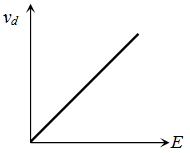
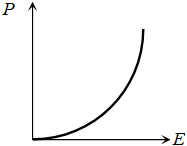
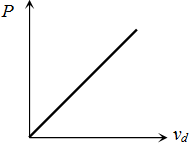
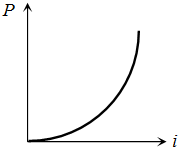
E denotes electric field in a uniform conductor, I corresponding current through it,  drift velocity of electrons and P denotes thermal power produced in the conductor, then which of the following graph is incorrect
|
(a)
|
(b)
|
(c)
|
(d)
|
A condenser having a capacity of 6mF is charged to 100 V and is then joined to an uncharged condenser of 14 μF and then removed. The ratio of the charges on 6mF and 14mF and the potential of 6mF will be
|
(a) |
(b) |
(c) |
(d) |
In a PN-junction diode not connected to any circuit
|
(a) The potential is the same everywhere |
|
(b) The P-type is a higher potential than the N-type side |
|
(c) There is an electric field at the junction directed from the N- type side to the P- type side |
|
(d) There is an electric field at the junction directed from the P-type side to the N-type side |