MCQ
Electrostatic field lines ____.
- AForms any closed loops.
- BDo not form any closed loops.
- CBoth a and b.
- DNone.
Generate a complete, print-ready paper with questions like this in minutes — across 16+ boards, with answer keys.
A ray of light is incident at the glass–water interface at an angle i, it emerges finally parallel to the surface of water, then the value of  would be
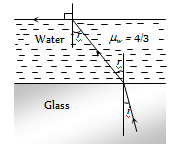
|
(a) (4/3) sin i |
(b) 1/sin i |
(c) 4/3 |
(d) 1 |
A cell of internal resistance 3 ohm and emf 10 volt is connected to a uniform wire of length 500 cm and resistance 3 ohm. The potential gradient in the wire is
|
(a) 30 mV/cm |
(b) 10 mV/cm |
(c) 20 mV/cm |
(d) 4 mV/cm |
In a Young’s double slit experiment, the source illuminating the slits is changed from blue to violet. The width of the fringes
|
(a) Increases |
(b) Decreases |
(c) Becomes unequal |
(d) Remains constant |
Mass of earth has been determined through
|
(a) Use of Kepler's |
|
(b) Sampling the density of earth's crust and using R |
|
(c) Cavendish's determination of G and using R and 'g' at the surface |
|
(d) Use of periods of satellites at different heights above earth's surface |
In a circuit 5 percent of total current passes through a galvanometer. If resistance of the galvanometer is G then value of the shunt is
|
(a) 19 G |
(b) 20 G |
(c) |
(d) |
A moving coil sensitive galvanometer gives at once much more deflection. To control its speed of deflection
|
(a) A high resistance is to be connected across its terminals |
|
(b) A magnet should be placed near the coil |
|
(c) A small copper wire should be connected across its terminals |
|
(d) The body of galvanometer should be earthed |
For a given temperature difference, which of the following pairs will generate maximum thermo e.m.f.
|
(a) Antimony-bismuth |
(b) Silver-gold |
(c) Iron-copper |
(d) Lead-nickel |
10 gm of radioactive material of half-life 15 year is kept in store for 20 years. The disintegrated material is
|
(a) 12.5 g |
(b) 10.5 g |
(c) 6.03 g |
(d) 4.03 g |
A 100 W bulb B1, and two 60-W bulbs B2 and B3, are connected to a 250 V source, as shown in the figure. Now W1, W2 and W3 are the output powers of the bulbs B1, B2 and B3, respectively. Then

|
(a) |
(b) |
(c) 
|
(d) 
|


